Professor Slow
Teacher Man Chinese Patent V2.4
Transform scientific research from your papers into an evidence-backed, editable Chinese invention patent application draft. Ideal for researchers who have SCI papers, dissertations, lab reports, supplementary materials (SI), or draft patents, but are unsure which technical solutions are worth protecting or how to draft independent claims. The skill extracts candidate inventive points from your materials, searches related patents, compares published solutions with the proposed protection scope, and highlights data gaps and protection risks. Once you confirm the inventive points and claims strategy, the skill writes an editable abstract, claims, and specification in YouMind. When key information is missing, it marks what needs to be supplemented without fabricating parameters, examples, or search conclusions. The deliverable is a YouMind document for review by inventors and patent agents, not a final Word-formatted layout or a CNIPA electronic filing package, and patent grant is not guaranteed.
 Research
Slow Teacher Paper Reader
Transforms a research paper into an evidence-controlled, 14-part in-depth Chinese analysis document covering the five soul questions, argument structure, step-by-step breakdowns of the title, abstract, conclusion, figures, introduction, and methods, P-I-E-C, and three levels of understanding, concluding with a one-page paper internalization card.
 Write
SCI Paper Revision
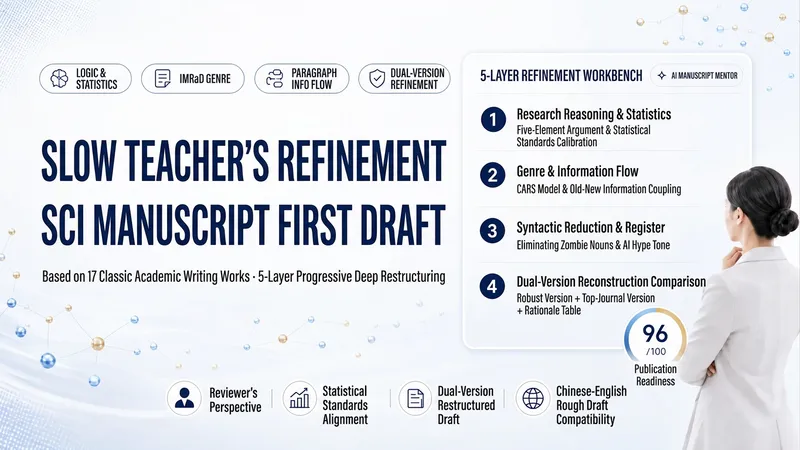
This goes beyond basic vocabulary polishing. It acts like an experienced mentor with peer-review expertise, helping you refine your early SCI draft toward top-journal standards. It places the [Original ❌] and the [Polished Version ✅] side by side, explaining in plain language why each change was made. [Paste Any Draft Directly] Whether it is a bilingual draft, a single section (Abstract, Introduction, Methods, Results & Discussion, Conclusion, figure captions), a full manuscript, a Cover Letter, or a Response to Reviewers, you can send it directly. [How to Use This Skill (Three-Step Reading Method)] Step 1 (Read the full paragraph preview for rhythm): After you submit your draft, each version (Robust Version A / Advanced Version B) begins with an underlined full-paragraph preview without Chinese explanations. Spend 15 seconds reading it from start to finish to sense the flow and rhythm. Step 2 (Review sentence-by-sentence comparisons and reasoning): Next, review the sentence-by-sentence breakdown. The [❌ Original (with strikethrough)] and [✅ Polished (bold and underlined)] are aligned right next to each other. Each sentence includes [💡 Writing Tip] explaining the awkwardness of the original, the rationale for the change, and underlying English writing principles. Step 3 (Select a version for a clean, copy-ready text): Reply with your choice of A or B (or request minor adjustments), and it will remove all underlines and notes to provide a clean, copy-ready English draft for your Word document. [3 Core Safeguards] 1. Preempts reviewer critiques by closing logical and statistical loopholes (such as treating P > 0.05 as proof of no effect, mismatched comparisons, or missing control experiment premises); 2. Avoids overly long, breathless sentences, keeping standard sentences within the 15–25 word golden range with a natural mix of sentence lengths; 3. 100% zero fabrication of data and literature, clearly marking missing values or error bar definitions for you to verify.
Research Defense Slides & Script
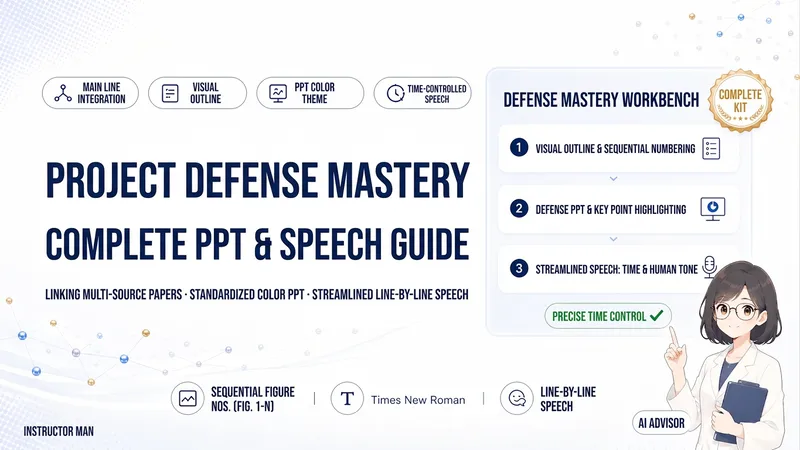
Synthesize multiple papers or research project materials into a unified theme, supporting custom presentation durations (defaulting to 6 minutes). Generate visual outlines, professional blue-white-red research defense Slides with continuous figure numbering and Times New Roman font, and natural academic scripts with precise timing control line by line.
 Research
Teacher Man · Science Q Check
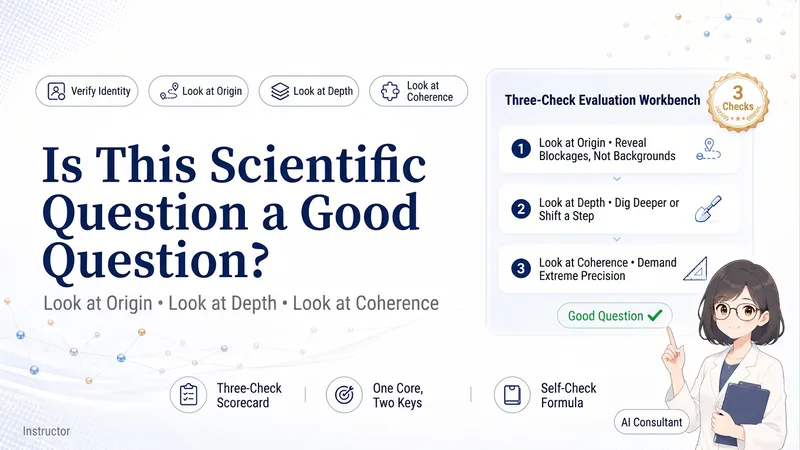
Conduct a reviewer-perspective deep health check on the scientific questions (or title abstracts and preliminary ideas) refined in your proposal. It supports automatically tracing back from scattered ideas or title abstracts through a four-step chain: Domain (Level 7) to Direction (Level 8 sub-discipline) to Bottleneck (Level 9) to Scientific Question (Levels 10-11), scoring each link. It first verifies legitimacy (non-research inputs trigger a 10-point cutoff, G0 three-question preliminary veto, science vs. engineering differentiation, and free exploration vs. target-driven alignment), then performs diagnoses across three lenses: looking at origin (Level 11 contraction ruler and pre-experiment two-way causal bridge), looking at depth (online verification of peer depth lines, 8-tier journal quality x quantity dual-track popularity, and sub-discipline uniqueness horizontal comparison), and looking at alignment (same-scale measure borrowing and red-team three paths). It outputs a three-lens scorecard, a four-step reverse-engineering check table, a five-dimensional score, an overall judgment, and a rewritten "one core + two keys" expression, and saves it as a document.
Slow Teacher's Readable Writing
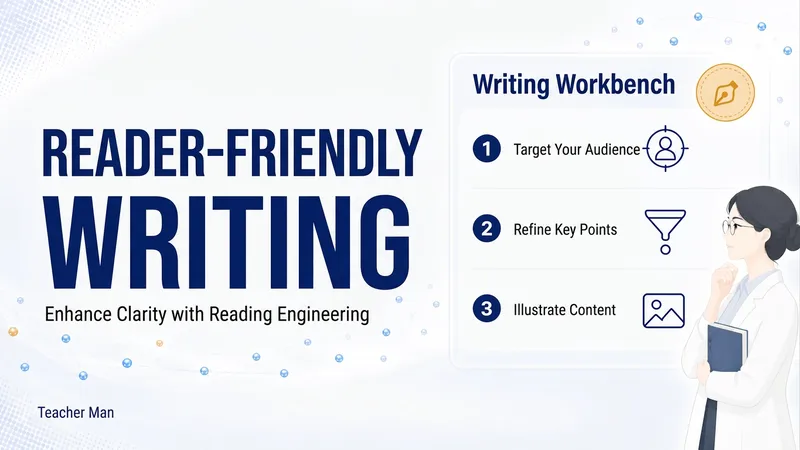
Using a reader-friendly writing approach, this skill prioritizes revising and polishing NSFC grant proposals, SCI research papers, and SCI reviews. It streamlines argumentation logic, paragraph transitions, and bilingual expression to help reviewers and academic readers easily understand your research. It faithfully preserves scientific meaning, evidence, and uncertainty without fabricating data or literature. It can also be used to write and revise social media posts and book commentary drafts.
xiaoxiaodong: Find Real Needs
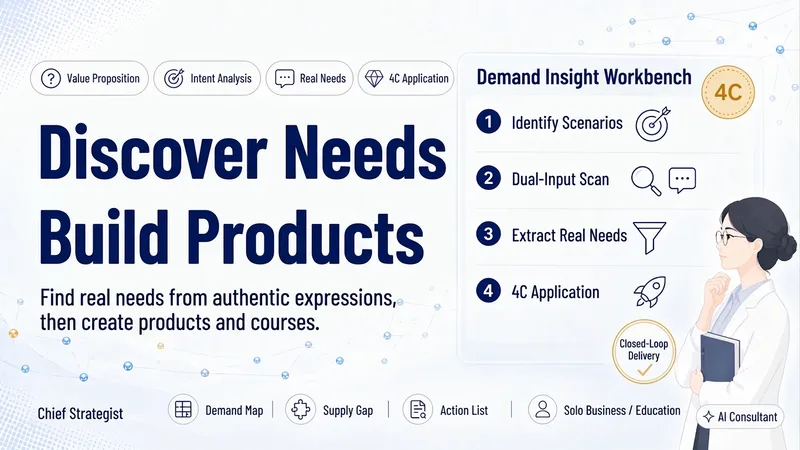
Uncover undefined needs from users’ real situations and expressions, then turn them into actionable products or teaching activities with the “three supply-side questions + intent management + 4C” framework. Outputs a structured needs-insight document for business, education, and other scenarios.
Slow Teacher's RIA Method
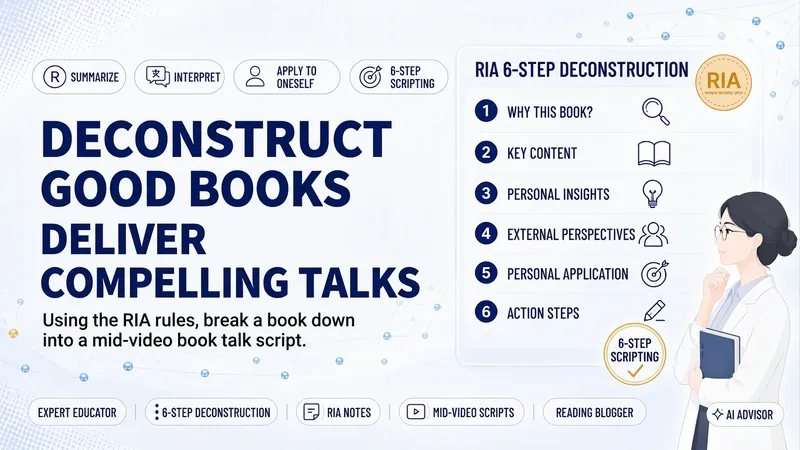
Break down a book into six steps using the RIA method (Retell → Translate → Make It Your Own), producing a 1,500–2,000-character script for a mid-length book video that can be recorded as-is. It includes others’ reviews, personal practice, action recommendations, reading cues, and a self-checklist. Suitable for book bloggers, popular science, and teaching.
Slow Teacher: Book to Video
Break down a book into a complete, approximately 8,000-word book breakdown for your review first. After you approve it, condense it into a 1,500–2,000-word mid-length video voiceover script that can be read aloud directly. The entire process follows a six-step structure: an engaging opening → an introduction to the author → what the book is about → your understanding and others’ evaluations → how it can help you and recommendations → a memorable quote or question to close. It incorporates the content logic of “restate → translate → apply.” Author information and others’ evaluations must be verifiable, prioritizing accuracy over completeness.
 Research
Four-Step Critical Reading
When reading a book, paper, or report, the hardest part is often not understanding the words, but explaining what the author is really saying—and why they believe it. Based on Tian Hongyun’s *Critical Thinking in Plain English: From Beginner to Master*, this skill uses a four-step critical reading method to break down a passage: ① Clear up terminology and background obstacles; ② Use a text logic tree and a hand-drawn cartoon to map its underlying logic; ③ Create an analytical argument table identifying the issues, conclusion, premises, and unstated premises; ④ Create a commentary argument table to assess whether the premises are true and whether they support the conclusion. It then provides a credibility assessment of the conclusion and a list of knowledge that still needs to be added. It knows when not to overdo it: only texts that genuinely express a viewpoint go through all four steps, while purely explanatory or narrative texts go through the first two steps only. Suitable for papers, commentary, reports, policy texts, book passages, and any other material that calls for close reading, helping you move from “opening a book and counting it as reading” to genuine deep reading.
 Write
Critical Writing IBAC
Many articles lack depth not because of writing skills, but because the authors themselves haven't figured out what question they are answering and why they reached that conclusion. This skill uses Tian Hongjun's critical writing framework IBAC—I (Issue), B (Big premise / hidden assumptions and values), A (Actual premise / facts and evidence), C (Conclusion)—to first narrow your topic down to an arguable question, and then build an IBAC structure table to confirm with you before writing. Once confirmed, it turns the framework into an argumentative essay with complete elements, accompanied by a hand-drawn marker-style structure diagram and an IBAC self-check list that points out where premises are weak or evidence is missing line by line. It neither embellishes nor fabricates: where evidence is insufficient, it writes 'need to supplement evidence' and never glosses it over with rhetoric. Suitable for academic, science popularization, workplace, and self-media writing across all scenarios.
xiaoxiaodong’s 7-Step Income Path
Provide your work experience or resume and personal goals for a guided seven-step analysis: uncover undervalued skills, find income opportunities, package your experience into products, identify the highest-leverage opportunities, benchmark against higher-paying roles, and design an AI-powered side hustle. You’ll finish with a progressive 90-day plan, compiled into a saveable Markdown report with commentary in xiaoxiaodong’s style.
Slow Teacher Naming Method
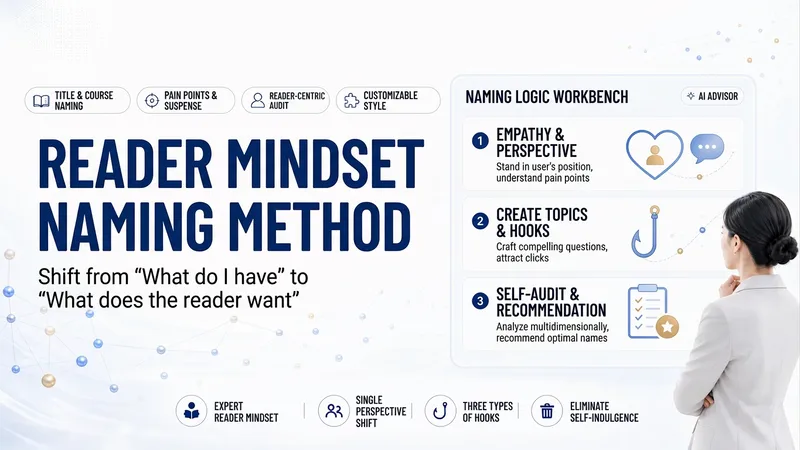
Based on Qiuguo (田洪鋆)’s “reader mindset,” this Skill shifts from “what I have” to “what readers want, fear, and aspire to become.” It generates batches of compelling candidates for book titles and manuscripts, WeChat Official Account articles, short videos and image-text posts, courses, lectures, and columns. It also adapts one piece of content across channels—including WeChat Official Accounts, Douyin, WeChat Channels, Xiaohongshu, Bilibili, and podcasts—based on each platform’s characteristics, with WeChat Official Account titles given the highest priority. It provides recommendations, reasons, and reader-perspective self-checks. The default style is general and adaptive, with an option to switch to the Slow Teacher Official Account style.
Slow Teacher · Think Clearly
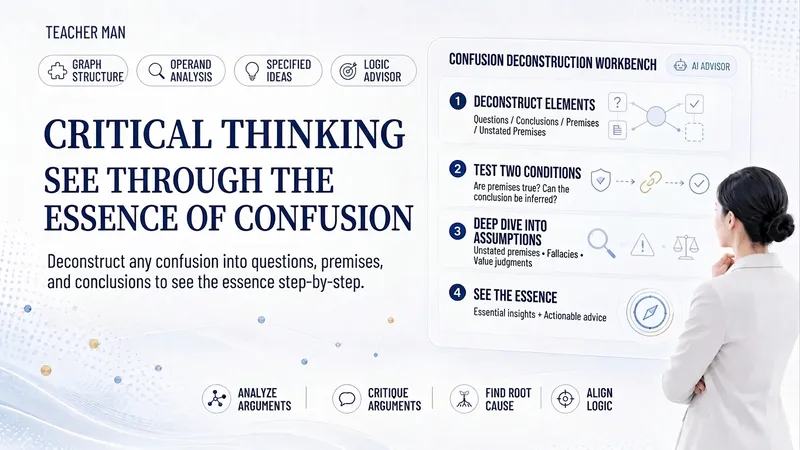
Share any confusion—about work, study, life, relationships, emotions, decisions, or anything else. Using the framework from Tian Hongyun's “General Course in Critical Thinking: Methods for Thinking Correctly,” the Skill breaks it down into “question—premise—conclusion—unstated premise,” then tests it with two questions: “Is the premise true?” and “Can the premise support the conclusion?” It identifies unstated premises and common fallacies, distinguishes factual judgments from value judgments, and ultimately helps you see the essence of the situation and define a practical next step. The tone is equal, gentle, and conversational, with hand-drawn marker-style illustrations added automatically for key steps.
Man's SCI Review
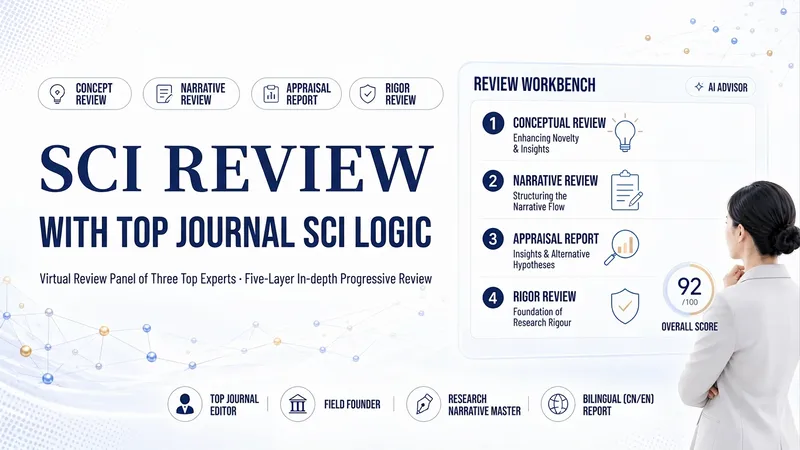
Simulates a virtual review committee of three top experts—a top-journal editor, an academician-level field founder, and a master of research storytelling—to conduct an in-depth review of SCI manuscripts. It follows a “Michelin tasting” philosophy, assessing whether a paper is merely “an experimental report made with good ingredients” or a Michelin-level dish that brings a new flavor to the field. Delivers a complete bilingual review document: a detailed Chinese analysis report (Framing → Narrative → Tasting → Rigor) plus a formal English review report (To the Editor + To the Authors + Recommendation). Suitable for any SCI/SCIE discipline.
Teacher Man NSFC Topic Selection
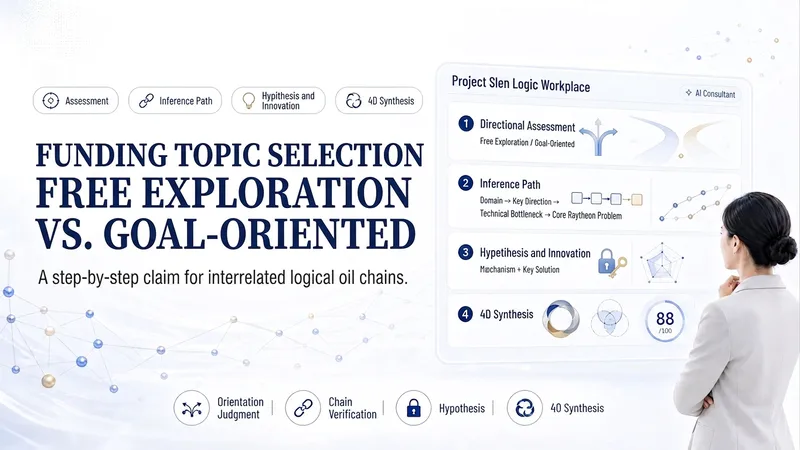
The "Teacher Man NSFC Topic Selection" advisor skill helps you set your track using the first 6 layers of official codes plus the 7th layer of proposal fields (free exploration vs. target-oriented, including non-research circuit breaking and code misalignment checks). It then guides you step by step along an 11-layer contraction chain (7th layer field [dual-track popularity] -> 8th layer distinctive direction -> 9th layer quantified technical bottleneck -> preliminary experiment two-way causal questioning bridge -> 10th layer 1 core scientific question -> 11th layer 2 key scientific questions), performing "link checks" at every step. It derives scientific hypotheses (lock core diagram) and same-scale innovation (golden key), and concludes with a four-step onion-peeling scoring and four-dimensional mesh pressure test, producing a closed-loop core statement that can be directly written into your proposal. Each step automatically comes with a 16:9 white-background hand-drawn marker doodle-style illustration.