SCI Paper Revision
Mentor-style edits, dual revisions, and simple notes
SCI Paper Revision
Mentor-style edits, dual revisions, and simple notes
Showcase
Description
This goes beyond basic vocabulary polishing. It acts like an experienced mentor with peer-review expertise, helping you refine your early SCI draft toward top-journal standards. It places the [Original ❌] and the [Polished Version ✅] side by side, explaining in plain language why each change was made. [Paste Any Draft Directly] Whether it is a bilingual draft, a single section (Abstract, Introduction, Methods, Results & Discussion, Conclusion, figure captions), a full manuscript, a Cover Letter, or a Response to Reviewers, you can send it directly. [How to Use This Skill (Three-Step Reading Method)] Step 1 (Read the full paragraph preview for rhythm): After you submit your draft, each version (Robust Version A / Advanced Version B) begins with an underlined full-paragraph preview without Chinese explanations. Spend 15 seconds reading it from start to finish to sense the flow and rhythm. Step 2 (Review sentence-by-sentence comparisons and reasoning): Next, review the sentence-by-sentence breakdown. The [❌ Original (with strikethrough)] and [✅ Polished (bold and underlined)] are aligned right next to each other. Each sentence includes [💡 Writing Tip] explaining the awkwardness of the original, the rationale for the change, and underlying English writing principles. Step 3 (Select a version for a clean, copy-ready text): Reply with your choice of A or B (or request minor adjustments), and it will remove all underlines and notes to provide a clean, copy-ready English draft for your Word document. [3 Core Safeguards] 1. Preempts reviewer critiques by closing logical and statistical loopholes (such as treating P > 0.05 as proof of no effect, mismatched comparisons, or missing control experiment premises); 2. Avoids overly long, breathless sentences, keeping standard sentences within the 15–25 word golden range with a natural mix of sentence lengths; 3. 100% zero fabrication of data and literature, clearly marking missing values or error bar definitions for you to verify.
Recommended by
Dancang
Why we love this skill
It goes beyond language polish by addressing logical, statistical, and structural risks before providing two revised versions. The unique workflow delivers both ready-to-use text and actionable insights.
Best for
Best for researchers, students, and academic writers looking to improve their research paper argumentation, academic English phrasing, and manuscript structure.
How to use this Skill
Provide your input
Enter your draft research paper or excerpt, which may include mixed Chinese and English, including the abstract, introduction, methods, results, discussion, conclusion, figure captions, cover letter, or response to reviewers.
Run the Skill
After submission, the Skill evaluates research logic, statistical phrasing, paper structure, paragraph transitions, and academic English, then provides two revised English drafts, sentence-by-sentence comparisons, and plain-language notes.
Review your result
Receive an annotated diagnostic report and two revised drafts. Once you select a version, it generates a clean English draft without markup or notes that is easy to copy and use, while preserving items to verify.
Related Skills
View all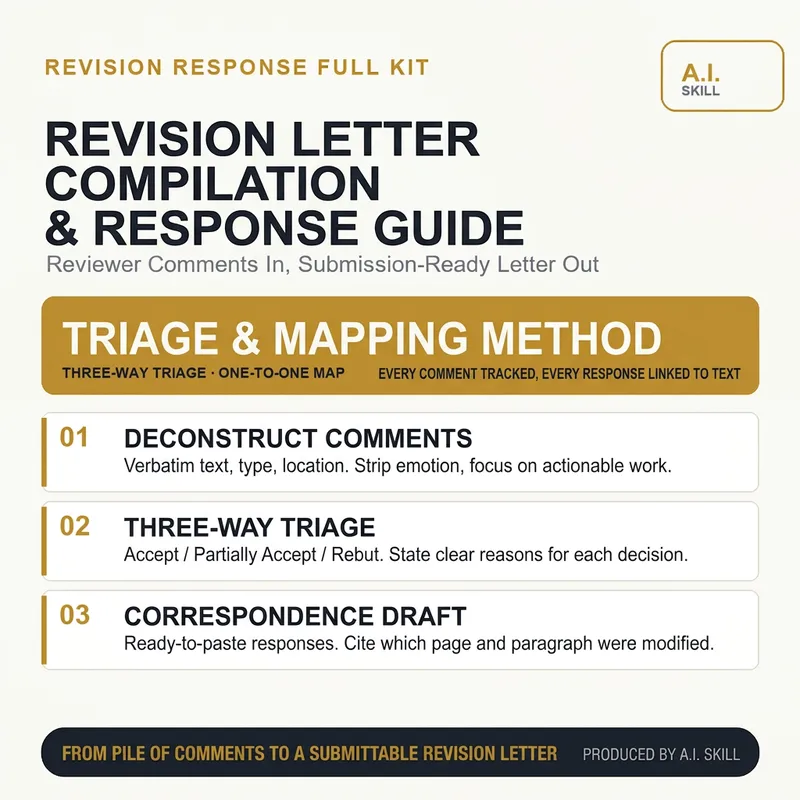 Write
Peer Review Response & Revision
Struggling to organize dozens of reviewer comments into a cohesive response letter? The three-way triage and one-to-one matching method helps you break down, categorize, draft, and align every comment. With authorization, it generates ready-to-use response letters, item-by-item comparison tables, and revision checklists based strictly on your actual changes without fabricating data or reviewers. Key selling point: Goes beyond templates by delivering complete response letters, comparison tables, and checklists directly to you, backed by verifiable public guidelines and zero fabricated data. Best for: Graduate students and early-career researchers receiving major or minor revisions, resubmissions after rejection, or delayed responses; anyone struggling to organize multiple comments or respond without causing friction. Input: Original reviewer comments word for word, your planned changes (accept/partial/rebuttal), actual modification locations, and target journal requirements. Deliverables: 8 content items (comment breakdown, three-way triage, line-by-line responses, response-to-text comparison, revision checklist, response letter, follow-up letter plus log, compliance check) and 5 final items (authorization record, response letter file, response comparison table, revision checklist plus follow-up, sign-off sheet). When tools are unavailable, a ready-to-paste content package is provided instead. Methodology: Three-Way Triage & One-to-One Matching 1. Breakdown fields - Number each comment, keep verbatim text, type, location, and feasibility before writing. Isolate emotional remarks and focus solely on required actions. 2. Three-way triage - Accept, partially accept, or rebut, with clear justification for each. Rebuttals follow a framework of acknowledging valid points, presenting evidence, and explaining retention. 3. One-to-one matching - Generate paste-ready responses and create a comparison table with three valid status values, ensuring all promised changes appear in the text. Grounded in public guidelines: Based on journal author guidelines, COPE, ICMJE, APA 7, GB/T 7714-2015, and PRISMA 2020 where applicable. Every boundary is clearly marked, and authoritative sources are never fabricated.
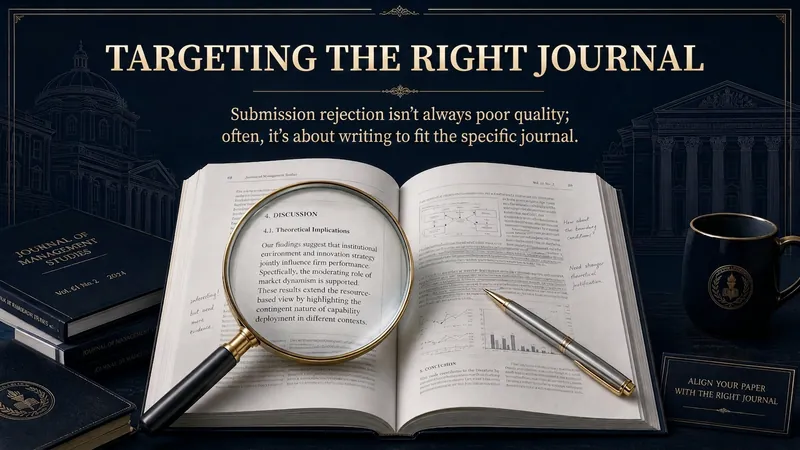
Journal Fit Advisor
Rejected? It's not necessarily bad writing—it's not writing like this journal. 「Journal Fit Advisor」doesn't boast about the journal's ranking. It does one thing: break down real samples from your target journal, show you exactly what it prefers, and help you revise your paper paragraph by paragraph to fit better. 🎯 How it helps Submit a target journal → Extracts real preferences across six dimensions: topic, structure, theory, methodology, language, argumentation → Diagnoses where your paper falls short → Provides actionable rewrites (2-3 versions each for title, abstract, introduction, conclusion). ✨ Why trust it • Each preference is labeled with evidence level: official statement (A), sample inference (B), cautious guess (C). If it's a guess, it says so. • Cross-checked for uniqueness: every feature asks 'Do other similar journals do this too?' Only retains true differentiators. • No fabrication: no fake impact factors, no fake acceptance rates, no promises of acceptance. Lowers confidence if material is insufficient. • Plus a 'Journal Style Prompt Card' – copy and paste into any LLM to instantly write in that journal's style. 💬 How to use it ·“Analyze the topics and writing style of Journal XX over the last three years” ·“I want to submit to Journal XX – run a submission fit diagnosis for me” ·“Rewrite my abstract to sound more like Journal XX” ·“How long are titles in Journal XX typically?” (quick answer for short questions) 👥 Who it's for: graduate students, early-career researchers, authors wanting to self-check before submission. ⚠️ Boundaries: It provides observable style analysis, not the editor's true thoughts, nor a guarantee of acceptance. Cross-journal topic selection, pure title polishing, and chapter ghostwriting will be redirected to more appropriate tools.
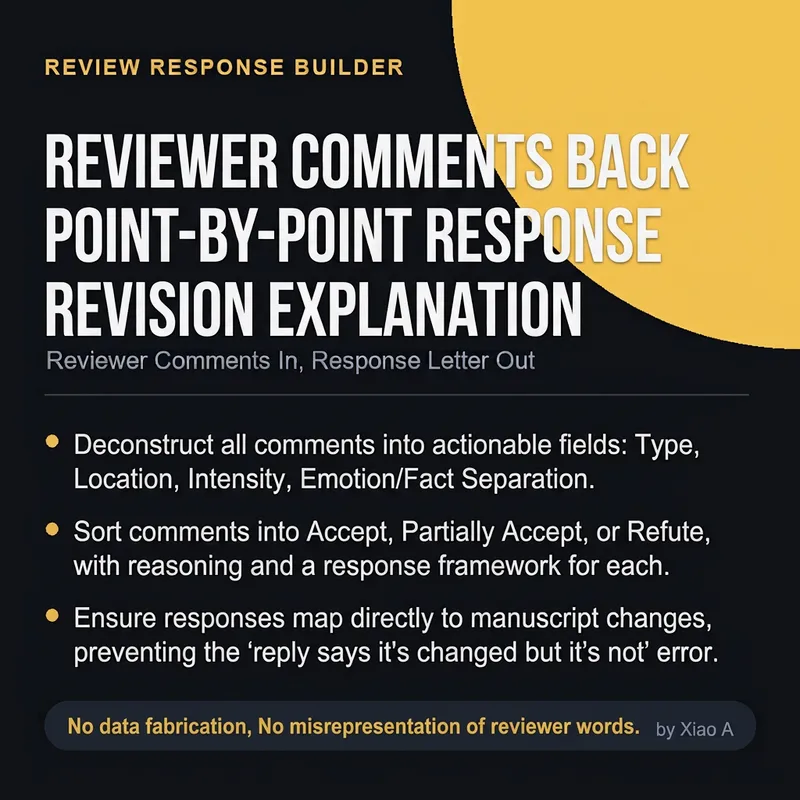 Write
Peer Review Response Generator
Struggling to respond to a mountain of peer review comments? This Skill parses feedback into actionable items, sorts them by acceptance status, provides structured response templates, creates a mapping table between replies and manuscript edits, and assembles a professional response letter and revision checklist. After receiving dozens of comments, the hardest part is categorizing them, prioritizing edits, and respectfully rebutting points without provoking reviewers. This workflow breaks down reviews into structured fields: type, location, demand strength, and feasibility. It separates reviewer tone from actual requested actions. Incoming comments are triaged into three categories: accept, partially accept, or rebut, with clear determination criteria and proven response frameworks. Rebuttals follow strict red lines to remain professional and evidence-based. The critical step is the revision mapping table, which ensures every promised change matches actual manuscript edits, preventing discrepancies. Finally, it formats a numbered response letter and a revision checklist for your supervisor. **Note**: This is a guidance-only Skill. It delivers worksheets, response frameworks, and checklists. It does not write manuscript text, fabricate experimental data or literature, or guarantee acceptance.
Information
- Version
- v20
- Last updated
- Runtime credits
- Usage-based
- Models
- Auto
- Use cases
- Writing & contentResearch & analysisLearning & education
- What you get
- ReportDocument
