
Four-Step Critical Reading
Read closely and test whether the argument holds
Four-Step Critical Reading
Read closely and test whether the argument holds
Showcase
Description
When reading a book, paper, or report, the hardest part is often not understanding the words, but explaining what the author is really saying—and why they believe it. Based on Tian Hongyun’s *Critical Thinking in Plain English: From Beginner to Master*, this skill uses a four-step critical reading method to break down a passage: ① Clear up terminology and background obstacles; ② Use a text logic tree and a hand-drawn cartoon to map its underlying logic; ③ Create an analytical argument table identifying the issues, conclusion, premises, and unstated premises; ④ Create a commentary argument table to assess whether the premises are true and whether they support the conclusion. It then provides a credibility assessment of the conclusion and a list of knowledge that still needs to be added. It knows when not to overdo it: only texts that genuinely express a viewpoint go through all four steps, while purely explanatory or narrative texts go through the first two steps only. Suitable for papers, commentary, reports, policy texts, book passages, and any other material that calls for close reading, helping you move from “opening a book and counting it as reading” to genuine deep reading.
Recommended by
Dancang
Why we love this skill
Moves close reading beyond understanding to testing whether an argument holds, while clearly separating facts from value judgments and honestly flagging what cannot be confirmed.
Related Skills
View all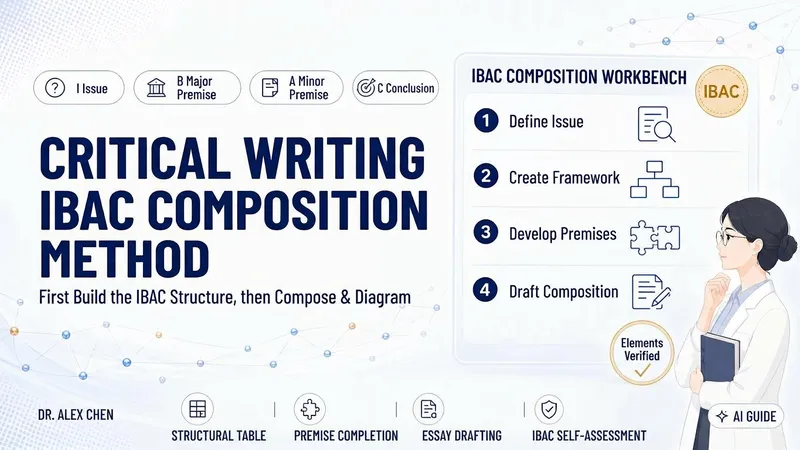 Write
Critical Writing IBAC
Many articles lack depth not because of writing skills, but because the authors themselves haven't figured out what question they are answering and why they reached that conclusion. This skill uses Tian Hongjun's critical writing framework IBAC—I (Issue), B (Big premise / hidden assumptions and values), A (Actual premise / facts and evidence), C (Conclusion)—to first narrow your topic down to an arguable question, and then build an IBAC structure table to confirm with you before writing. Once confirmed, it turns the framework into an argumentative essay with complete elements, accompanied by a hand-drawn marker-style structure diagram and an IBAC self-check list that points out where premises are weak or evidence is missing line by line. It neither embellishes nor fabricates: where evidence is insufficient, it writes 'need to supplement evidence' and never glosses it over with rhetoric. Suitable for academic, science popularization, workplace, and self-media writing across all scenarios.
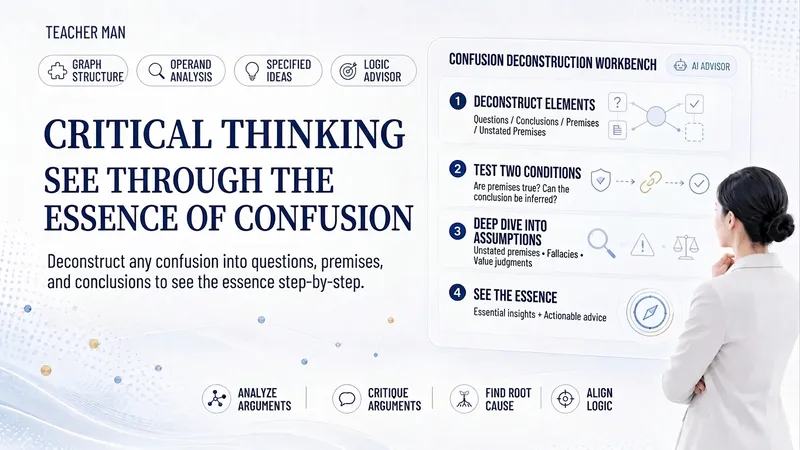
Slow Teacher · Think Clearly
Share any confusion—about work, study, life, relationships, emotions, decisions, or anything else. Using the framework from Tian Hongyun's “General Course in Critical Thinking: Methods for Thinking Correctly,” the Skill breaks it down into “question—premise—conclusion—unstated premise,” then tests it with two questions: “Is the premise true?” and “Can the premise support the conclusion?” It identifies unstated premises and common fallacies, distinguishes factual judgments from value judgments, and ultimately helps you see the essence of the situation and define a practical next step. The tone is equal, gentle, and conversational, with hand-drawn marker-style illustrations added automatically for key steps.
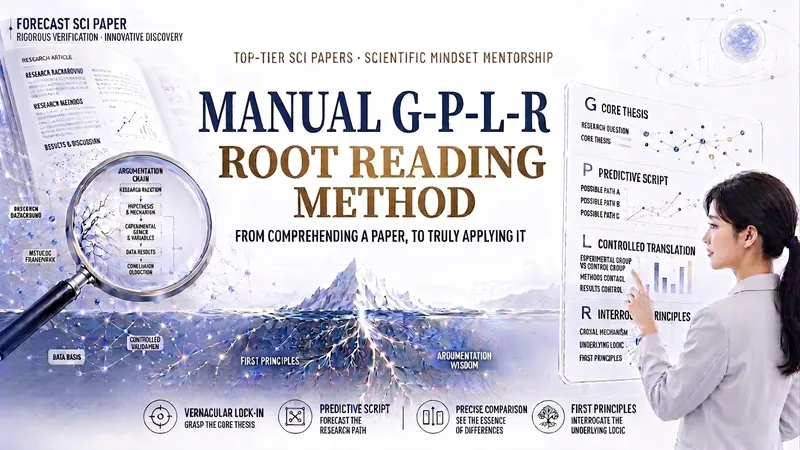
Slow Teacher's Root Reading
Slow Teacher's G-P-L-R Root Reading Method. This is not an ordinary paper summarization tool, but a professional "research thinking training coach." It uses the original G-P-L-R four-stage iceberg reading method (also called root reading method) to help you transform your understanding of top SCI papers from "comprehension" to "application": Stage G: Quickly lock in the core argument of the paper in the most plain language. Stage P: You play the role of the author, predicting the paper's argumentative script and figure layout. Stage L: AI precisely compares your prediction with the actual paper, points out key differences, and provides a full high-quality Chinese translation. Stage R: Explore layer by layer asking "why the author did this" to uncover the underlying first principles and argumentative wisdom. Unlike ordinary AI, it strictly forbids giving you direct answers; instead, it forces your brain to participate fully, like a one-on-one sparring session with a top journal reviewer. After reading a paper...
Information
- Version
- v4
- Last updated
- Runtime credits
- Usage-based
- Models
- Auto
