Starryear年
 Image
ImageS.011 YearGrid Starryear
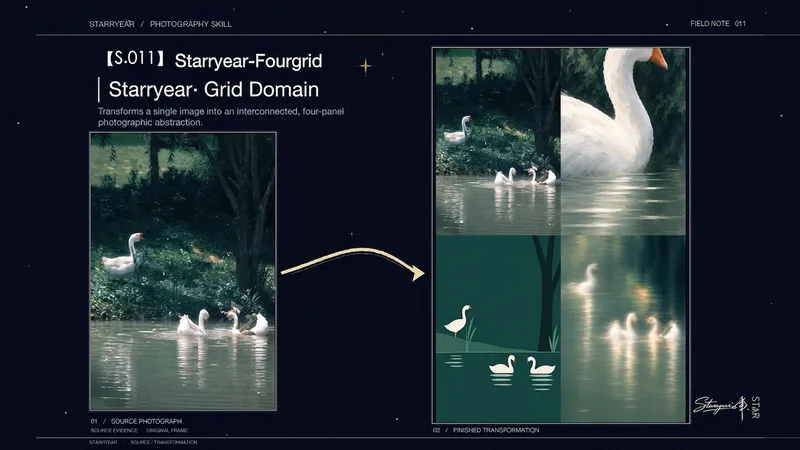
Distill one photo into a complete 2:3 portrait four-panel abstract poster. While preserving evidence from the original photo, it explores different visual distances and emotional tones within the same scene. The finished piece follows the viewing order of “original evidence, enlarged abstraction, minimalist structure, and dreamlike afterimage”: key contours, spatial relationships, and color cues from the photo remain recognizable, while textures, light, reflections, or materials are reorganized into abstract expressions. This Skill is suited to four-photo layouts, four-panel grid posters, editorial-style visual work, and artistic reinterpretations based on a single photo. The three transformed panels share the original photo’s color relationships and visual DNA while clearly distinguishing enlarged details, sparse structures, and optical illusions—avoiding four duplicated filter treatments or an unrelated collage. The imagery emphasizes restrained textures, clear functional sections, and an overall balance that remains effective at thumbnail size. It works with photos of people, animals, architecture, nature, objects, and subjects with distinctive lighting or material qualities. The final output is a single, consistently proportioned portrait four-panel image ready for use, with no extra versions, borders, or unrelated decoration.
 Image
ImageS.013 Starryear Collage
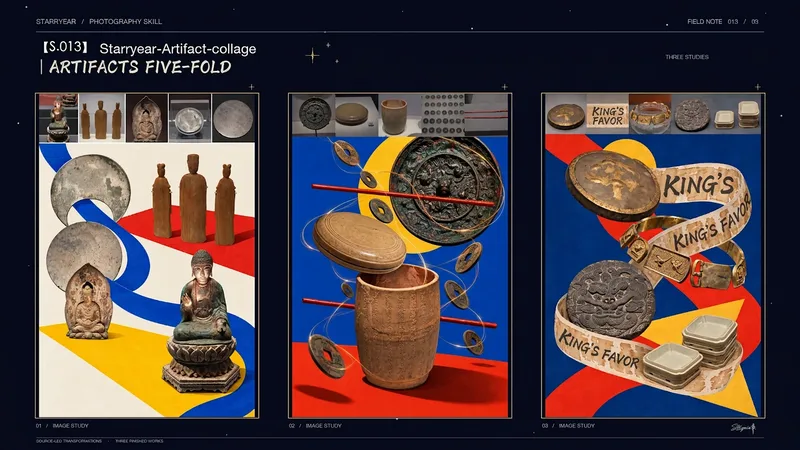
Transforms the features of objects in exactly five artifact photos into a completely new artistic photograph. The Skill focuses on each object's silhouette, proportions, materials, patterns, colors, and visible traces, then brings them together in one complete scene with a clear visual focal point and spatial relationships. Recognizable structural characteristics are preserved, while the background, lighting, shot scale, positioning, and overall color palette can be freely changed. The final image may take the form of realistic photography, a surreal scene, or a visual effect with an artistic collage quality. Here, “collage” refers to the creative arrangement within the image—it does not mean placing the five original photos into a grid, split layout, or composite set. Only one complete standalone image is delivered, without source-photo layouts, alternate options, borders, titles, logos, or watermarks. It is suitable for artifact-focused visual creation, cultural-theme posters, and artistic image-making.
 Image
Image【S.014】Year · Fusion | Photography Skill · Starryear
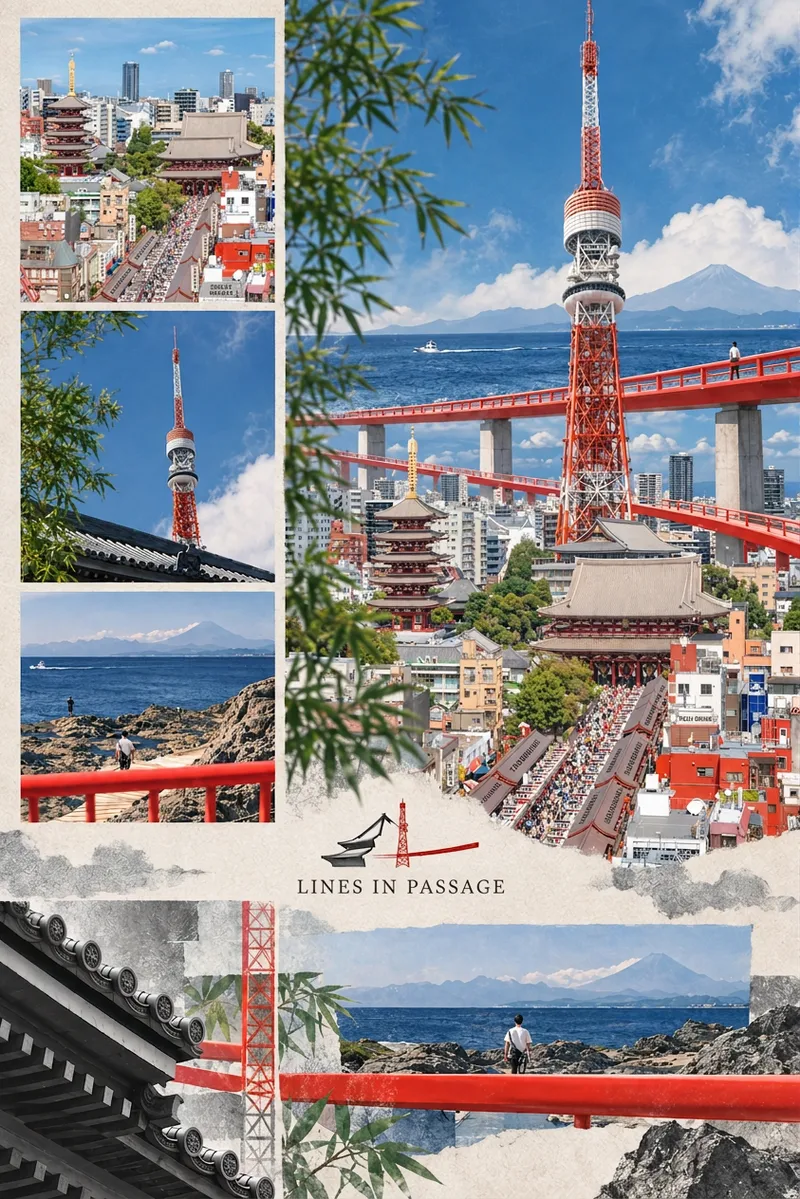
Combine three Buddhist-themed photos into a complete vertical art collage, creating a coherent narrative where the original images, surreal imagination, and abstract deconstruction coexist in one composition. The work preserves all three photos as recognizable visual evidence while distilling their colors, contours, lighting, and spatial relationships into a primary visual with absurd scale and clear spatial tension—for example, placing a giant Buddha image alongside a tiny human setting—without changing facial features, poses, or religious identifiers. The lower section uses a horizontal composition distinct from the primary visual to release fragments, silhouettes, and color blocks from the photos, avoiding ordinary grids or repeated cropping. The central negative space becomes an embedded editorial signature: a simple logo made from abstract elements extracted from each of the three photos, paired with short, natural, artful French text. The final deliverable is a cohesively arranged, flattened composition suited to Buddha’s Birthday themes, experimental religious imagery, art posters, and editorial-style photography collages.
S.016 · Displaced Film
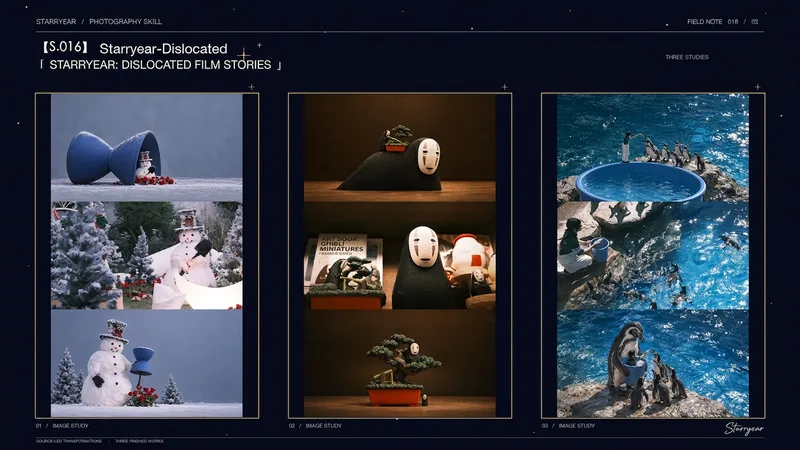
[Premium] Starryear premium Skill series Turn one photo into a vertical surreal triptych: the original image remains in the center, while the scenes above and below extend its characters, objects, poses, colors, and spatial cues into closely related surreal settings. The same subjects undergo absurd yet coherent changes in scale, support relationships, or cause and effect. Ideal for creating “original image in the middle” displaced-film compositions, photographic narratives, and visual concept art—not ordinary filters, collages, or fantasy scenes completely detached from the source photo. The central panel preserves the photo’s authentic texture, with only the necessary horizontal composition adjustments. The upper and lower panels use restrained, spacious cinematic scenes or a pantomime-stage atmosphere, emphasizing one clear visual relationship and creating below an echo or loop that responds to the story above. The final output is a borderless vertical triptych with equal-height upper and lower panels, an overall 16:27 aspect ratio, and a strong sense of photographic evidence and surreal narrative.
 Image
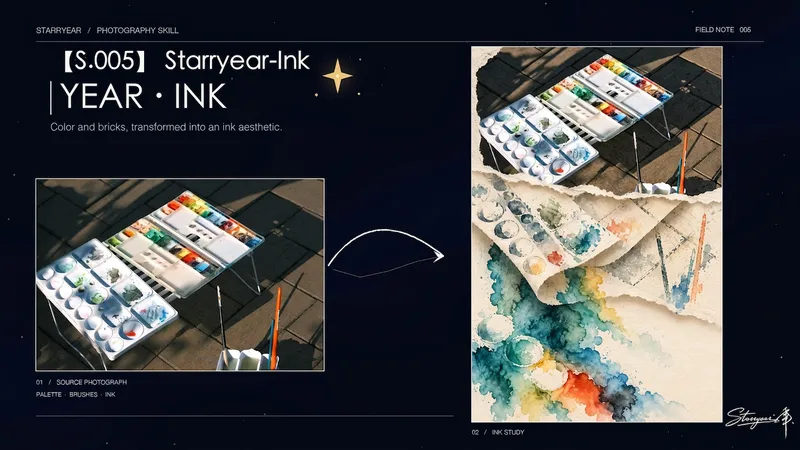
Image【S.005】Photo Ink · Starryear
Transform a single photo into a vertical artwork with tactile quality and narrative depth: the top preserves the source photo as real visual evidence, the middle presents a three-dimensional memory of the photo through lifted, curled, and layered warm ivory handmade paper, and the bottom releases a moist, translucent, diffused afterimage in colored ink. It is suited to creating Starryear ink, torn-paper photo ink, and three-dimensional turning-page ink works with the “original image above, flowing ink released below” structure. It is especially suitable for photos of people, animals, buildings, or landscapes where the original identity, number, direction, and spatial relationships need to remain intact. The finished piece emphasizes one complete vertical composition rather than a simple filter or evenly divided collage. The photo area remains clear and recognizable, while the paper layers carry the rhythm, contours, reflections, or negative space of the scene, using natural paper thickness, deckled fibers, overlaps, and soft shadows to create a convincing page-turning effect. The lower ink section uses a small number of related color families to show water-driven blooming, layered color, backflow, pooling, and seepage, creating a clear spatial transformation as the image moves between materials. The overall design centers on matte warm ivory paper and negative space, avoiding a second complete person, unrelated fantasy elements, decorative paper strips, imitation traditional Chinese painting, or overly saturated visual noise. The final output is a polished vertical artwork.
 Image
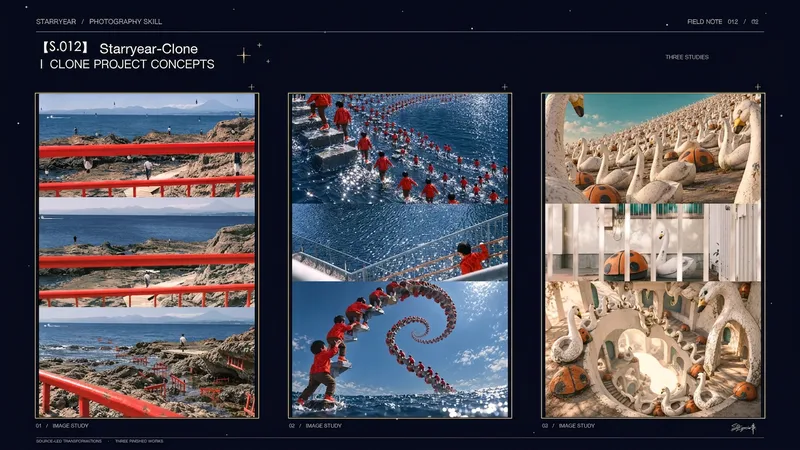
Image[S.012] Year Clone · Photo
Turn one photo into a borderless vertical triptych: the center preserves an unaltered crop of the original image as clear evidence of the scene, while the top and bottom each clone and invert a different subject from the photo. The result is a surreal image rooted in the original environment. The top panel can focus on a primary subject such as a person or animal, while the bottom panel works well with boats, buildings, railings, landmarks, or other clearly structured objects. Each generated area retains one recognizable subject at a clear scale, while allowing smaller inverted forms to blend into the foreground, background, water, rocks, roads, or building edges. The original scene’s lighting, perspective, occlusion, materials, and depth of field are maintained. Ideal for photographic collages with separately duplicated and inverted people and objects, source-photo-driven surreal triptychs, and visual experiments that preserve features such as landmarks, mountains, and skylines. The final output is a single vertical 2:3 image with no text, border, watermark, or decorative title.
 Image
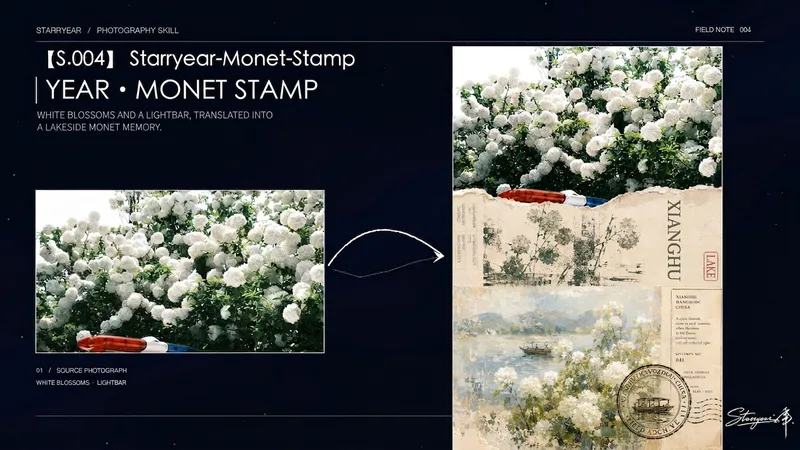
ImageS.004 Starryear Monet Stamp
Turn a travel, landscape, architecture, street, or quiet documentary photo into a collectible-feeling vertical 2:3 “Starryear · Monet Stamp” travel archive artwork. The image preserves the real scene and color evidence from the photo, transforms recognizable subjects, structures, and visual cues into exclusive symbolic marks, and reimagines them as a new memory scene with Monet-inspired light and brushwork. Each photo gains a distinctive sense of place and visual narrative. The finished piece combines photographic evidence, symbolic marks distilled from the source image, and a “Monet memory,” paired with a narrow vintage-paper information panel and a circular postmark generated from the current photo. The location name is based only on what the user provides or what the photo can support, avoiding invented geographic details. The marks, palette, reconstructed composition, and scene identification also change with the original photo rather than applying a generic badge or fixed retro color scheme. Ideal for travel keepsake posters, destination visual archives, personal photography collections, and artistic photo works with a stamp-like feel. Each output is a complete finished piece that preserves the photo’s authenticity while giving it an independent symbolic quality and painterly memory of light and shadow. It is not intended for creating without an original photo, applying an ordinary Monet filter, or making generic decorative designs unrelated to the photo’s content.
 Image
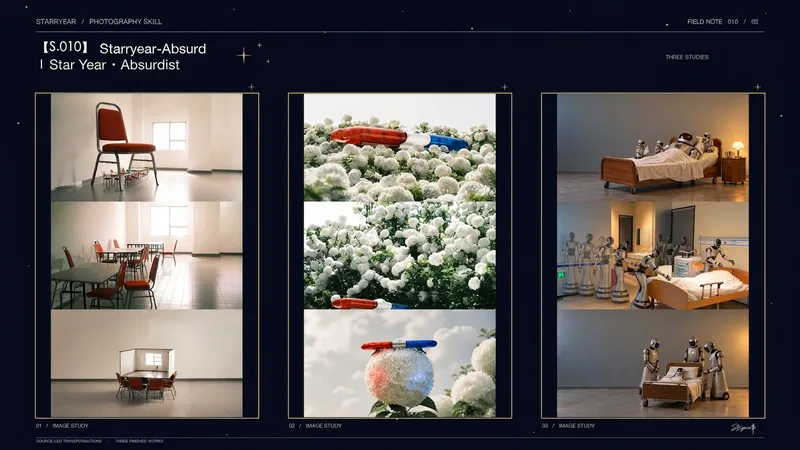
ImageS.010 · Starryear Absurdist
Turn one photo into a vertical absurd triptych that uses the original image as visual evidence: the top panel presents a scale-shifted absurd scene, the middle preserves the original photo with a horizontal crop, and the bottom forms a return or causal loop from the same absurd relationship. The final image combines three equal-width landscape 16:9 panels vertically with no gaps, creating an exact 16:27 composition without borders, text, or watermarks. The generated top and bottom panels develop new relationships only from the people, animals, objects, actions, quantities, colors, and lighting in the photo. They preserve important identifying features and recognizable outlines, using a spacious, restrained real-world or puppet-theater aesthetic. The middle panel uses only the original photo pixels, with orientation correction, proportional scaling, and conservative cropping where necessary. It is not redrawn, retouched, or filled in, ensuring that it remains a reliable record of the original image. Ideal for vertical absurd triptychs with the original image in the middle, photo-based derivative art, and surreal posters with visual narratives. It is not intended for ordinary filters, unrelated fantasy scenes, dense collages, or layouts that redraw the middle evidence photo.
 Image
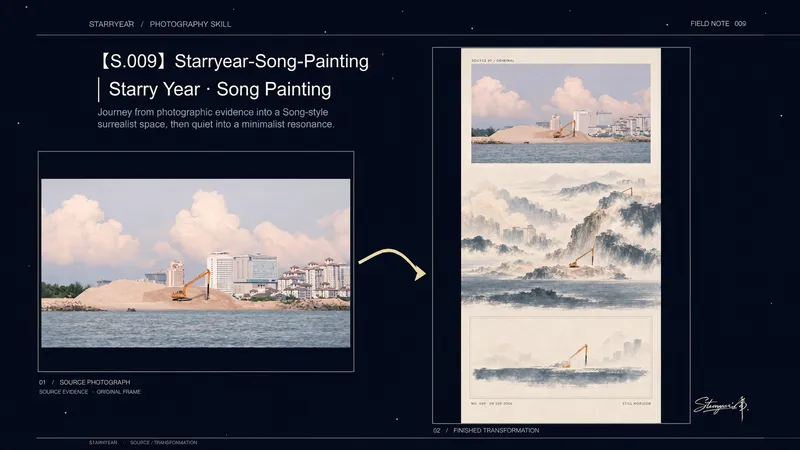
Image【S.009】Song Art · Starryear
Turn a single photo into a vertical editorial art poster, guiding the same visual structure through three progressively quieter modes of looking: “evidence, reconstruction, and afterglow.” The untouched original photo remains at the top as visual evidence. In the middle, space is reorganized through the Northern Song landscape concepts of high distance, deep distance, and level distance, transforming the subject, direction, repeated forms, and negative space into a textured, expressive surreal scene. At the bottom, the image is distilled into a restrained structural afterimage, brought to a close with warm paper, a fine frame, and a few pale color echoes. The complete work preserves the photo’s key compositional relationships while gradually reducing scale, layering, density, and narrative, creating a continuous viewing experience from concrete imagery to expressive interpretation and then minimalism. It is suited to contemplative triptychs, photo translations in the context of Song painting, exhibition posters combining photography and contemporary art, and vertical publications centered on negative space and visual storytelling. The result is one complete, unified tall poster—not an ordinary filter, a photo redraw, or three side-by-side files.
 Image
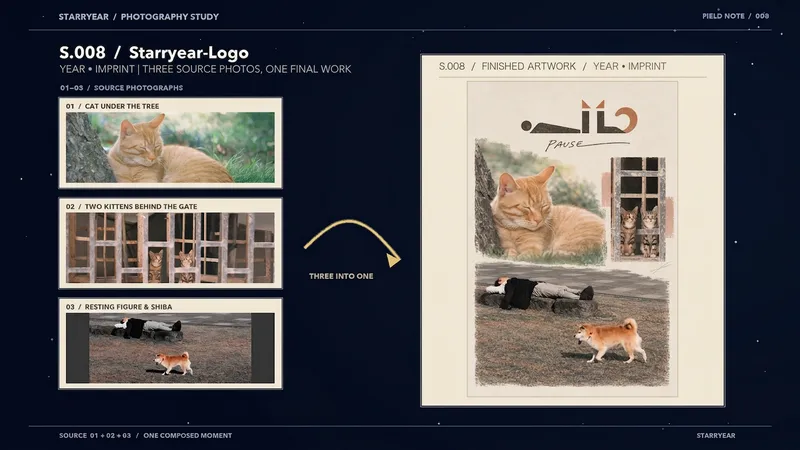
Image【S.008】Imprint
Fuse 2–5 photos into a complete 2:3 vertical visual brand poster, making the photographic content the main visual and extracting a compact, recognizable visual symbol from the photos themselves. Ideal for photographers, visual projects, art exhibitions, and brands that need a distinctive visual identity—for image branding, photography brand posters, and series covers. The work integrates multiple photos through asymmetrical composition, layered cropping, contour relationships, and negative space. It avoids ordinary collages or evenly divided panels, allowing different scenes to form one cohesive visual concept. The poster includes a simple English wordmark and a Brand Symbol related to the photos’ forms, colors, and structure. Together, they act as restrained identity signatures that connect naturally with the imagery rather than appearing as separate stacked logos or titles. The final output is a clean, presentation-ready poster suitable for display and sharing. It preserves the authentic characteristics of the photos while extracting the symbol’s primary colors and visual cues from the source images. Only the necessary English wordmark is retained—no Chinese text, explanatory copy, dates, or unnecessary decoration—making it suitable for creators who want to turn multiple images into a distinctive brand visual.
 Image
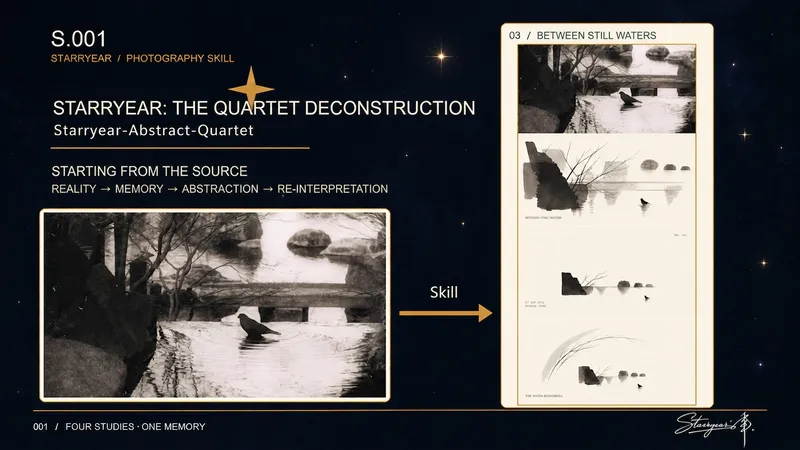
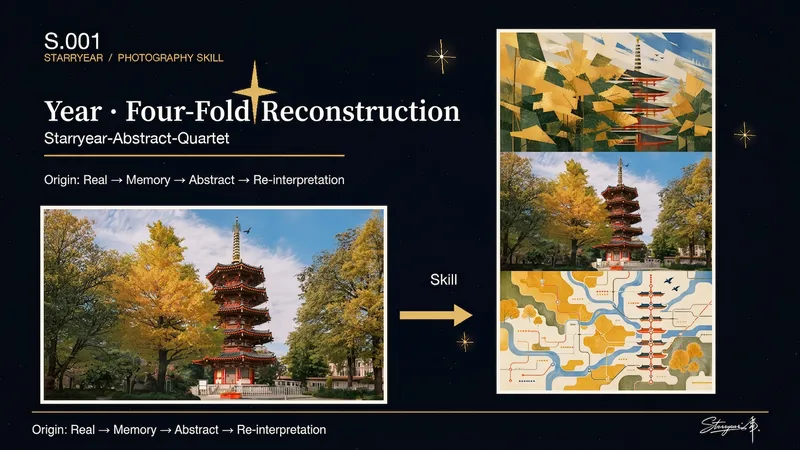
Image[S.001] Starryear Photo Quad
Turn one of your own photos into a vertical four-panel artwork: the top panel preserves the original as “evidence,” while the three panels below use the same warm-white, ivory negative-space language to let the scene gradually contract, simplify, and retreat into quiet like a memory—from reality, to fragments of local memory, to sparse structural essence, and finally to a quiet trace. Abstraction appears only as local “visual islands” rather than filling the frame. Key anchors from the photo, left-right relationships, light direction, and emotional tone remain intact, so the style comes from changes in information density and the way memory is expressed—not from applying a filter or redrawing the scene. The default output is a seamless 1:2 vertical four-panel composition with four equal-height sections, without titles, dates, numbering, signatures, or watermarks. It works well for ivory negative-space photo quads, an original photo paired with three abstract works from the same series, and surreal abstraction derived from the source image. You’ll receive the finished image and the image prompts actually used. If you only want prompts, revision suggestions, or a visual review, you can specify that directly. This is not suited to photography filters, literal redraws, ordinary collages, or fantasies unrelated to the source.
 Image
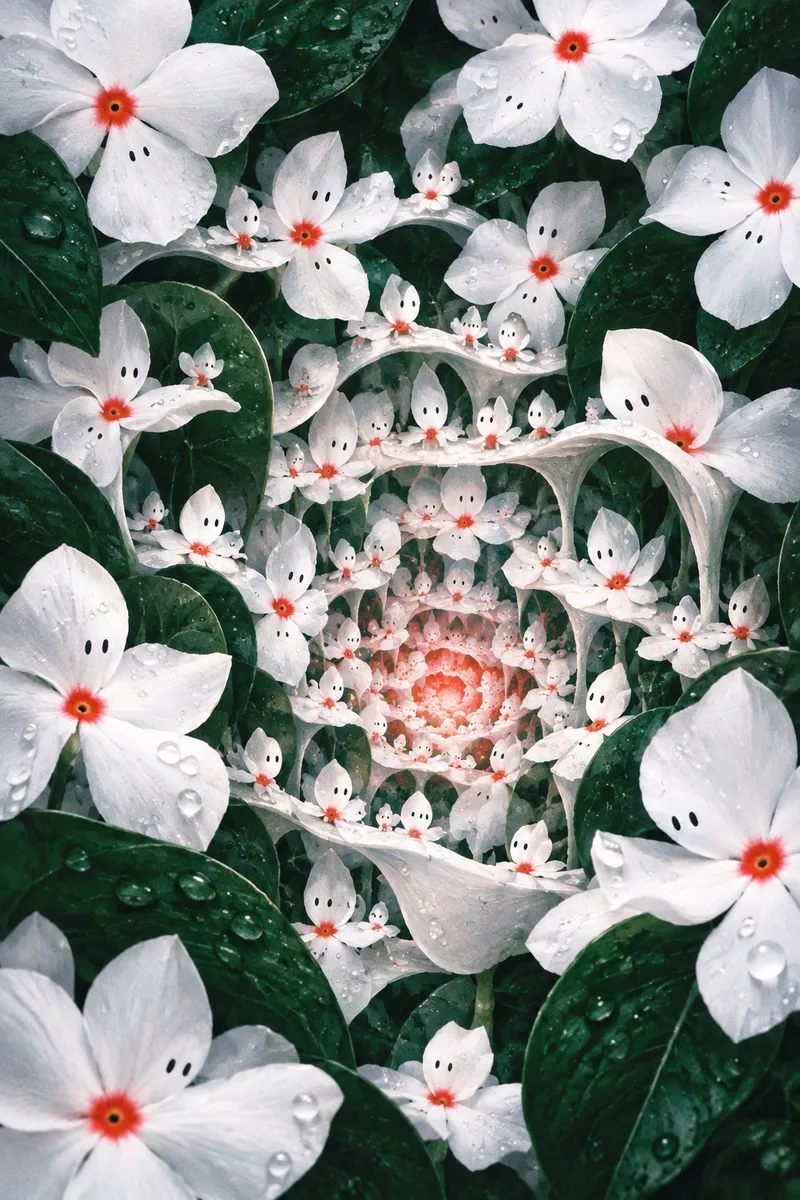
Image[S.007] Eye Eyes
Turn a single photo into a unique vertical “eye world” artwork: the original photo fills the entire canvas, preserving the subject, colors, and lighting, while the center contains a watercolor scene reimagined from the photo’s content. The photo and the painted world echo one another, making the embedded scene feel like an impossible space opening inside reality rather than a simple overlaid illustration. The central scene translates the objects, materials, and group relationships in the photo into hand-drawn living forms with pairs of little eyes. Recursive nesting, shifts in scale, deep corridors, and self-containing spaces create a cute, clear, quiet, and slightly eerie atmosphere. Lightweight, luminous watercolor and semi-transparent gouache textures keep the image airy, avoiding gore, darkness, muddiness, and unrelated elements. The final result is a flat vertical artwork suited for collecting, display, or visual experimentation.
 Image
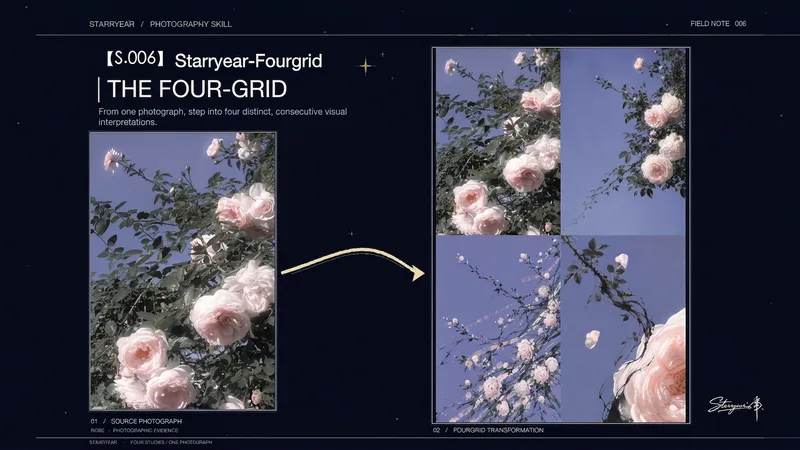
ImageS.006 · Starryear Four-Grid
Turn a single photo into a vertical 2:3 ink four-panel artwork. The original image remains as the top-left panel, while three distinct visual expressions extend from the photo's own colors, compositional relationships, motion paths, and spatial rhythms. The final work is not a standard collage or four filters, but a continuous transformation from photographic evidence to poetic memory, dot-and-line rhythm, and surreal space. The second panel distills the photo's atmosphere in a semi-abstract, moist, and subtly veiled style. The third transforms observable directions, intersections, repetitions, and variations in density into restrained dot-and-line structures, moving beyond the outlines of specific objects. The fourth preserves the original image's spatial grammar and layering, replacing real objects with photo-derived folds, interfaces, passages, or other non-representational forms to create a surreal world whose source remains recognizable. Colors and visual features are extracted anew from each uploaded photo, avoiding fixed themes, palettes, or compositions. Use it to create ink four-panel artworks, one-photo-into-four transformations, source-image abstractions, and editorial-style visual posters. The result is a complete, unified vertical artwork with no text or borders.
 Image
ImageTriple Memory · Starryear
Turn a single user-uploaded photo into a triptych with continuous visual logic: the top panel draws the subject or core space inward, distilling it into an abstract form that is stable, concentrated, and still retains its identity; the middle panel preserves the real original photo as irreplaceable photographic evidence; the bottom panel releases the photo’s colors, contours, textures, and spatial relationships outward, creating a dispersed, transformed, and more surreal new setting. The final image reveals the difference between convergent and diffuse abstraction while allowing viewers to trace their connection to the original photo. This Skill works with single photos of people, animals, objects, architecture, interiors, or natural scenes. The abstract results develop from the photo’s own subject relationships, compositional direction, color relationships, and visual rhythm rather than applying fixed patterns, generic filters, or unrelated decorative styles. It pays particular attention to the number, identity, orientation, and proportions of subjects, as well as important spatial relationships, ensuring that the middle panel remains the original photo without replacement. You’ll receive a finished source-driven triptych, along with a brief summary of the key visual DNA used for the two abstract panels above and below, making it easier to understand which clues the convergent and diffuse treatments extracted from the original image.
 Image
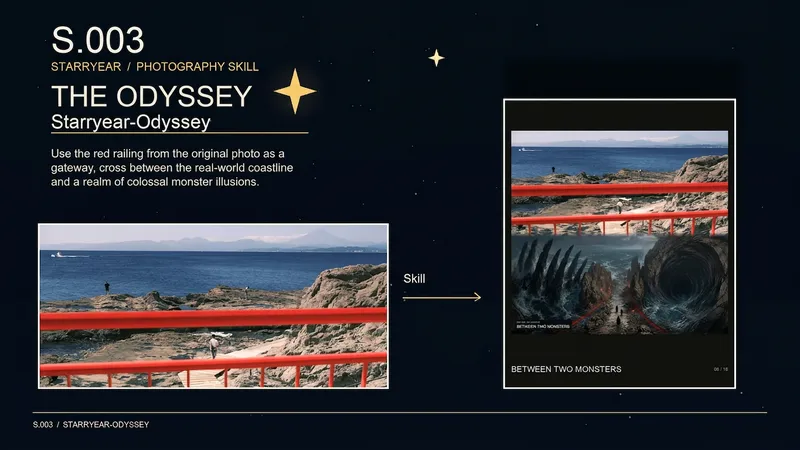
ImageS.003 Year·Odyssey·Starryear
Transform a real photo into an epic, narrative Odyssey diptych: the original photo is preserved in full at the top, while the lower panel becomes a contemporary abstract scene that responds to the photo’s visual evidence. The work extracts clues from people, animals, quantities, poses, spatial structure, direction, light, and color, then selects the Odyssey episode that best fits—making the photo a record of reality and the lower panel a mythic interpretation. The abstract lower panel does not copy the photo, apply a filter, or depict a literal mythological illustration. Instead, it incorporates one or more recognizable episode motifs through scale, paths, enclosure, repetition, pressure, and material weight—for example, the Cyclops’ opening, the Sirens’ lure, Charybdis’s whirlpool, Scylla’s multiple attacks, Penelope’s textile, or Odysseus’s return. The scene carries forward the photo’s dominant colors, shadows, and highlights, while its natural light, firelight, or hazy liminal atmosphere is selected according to the original lighting. The result maintains a clear, restrained, tactile “clean epic” visual style. The final result is a complete, vertically connected art page with a concise archive number, date, and English episode title. A short note explains the selected chapter, the evidence found in the photo, the mythic motif, and the color direction. It is suited to mythology-themed photographic archives, visual studies of literature, contemporary art projects, or personal image works centered on return and journey.