![[S.012] Year Clone · Photo](https://cdn.youmindassets.com/user-files/66c1a09eb3f6c308806b4733968134320faa04ec3c2117a98a1703632a47d6af)
[S.012] Year Clone · Photo
A surreal inverted triptych from one photo
[S.012] Year Clone · Photo
A surreal inverted triptych from one photo
Showcase
Description
Turn one photo into a borderless vertical triptych: the center preserves an unaltered crop of the original image as clear evidence of the scene, while the top and bottom each clone and invert a different subject from the photo. The result is a surreal image rooted in the original environment. The top panel can focus on a primary subject such as a person or animal, while the bottom panel works well with boats, buildings, railings, landmarks, or other clearly structured objects. Each generated area retains one recognizable subject at a clear scale, while allowing smaller inverted forms to blend into the foreground, background, water, rocks, roads, or building edges. The original scene’s lighting, perspective, occlusion, materials, and depth of field are maintained. Ideal for photographic collages with separately duplicated and inverted people and objects, source-photo-driven surreal triptychs, and visual experiments that preserve features such as landmarks, mountains, and skylines. The final output is a single vertical 2:3 image with no text, border, watermark, or decorative title.
Recommended by
淡苍
Why we love this skill
Creates borderless inverted triptychs that balance visual evidence and illusion, using two distinct subjects with layered clones grounded in realistic lighting, perspective, and photographic detail.
Best for
Creators who want to turn travel, portrait, or scene photos into surreal photographic works that preserve environmental clues.
How to use this Skill
Provide your input
Provide a photo featuring people, animals, buildings, boats, or other clearly defined subjects.
Run the Skill
縮小、复制并倒置照片中的两个不同主体,将其与原场景的光线、透视和环境融合;中部保留原图裁剪。
Review your result
Generate a borderless vertical 2:3 triptych: the original scene in the center, with surreal inverted images of two subjects above and below. No text, watermark, or decorative title.
Related Skills
View all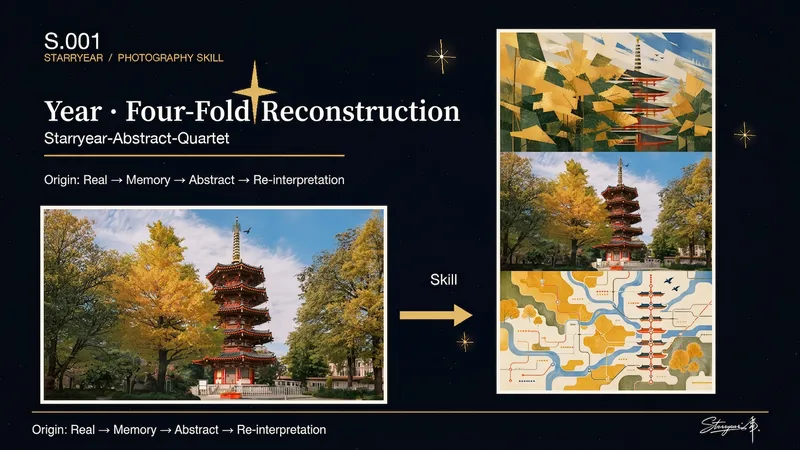 Image
ImageTriple Memory · Starryear
Turn a single user-uploaded photo into a triptych with continuous visual logic: the top panel draws the subject or core space inward, distilling it into an abstract form that is stable, concentrated, and still retains its identity; the middle panel preserves the real original photo as irreplaceable photographic evidence; the bottom panel releases the photo’s colors, contours, textures, and spatial relationships outward, creating a dispersed, transformed, and more surreal new setting. The final image reveals the difference between convergent and diffuse abstraction while allowing viewers to trace their connection to the original photo. This Skill works with single photos of people, animals, objects, architecture, interiors, or natural scenes. The abstract results develop from the photo’s own subject relationships, compositional direction, color relationships, and visual rhythm rather than applying fixed patterns, generic filters, or unrelated decorative styles. It pays particular attention to the number, identity, orientation, and proportions of subjects, as well as important spatial relationships, ensuring that the middle panel remains the original photo without replacement. You’ll receive a finished source-driven triptych, along with a brief summary of the key visual DNA used for the two abstract panels above and below, making it easier to understand which clues the convergent and diffuse treatments extracted from the original image.
 Image
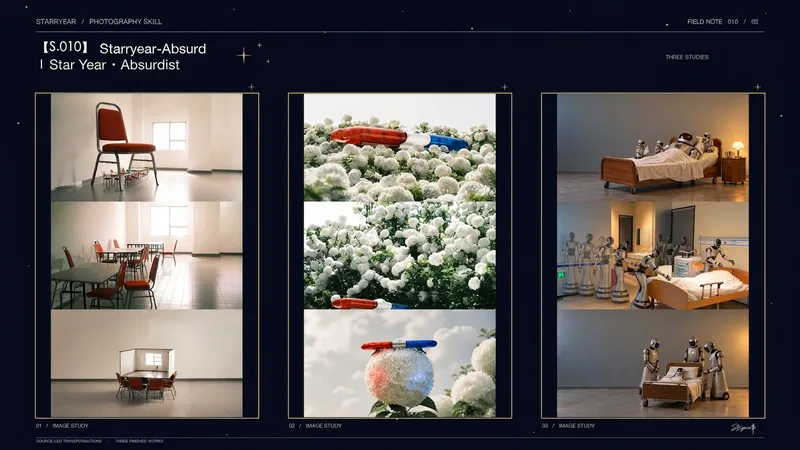
ImageS.010 · Starryear Absurdist
Turn one photo into a vertical absurd triptych that uses the original image as visual evidence: the top panel presents a scale-shifted absurd scene, the middle preserves the original photo with a horizontal crop, and the bottom forms a return or causal loop from the same absurd relationship. The final image combines three equal-width landscape 16:9 panels vertically with no gaps, creating an exact 16:27 composition without borders, text, or watermarks. The generated top and bottom panels develop new relationships only from the people, animals, objects, actions, quantities, colors, and lighting in the photo. They preserve important identifying features and recognizable outlines, using a spacious, restrained real-world or puppet-theater aesthetic. The middle panel uses only the original photo pixels, with orientation correction, proportional scaling, and conservative cropping where necessary. It is not redrawn, retouched, or filled in, ensuring that it remains a reliable record of the original image. Ideal for vertical absurd triptychs with the original image in the middle, photo-based derivative art, and surreal posters with visual narratives. It is not intended for ordinary filters, unrelated fantasy scenes, dense collages, or layouts that redraw the middle evidence photo.
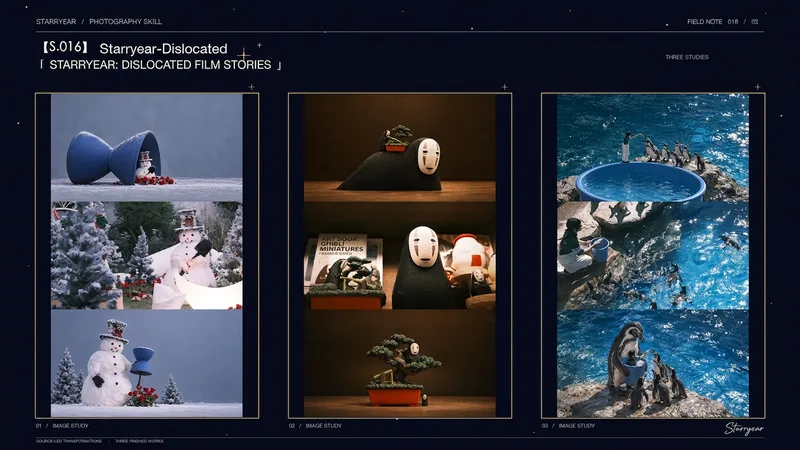
S.016 · Displaced Film
[Premium] Starryear premium Skill series Turn one photo into a vertical surreal triptych: the original image remains in the center, while the scenes above and below extend its characters, objects, poses, colors, and spatial cues into closely related surreal settings. The same subjects undergo absurd yet coherent changes in scale, support relationships, or cause and effect. Ideal for creating “original image in the middle” displaced-film compositions, photographic narratives, and visual concept art—not ordinary filters, collages, or fantasy scenes completely detached from the source photo. The central panel preserves the photo’s authentic texture, with only the necessary horizontal composition adjustments. The upper and lower panels use restrained, spacious cinematic scenes or a pantomime-stage atmosphere, emphasizing one clear visual relationship and creating below an echo or loop that responds to the story above. The final output is a borderless vertical triptych with equal-height upper and lower panels, an overall 16:27 aspect ratio, and a strong sense of photographic evidence and surreal narrative.
Information
- Version
- v5
- Last updated
- Runtime credits
- Usage-based
- Models
- Auto
- Use cases
- Images & design
- What you get
- Image
- Visual styles
- PhotorealisticSurrealist