哈哈hvhh
 Write
One-Click Ready-to-Use Copy
An essential tool for social media creators: a Chinese conversion copywriting assistant that generates testable drafts across multiple platforms. The hardest part of copywriting isn't writing words, but figuring out where to start when staring at a product: listing features bores readers, and brainstorming headlines goes nowhere. This workflow first clarifies goals, audiences, target actions, and core selling points, then selects a primary angle from pain points, desires, convenience, or curiosity, structures the content using frameworks like AIDA, PAS, or FAB based on the channel, and finally delivers two to five variants at once with separate headlines, body text, and CTAs for easy comparison. Tailored formats are available for RED, Moments, short video scripts, official accounts, e-commerce details, landing pages, ads, and cross-border copy, plus a brand-approved version ready for management. This complete prompt template comes with clear Chinese instructions so beginners can easily handle topics, headlines, and selling points. However, users should still verify selling points, evidence, and compliance before publishing.
 Write
Academic Paper Writing
Provides writing support for Chinese humanities academic papers from topic conception to submission self-check, suitable for degree papers, journal papers, conference papers, proposal reports, and research plans in fields such as Chinese studies, history, philosophy, and literature. Whether you are in the process of determining research directions, planning paper outlines, writing the main text, revising the first draft, or preparing for submission, you can get assistance tailored to your current stage. It can help you propose feasible topics, build paper structures at the chapter, section, and subsection levels, sort out research backgrounds, research questions, methods, and expected contributions, and organize literature reviews, analyze research contexts, and identify research gaps based on the materials you provide. During main text writing, it can also optimize paragraphs around arguments, evidence, and logical relationships, provide more standardized academic Chinese expressions, and mark positions where literature or materials need to be supplemented. For footnotes, references, title hierarchies, punctuation, and paragraph formatting, it can also organize and check; the revision stage covers language, logic, format, and academic integrity. All literature, authors, page numbers, data, and academic viewpoints are based on the real materials you provide, without fabricating information, and missing content is clearly marked to help you complete Chinese academic writing more securely.
WeChat Viral Article Creator
Transform a topic into an in-depth article tailored for WeChat Official Account publishing, complete with cover images, formatting, and draft saving. It combines real-time trends and business context to write around clear viewpoints, supported by concrete business cases, factual data, and progressive analysis to help you produce insightful and readable long-form content. The writing style is concise, powerful, and viewpoint-driven, starting from phenomena or stories to extract core judgments and concluding with clear conclusions and actionable advice. The body text is structured around multiple sub-arguments with clear paragraphs and hierarchical headings, aiming for a length of 3,000 to 5,000 words, suitable for business trends, management thoughts, career growth, and brand marketing. Once the content is ready, it generates a matching cover image, applies basic formatting, and saves the article as a WeChat draft so you can log in and review or publish it easily. The final piece avoids unnecessary hashtags, excessive emojis, or formulaic engagement phrases at the end.
Xiaohongshu Post Generator
An automated workflow for Xiaohongshu content creation, offering a one-stop automated solution from topic selection and drafting to formatting and publishing, helping you quickly produce high-quality Xiaohongshu content.

A-Share Watchlist Manager
Manage your A-share watchlist at any time and quickly review recent market performance. You can add or remove Shanghai, Shenzhen, and STAR Market stocks using stock codes, view your current watchlist, or clear the entire list when needed, making it easy to track stocks of interest. When checking market data, the system summarizes key performance indicators such as stock codes, names, and price change percentages, while providing links to stock details to help you grasp the overall picture before diving deeper. Market data comes from Tonghuashun, making it suitable for obtaining recent market information, though it may have a 1–3 minute delay and requires an internet connection. Whether you are organizing a personal stock watchlist, checking recent performance during trading hours, or periodically reviewing focused stocks, this skill makes A-share watchlist management and market overviews more straightforward.
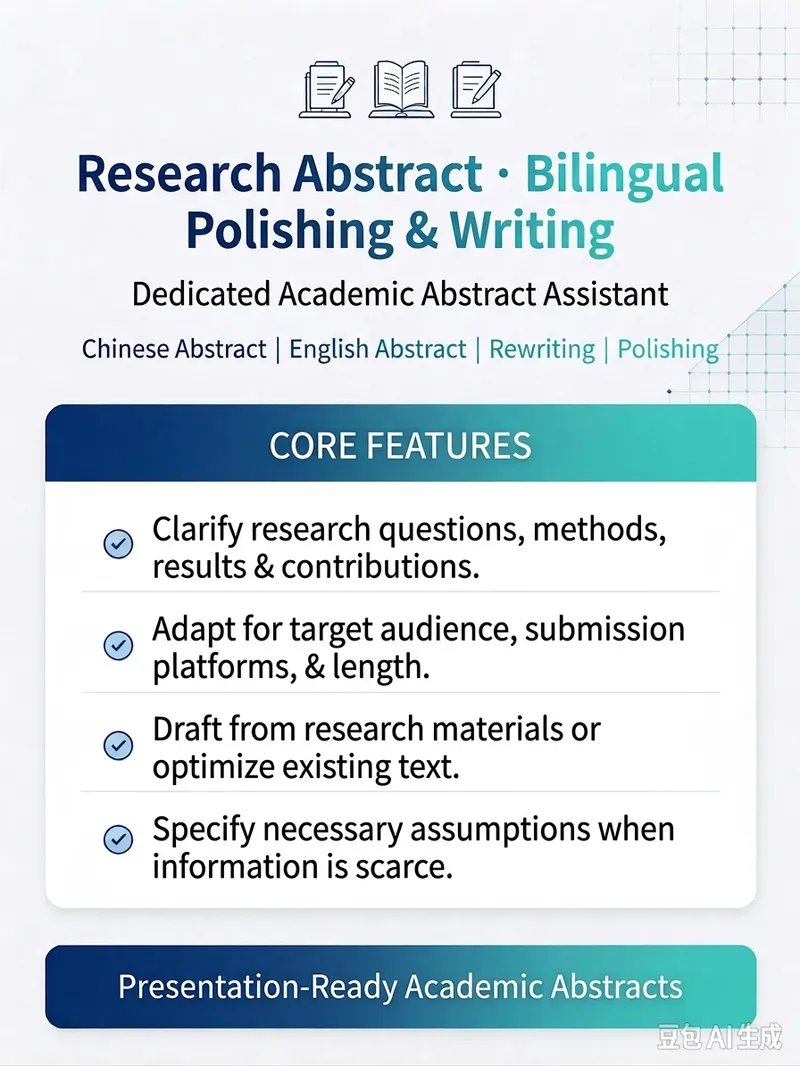
Bilingual Paper Abstract Writer
Designed for paper abstracts and academic writing scenarios, this helps you write, rewrite, and polish Chinese or English abstracts, making research questions, methods, results, and contributions clearer, more accurate, and aligned with academic contexts. Whether drafting from research materials or optimizing existing text, it adapts to your target audience, submission platform, length, and language style to produce ready-to-use versions, clearly stating necessary assumptions when information is insufficient. Beyond bilingual abstracts, it supports structured writing for introductions, literature reviews, methodology, results, discussion, and grant proposals. When handling complex or lengthy materials, it first outlines headings, core arguments, and paragraph relationships before drafting the main text, reducing logical leaps, redundancy, and empty clichés. During revisions, it explains key adjustment directions to help you continue refining your work. Outputs focus not only on language fluency but also on verifying factual basis, citation and copyright risks, academic expression, sensitive phrasing, and compliance boundaries, while distinguishing facts, opinions, speculations, and citations. For legal, medical, financial, or other high-risk research, it serves as a writing draft and review checklist to help you spot issues before submission, publication, or further revision.
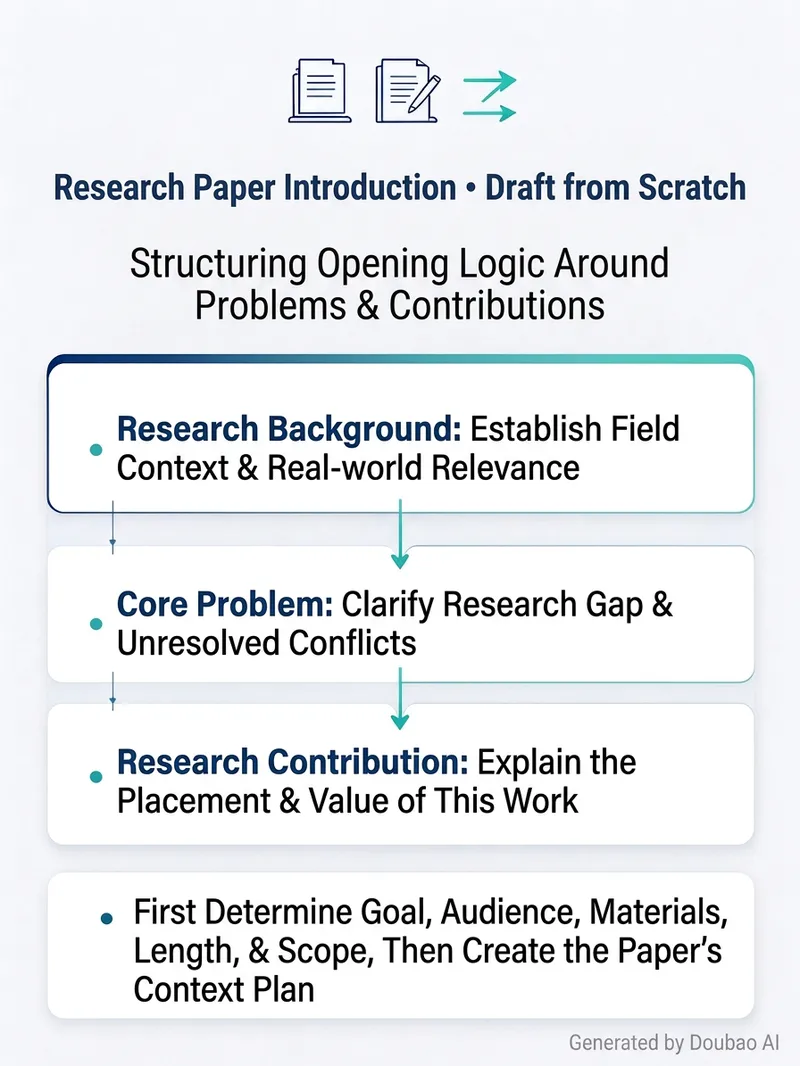
Related Work Review Writing
Helps you organize scattered academic literature into a logically clear related work review that supports your paper's positioning. It is suitable for designing review frameworks during topic selection, as well as for rewriting, polishing, reviewing, and optimizing academic expression in existing drafts. It focuses on mapping out research trajectories, comparing different methods and conclusions, and clarifying existing research gaps and your entry point. You can provide your research topic, literature materials, target audience, length, and writing requirements to receive a ready-to-use review draft, structural plan, or revised version. The content carefully distinguishes facts, opinions, speculations, and citations to reduce literature piling, redundant expressions, and vague summaries, creating natural comparisons and progressive relationships between paragraphs. In addition to the main text, it can assist in checking logical coherence, argumentative completeness, language style, factual basis, citation and compliance risks, and point out key issues and subsequent revision directions. Suitable for academic papers, research grant applications, and other writing scenarios that require a systematic presentation of research background and domain progress.
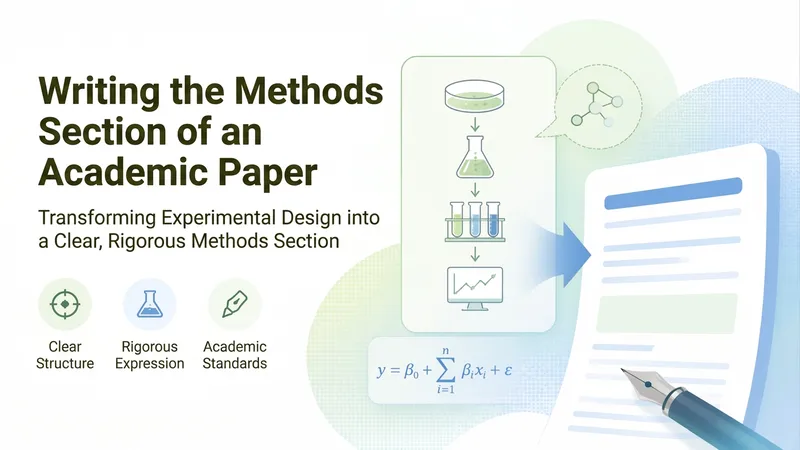
Academic Methodology Writer
Helps you clearly and rigorously write and refine the methodology section of your academic papers, suitable for experimental research, empirical analysis, algorithm implementation, questionnaire surveys, case studies, and more. Whether drafting from scratch, rewriting based on research materials, or polishing existing text for academic tone, it covers research design, data sources, experimental procedures, variable definitions, model formulas, parameter settings, and implementation details to enhance the reproducibility and logical coherence of your methods. You will receive a structural plan tailored to your research objectives and target audience, along with ready-to-use text that can be generated in more concise, formal, or conservative versions as needed. For existing manuscripts, it helps identify missing steps, confused concepts, logical gaps, vague expressions, redundancy, and insufficient factual backing, while distinguishing between facts, speculations, and citations to avoid fabricating data or literature. Suitable for drafting first drafts, pre-submission revisions, peer-review responses, and organizing research proposals. When information is incomplete, it clarifies necessary assumptions and provides suggestions for supplemental materials, revision priorities, and quality checks. It also highlights matters requiring further confirmation by professionals when dealing with academic compliance or other high-risk content.

Discussion: Meaning & Future
Build a clear, ready-to-use discussion section based on your research questions, results, and evidence. It highlights research significance, explains findings, outlines limitations, and suggests well-founded future directions. Ideal for drafting, rewriting, polishing, and reviewing discussion chapters in theses, journal articles, and research papers. You can provide your research abstract, methods, results, existing drafts, or fragmented notes to receive a tailored structural plan and academic phrasing. It helps distinguish facts, opinions, speculations, and citations to reduce repetition, vague statements, and overstatements while keeping conclusions consistent with your evidence. For existing text, it also reviews argumentative logic, paragraph transitions, language style, factual basis, and academic compliance risks, while outlining key revision directions. When information is incomplete, it highlights necessary assumptions and missing details to help you improve your discussion rather than fabricating data, citations, or conclusions.
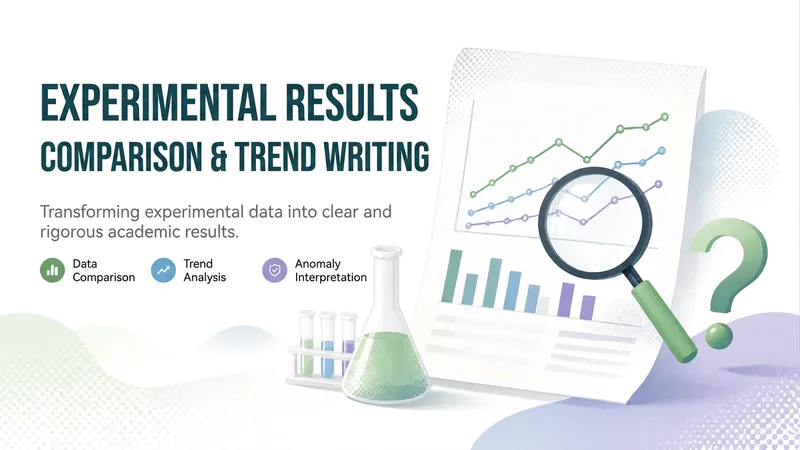
Experimental Results Writer
Help you turn experimental data into clear, rigorous result statements that can be directly used in academic papers, especially suitable for experimental results, inter-group comparisons, trend changes, and abnormal phenomenon analysis. Whether drafting result paragraphs from data or rewriting, polishing, and reviewing existing text, it can revolve around research goals and reader needs, reduce vague descriptions, accurately distinguish facts, viewpoints, speculations, and citations, and enhance the credibility and readability of the paper. You can obtain structured writing plans, ready-to-use main text or revised versions, and check suggestions regarding logical cohesion, language accuracy, repetitive expressions, factual basis, and academic compliance. For incomplete information, the content will explicitly state necessary assumptions to avoid fabricating data, falsifying citations, or exaggerating experimental conclusions; for high-risk research scenarios involving medicine, law, finance, etc., it will also mark parts that require further confirmation by professionals. Suitable for experimental result writing in paper result chapters, abstracts, discussion sections, scientific research reports, and project application materials. Whether you need to describe significant differences, explain trend changes, sort out abnormal results, or turn a first draft into more robust academic expressions, you can get clear revision directions and subsequent improvement suggestions.
Academic Paper Introduction
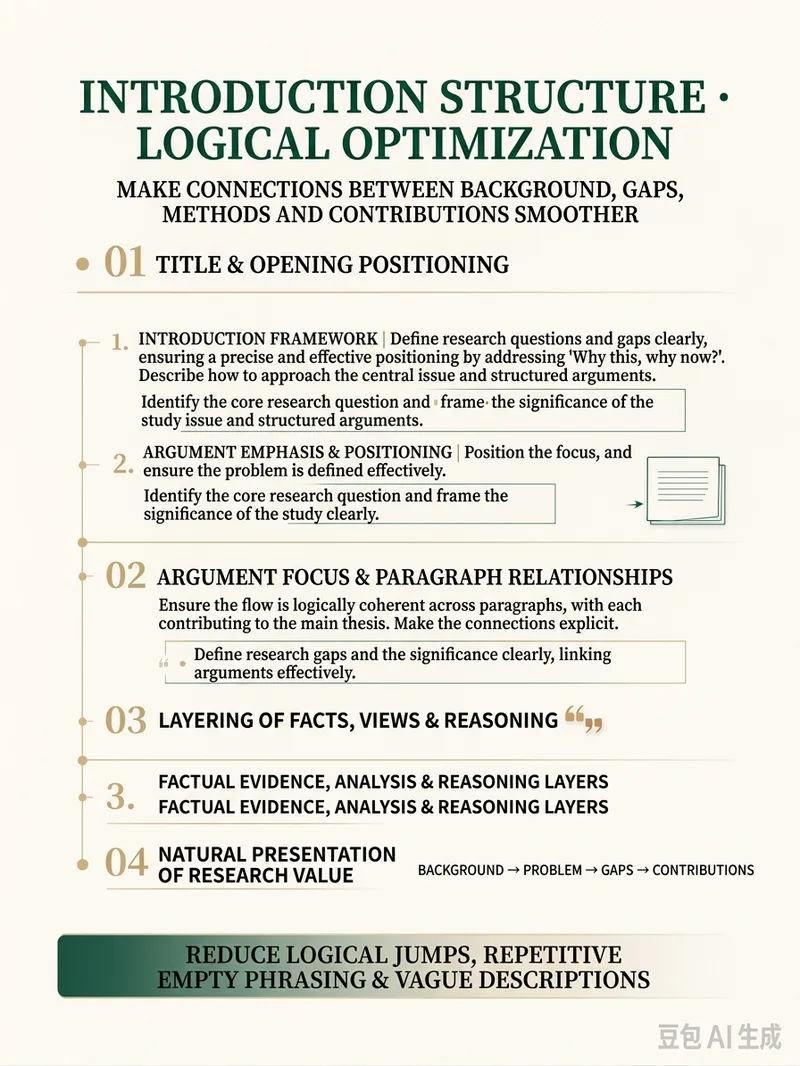
Helps you write logically clear, academically appropriate paper introductions centered on research background, core questions, literature gaps, and contributions. Whether drafting from scratch, rewriting, or addressing reviewer comments, it first organizes your research goals, target audience, source material, length, and tone before generating a tailored introduction plan. You will receive a clear heading or paragraph structure, ready-to-use introduction drafts, and reliable alternative academic phrasing. For existing text, it reviews logical transitions, eliminates filler words, distinguishes facts from speculation, checks citation backing, and highlights research value with explanations for key changes. Suitable for writing and revising introductions in academic papers, research reports, and funding proposals. It clarifies assumptions when information is insufficient and handles high-risk topics like data, citations, medical, legal, or professional content strictly using reliable materials without fabricating facts, faking citations, or guaranteeing review approval.
 Image
Classic of Mountains and Seas
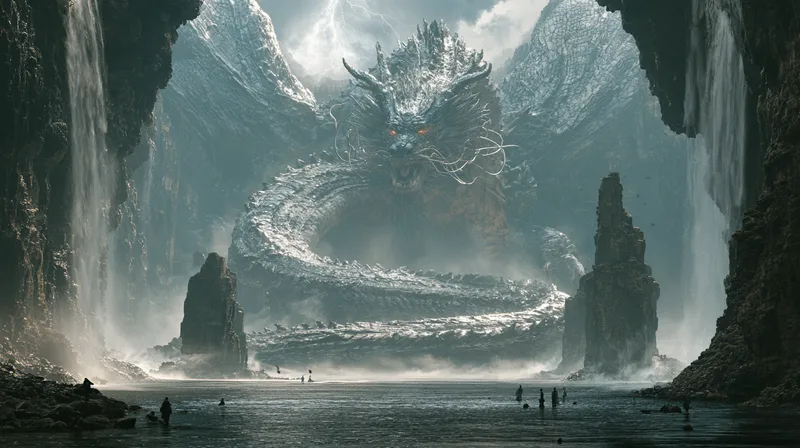
Transform a single scene concept into Classic of Mountains and Seas style mythological image prompts featuring moonlit sea of clouds, celestial palaces, and colossal beasts. Ideal for scenes like beasts descending, ancient people looking up, crowds watching ceremonies, solitary beast portraits, and scenic views. Beast anatomy, colors, and patterns are clearly described based on historical records or user settings to avoid western dragons or generic fantasy creatures. The visuals maintain the oriental textures, fine brushwork, cold-warm lighting, and epic feel of the reference images. Users can specify locations, times, weather, character counts, aspect ratios, and beast actions, or start with a vague idea to flesh out visual details. Outputs can include complete Midjourney English prompts, Chinese explanations, and negative constraints for beast form, character scale, moon disc, color temperature, and architectural style. Sets of prompts with consistent settings can also be generated when needed. For ImageGen, native Chinese prompts without Midjourney parameters are provided. After receiving images, you can refine beast count and structure, character scale, moon position, color, and oriental brushwork based on actual deviations to make subsequent prompts match your expectations.
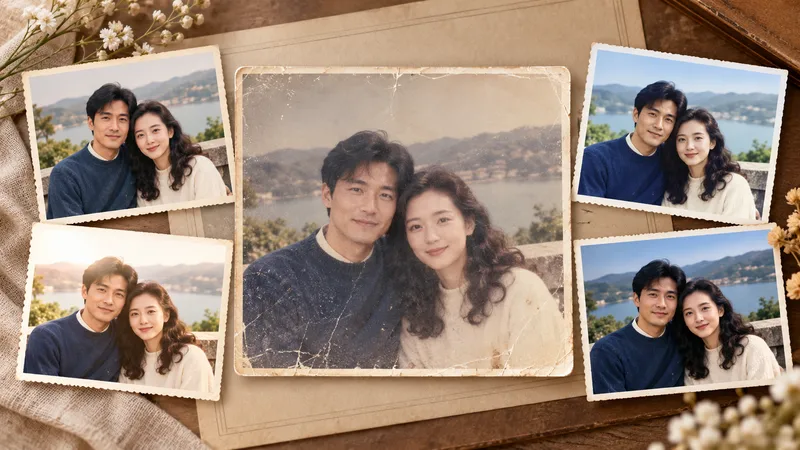
Photo Restoration and Cinematic Enhancement
Transform ordinary, out-of-focus, poorly exposed, faded, or damaged photos into clearer, more textured results ready for sharing and printing. Whether working with portraits, travel landscapes, architecture, interiors, food, products, museum exhibits, old photos, black-and-white images, or scans, it handles light, shadow, color, detail, noise, scratches, and visual depth based on the subject's characteristics while preserving personal identity, object details, architectural structures, text, logos, and historical marks. In addition to faithful and natural restoration, it re-evaluates cropping, aspect ratio, subject size, negative space, perspective, and visual flow to make the image look professionally shot and edited rather than simply brightened or filtered. Landscapes can be enhanced for sky, atmosphere, depth, and cinematic feel; portraits focus on natural skin tones, eyes, hair, and subject separation; architecture maintains realistic lines and textures; exhibits and documents prioritize accurate colors, textures, inscriptions, and details. Old photos undergo dust removal, repair, tonal recovery, and careful colorization, with prudent handling of any inferred reconstruction. Four clearly labeled results are provided by default: natural programmatic restoration, stylized programmatic enhancement, natural AI restoration, and a more impactful AI enhancement, making it easy to compare fidelity and visual presentation. The AI versions also include the optimization prompts used, making it easy to adjust the style or continue creating later.
Vintage Photo Restoration
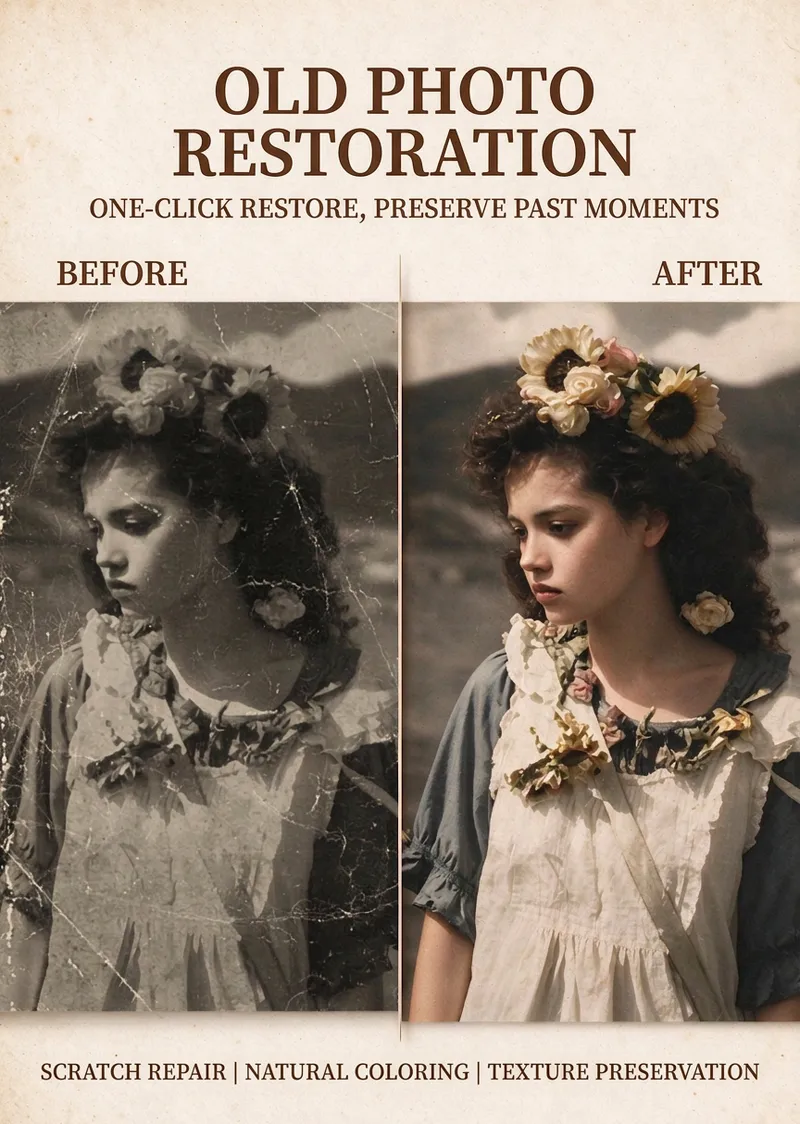
Restore clarity and life to yellowed, black-and-white, or damaged old photos while preserving their original vintage feel, facial features, and authentic memories. It is ideal for family photos, historical images, and old color photos from the 1970s, 1980s, and 1990s. The focus is on repairing scratches, cracks, mold spots, white dots, noise, and mild blur without altering face shapes, facial proportions, expressions, poses, or composition, nor adding extra people or background elements. For photos needing color, the result features a low-saturation, warm, and natural retro tone, presenting credible skin tones, clothing, and environmental colors matching the photo's era. Areas without clear evidence are kept restrained to avoid overly vibrant, heavily beautified, or distorted plastic looks. Clarity enhancement moderately preserves film grain while improving facial features, hair, and fabric textures. Missing or severely blurred details are not arbitrarily invented. After use, you will receive a concise restoration summary and the restored or colored image. You can request further adjustments, such as repairing without coloring, reducing saturation, or fixing damage without enhancing clarity. If faces are severely damaged and unrecognizable, limitations in completing them will be clearly noted.
Novel Scene Image Prompts
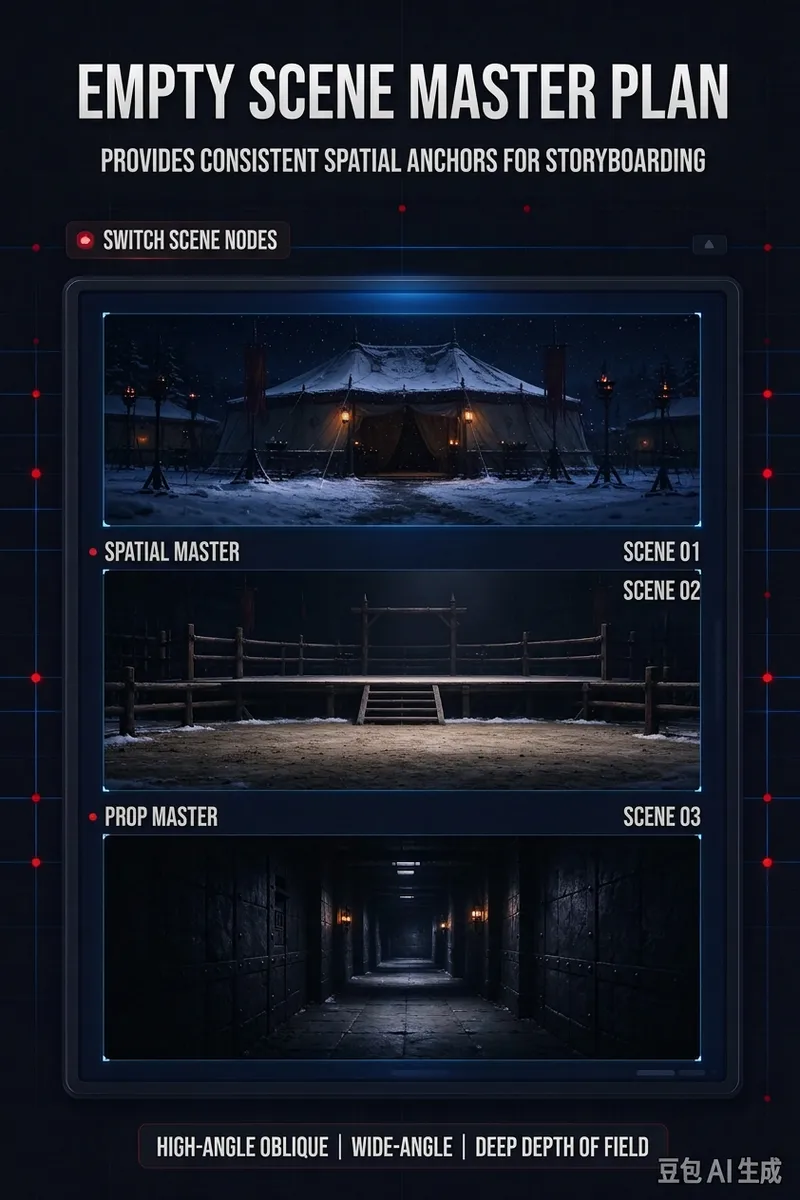
Extract actual scene cuts one by one from novels, scripts, text storyboards, or plot outlines, transforming them into Chinese empty-scene reference prompts ready for AI image generation. Whether dealing with changes in location, time, weather, or the reappearance of the same location in different plot segments, scenes are independently organized in story order to prevent omissions or mismergers, establishing a stable spatial reference for subsequent comic storyboards. Each scene undergoes specific art design tailored to its narrative function, detailing spatial structure, entrances and exits, movement paths, foreground-midground-background layers, key props, visual focus, lighting relationships, materials, colors, and narrative traces, while classifying them as indoor, outdoor, vehicle, or special spaces. Even with limited source text, necessary visual scene information is supplemented. The final output includes a scene overview, overall visual tone, individual scene designs, Chinese image generation prompts, and Chinese negative prompts. Prompts emphasize cinematic high-angle oblique shots, high-angle wide-angle panoramas, 18mm-24mm lenses, deep depth of field, and complete spatial layouts, strictly maintaining empty scenes without characters or animals, making them ideal for cinematic establishing reference images rather than character storyboards, architectural floor plans, or ordinary interior renderings.
Web Novel Breakdown and Writing
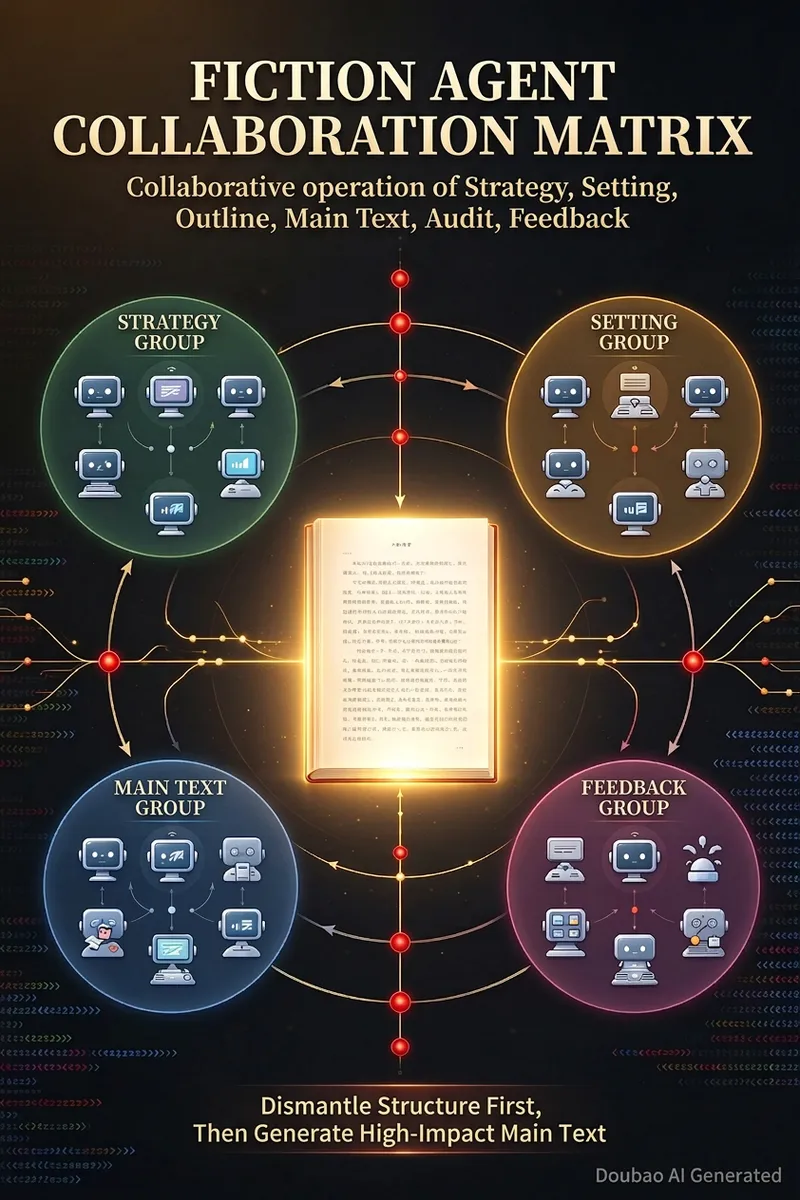
Deconstructs your provided web novel or script into actionable creative directions, developing them into original stories with tight pacing and distinct conflict. It analyzes the original work's overall structure, worldview settings, character relationships, engaging hook progression, foreshadowing, and narrative pacing, extracting useful creative techniques while providing specific advice on building a similar reading experience. During the direction exploration phase, the skill generates five distinct story options with independent development based on the original settings, helping you compare genres, characters, and core conflicts. Once a plan is chosen, it assists in refining outlines, designing high-stakes plots and character interactions, and writing the novel chapter by chapter to maintain coherent plot progression and vivid dialogue emotions. You can set your own total word count for the novel. Upon completing each chapter, it provides the chapter title, a content summary, and word count statistics, confirming your preferences before proceeding. This is well-suited for web novel imitation analysis, original concept generation, script breakdown, and serialized long-form fiction writing.