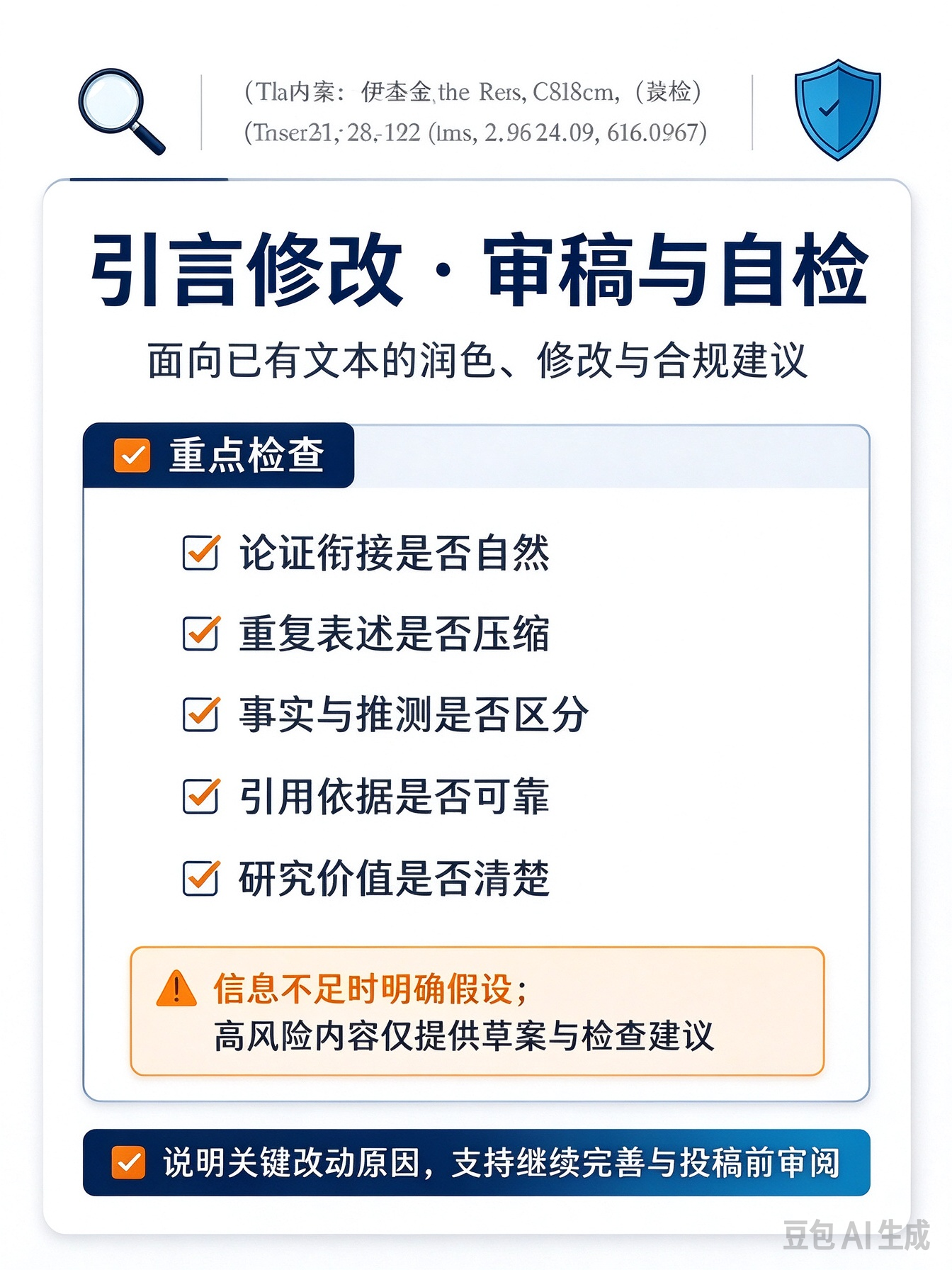
Related Work Review Writing
Synthesize literature, compare methods, and position papers
Related Work Review Writing
Synthesize literature, compare methods, and position papers
Showcase
Description
Helps you organize scattered academic literature into a logically clear related work review that supports your paper's positioning. It is suitable for designing review frameworks during topic selection, as well as for rewriting, polishing, reviewing, and optimizing academic expression in existing drafts. It focuses on mapping out research trajectories, comparing different methods and conclusions, and clarifying existing research gaps and your entry point. You can provide your research topic, literature materials, target audience, length, and writing requirements to receive a ready-to-use review draft, structural plan, or revised version. The content carefully distinguishes facts, opinions, speculations, and citations to reduce literature piling, redundant expressions, and vague summaries, creating natural comparisons and progressive relationships between paragraphs. In addition to the main text, it can assist in checking logical coherence, argumentative completeness, language style, factual basis, citation and compliance risks, and point out key issues and subsequent revision directions. Suitable for academic papers, research grant applications, and other writing scenarios that require a systematic presentation of research background and domain progress.
Best for
Researchers and students who need to write, revise, or review the related work section of academic papers and grant proposals.
How to use this Skill
Provide your input
Provide your research topic, related literature, or existing draft, and specify your target audience, length, writing requirements, and revision focus.
Run the Skill
Analyzes the research trajectory based on your materials, compares different methods and findings, checks logic, evidence, and citations, and optimizes paragraph structure.
Review your result
Receive a ready-to-use or editable related work review, structural plan, and targeted review suggestions, highlighting research gaps and paper positioning.
Related Skills
View all Write
PhD Research Proposal & Review
Transforms research ideas into rigorously structured, clearly argued academic research proposals and literature reviews for PhD applicants across STEM, humanities, and social sciences. You can provide your research topic, core questions, target institutions or advisor directions, and existing papers or materials. The Skill integrates relevant research progress to help organize the theoretical background, current research status, key gaps, and proposed methods, building a targeted research framework for your application. Before formal drafting, it provides a research proposal outline for your confirmation, making it easy to adjust the focus, scope, and length. Once confirmed, it generates a complete proposal of approximately 2,000–4,000 words covering research background, research questions, literature review, methods, timeline, expected contributions, and references, using appropriate academic citation styles and formal register based on your discipline. The content supports Chinese or English output, emphasizing coherent academic discourse, prudent argumentation, and clear research value, while offering diagram suggestions for research frameworks, methodological workflows, or academic impact at key points. The final result is delivered as a Markdown document, accompanied by checklists for structure, citations, and academic expression to facilitate further revision or conversion into Word, PDF, and other formats.
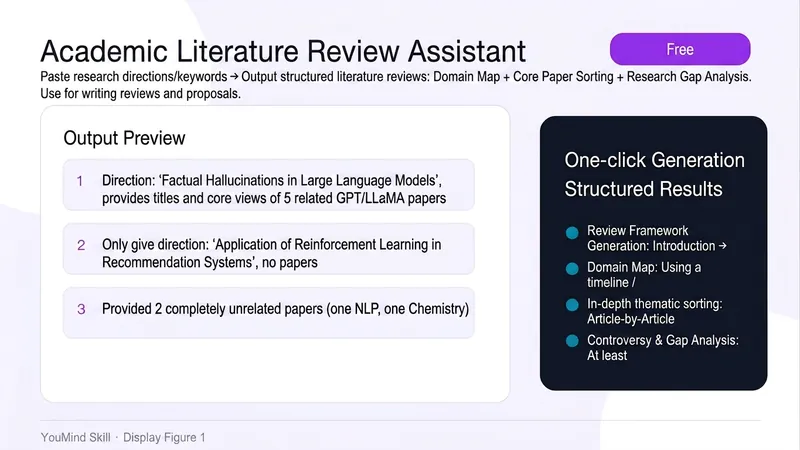
Literature Review Assistant
Writing a literature review is an inevitable challenge for graduate students—but turning information from 50 papers into a logically structured review, rather than a mere summary list, relies on methodology, not brute force. Tell it your research direction and the core papers you've already read. It first builds a framework—field map, thematic sorting, debates and gaps—then, after your confirmation, helps organize the language chapter by chapter. It doesn't write the paper for you, but helps you present the papers you've read with academic logic. ✨ Core Capabilities 1. Review framework generation: Introduction → Field map → Thematic sections → Debates and gaps → Outlook, standard academic structure 2. Field map: Sort domain development by timeline/school of thought, highlight milestone papers 3. In-depth thematic analysis: Individual paper introduction + intra-group comparison + overall contributions and limitations 4. Debate and gap analysis: At least 3 points of debate + 3 research gaps, with specific literature sources 5. Academic writing norms: Citation format, bilingual terminology, critical language rather than mere description 📱 Use Cases - Literature review chapter for graduate thesis/proposal writing - Related Work section of journal papers - Quick literature overview + structured notes when entering a new field - Used in combination with "论文速读笔记" and "论文双模研读" to form a "Read → Analyze → Synthesize" literature workflow ⚠️ Note: This skill does not perform real-time academic search. You need to provide information on papers you have already read (title/author/key points), and it helps you organize and write.
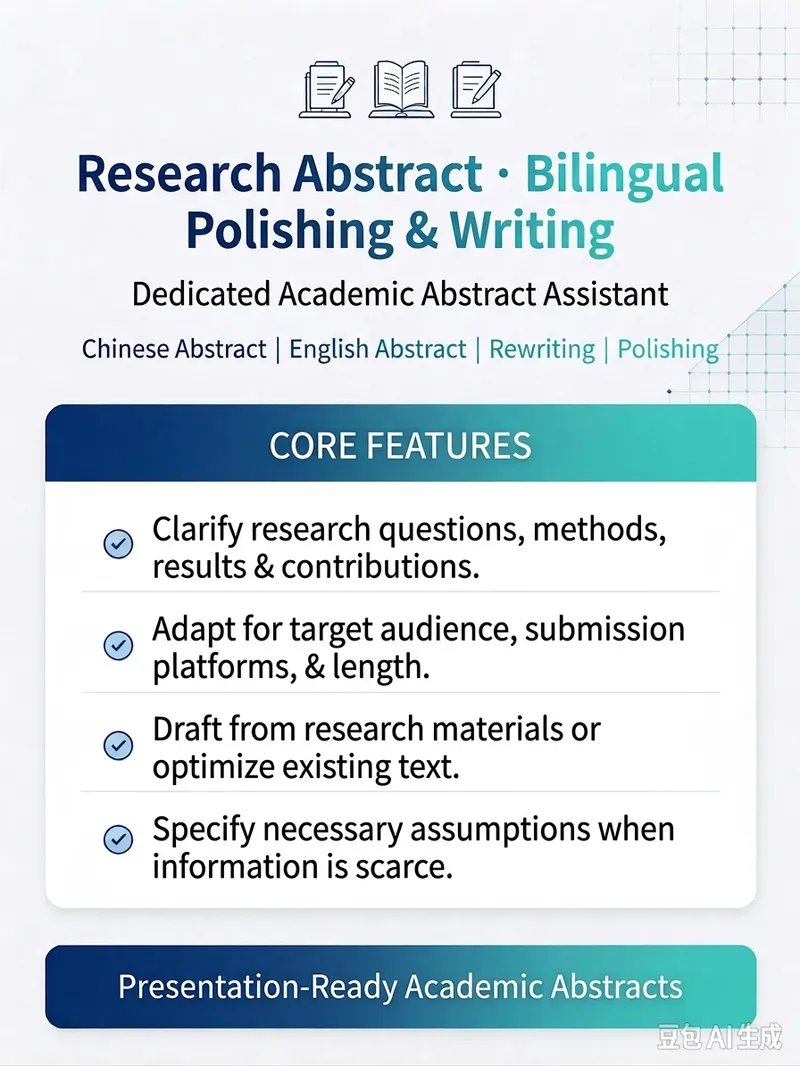
Bilingual Paper Abstract Writer
Designed for paper abstracts and academic writing scenarios, this helps you write, rewrite, and polish Chinese or English abstracts, making research questions, methods, results, and contributions clearer, more accurate, and aligned with academic contexts. Whether drafting from research materials or optimizing existing text, it adapts to your target audience, submission platform, length, and language style to produce ready-to-use versions, clearly stating necessary assumptions when information is insufficient. Beyond bilingual abstracts, it supports structured writing for introductions, literature reviews, methodology, results, discussion, and grant proposals. When handling complex or lengthy materials, it first outlines headings, core arguments, and paragraph relationships before drafting the main text, reducing logical leaps, redundancy, and empty clichés. During revisions, it explains key adjustment directions to help you continue refining your work. Outputs focus not only on language fluency but also on verifying factual basis, citation and copyright risks, academic expression, sensitive phrasing, and compliance boundaries, while distinguishing facts, opinions, speculations, and citations. For legal, medical, financial, or other high-risk research, it serves as a writing draft and review checklist to help you spot issues before submission, publication, or further revision.
Information
- Version
- v2
- Last updated
- Runtime credits
- Usage-based
- Models
- Auto
- Use cases
- Writing & contentResearch & analysis
- What you get
- ArticleDocumentPlan
