小鱼儿

Remaining Sections Expert
Step 7: Generate all remaining sections, including the research foundation, materials preparation, research team roles, timeline, interim results, final results, and intended use of the results. Based on Lessons 71 and 72, first confirm the topic, then request the writing framework. Use the framework to determine which sections are needed, generate each section through iterative interaction, and perform an independent quality check on every section.

National Teaching Award Guide
Professional writing guidance for applications to national teaching achievement awards. Through interactive dialogue, it helps vocational college teachers refine project titles, design application frameworks, and write high-quality application materials. Drawing on analysis of real 2022 award-winning cases, it provides end-to-end guidance on title assessment, innovation point refinement, framework design, and content writing. Ideal for teachers with a foundation in education reform projects who are preparing to apply for national or provincial teaching achievement awards.

Research Value Red Team
An expert skill for the research value section of National Social Science Fund and Ministry of Education Humanities and Social Sciences applications—the Topic Collision Radar edition. Built on Lecture 8, Lecture 64, a case library of five winning proposal templates, and a knowledge base of 535 funded-project lists, it provides: topic-collision radar searches across three comparison levels (National Social Science Fund → Ministry of Education → provincial philosophy and social sciences), with project status labels → six-dimensional difference analysis and collision warnings → T1–T5 academic value formulas and A1–A4 applied value formulas → format-adaptive output ("Academic Value + Applied Value" for the National Social Science Fund application’s free-form section / "Theoretical Value + Practical Application Value" for Ministry of Education Form B, limited to 2,000 Chinese characters). Includes a four-sentence template for "new progress compared with similar projects already funded." Confirm each step with a button to proceed. The term "空白" is prohibited in the output and is always replaced with specific wording such as "blind spots," "gaps," "weak areas," or "research limitations."

Doomsday Research Ideas Expert
Step 5.5: Research Approach (standalone skill), based on Lectures 68 and 7. You must read the research framework document before writing. Includes three templates: theory-building, policy-oriented, and mixed-methods research. Uses a closed-loop structure—“one-sentence overview → 4–5 detailed paragraphs → one-sentence conclusion”—with designated transition words, precise verbs, and → symbols to connect ideas. Produces 600–800 characters and prohibits vague language and weakly assertive statements.

Doomsday Innovation Expert
An expert skill for writing the “Innovations” section of applications to the National Social Science Fund of China and the Ministry of Education’s Humanities and Social Sciences programs. Based on the Lecture 8 methodology and the 2024 revised application-form standards, it covers two major categories: academic viewpoints and research methods. Academic viewpoint innovations follow three models: theoretical integration, contextual modification, and problem reframing. Methodological innovations follow three paths: data sources, analytical tools, and interdisciplinary integration. It uses a “viewpoint statement + brief explanation” writing technique, with button confirmation at each step before proceeding.

Doomsday Grant Review Expert
Step 8 (Final Review v2): Review and diagnose the grant proposal from start to finish, based on the original “Three-Line” review framework from Lecture 7—inner line (topic rationale → research subject → framework → key points → main objective: what to do), outer line (challenges → approach → research methods: how to do it), and side line (plan + feasibility + innovation + foundation + references + outcomes: whether it can be done, from the reviewer’s perspective). Includes the 30-second rule, three points that determine the outcome, a hidden-killer scan, the divide between key points and challenges, the main objective as the intersection of the inner and outer lines, four reviewer questions scored on a 5-point scale, and revision priorities.

Research Proposal Generator 5.0
Master orchestration skill: Enter a research topic to activate 10 sub-skills in one click and complete the full proposal workflow, from research background to final review and delivery. It includes three-stage confirmation gates, a cross-section consistency engine, automatic context transfer, and project file tracking to generate academic research proposals end to end.

Research Status & Trends Expert
An expert skill for applications to National Social Science Fund of China and Ministry of Education humanities and social sciences projects. Drawing on the four-dimensional synthesis-and-review method, expert lecture methodology, and successful National Social Science Fund applications, it uses multiple rounds of interaction to generate a format-compliant, literature-grounded “Research Status and Trends in China and Abroad” section (approximately 1,000 characters). Key upgrades: a three-part logical chain, a thematic synthesis method instead of periodization, at least two non-Chinese scholars in the international research section, embedded regional specialization, and summaries that acknowledge strengths before identifying gaps.

Topic Overlap & Value Expert
Review similar projects, identify research differences, and build a consistent case for your research object, theoretical value, practical value, and proposal format—while checking for potential risks.

Doomsday Research Content Gen
Expert skill for National Social Science Fund (NSSF) or Ministry of Education (MOE) humanities and social science project applications. Based on the methodology from the 4th lecture on 'Research Content' (five pillars, problem tree and problem chain, six techniques, and intuitive clarity), it generates research objects, research objectives (two versions: lecture style and expert standard style), overall framework, key points and difficulties, research plan, and feasibility through multi-round interaction. Each step requires the user to confirm and proceed.

Research Background Pro K6.0
Enter the topic name and key information to generate four versions of application text with one click (Stable version A/B and Innovative version A/B), covering two genres: research background and topic description. The innovative version features theoretical gap mining—it identifies core contradictions that no one has previously uncovered, impressing the reviewers. Based on the methodology of 'policy anchoring → importance elevation → three-level dilemma inquiry → research response + value convergence', it searches the latest policy documents online to ensure citation accuracy.

Grant Proposal Roadmap Expert
First, showcase 6 carefully selected sample styles for the client to choose. Then, through interactive guidance, collect project information and clarify the research logic. Finally, generate a three-column technical roadmap image showing 'Logic Route → Research Content → Research Methods', which can be directly used in grant applications such as those for the National Social Science Fund, National Natural Science Foundation, and Ministry of Education Humanities and Social Sciences.
 Write
Any Grant to MOE Humanities
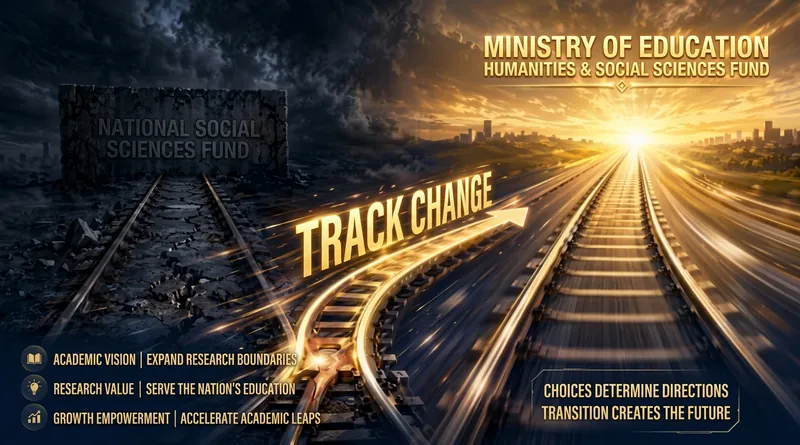
Users input the original topic title and application content. The AI guides users step-by-step through the complete rewriting plan to convert from NSSF to MOE Humanities project application. The process is based on five major difference diagnoses, matching with six key directions for 2026, and step-by-step rewriting guidance across six dimensions. It simultaneously generates a complete conversion plan as a Markdown document.
 Research
NSSF to MOE Humanities v3,0
A complete plan generator that converts National Social Science Fund applications into Ministry of Education Humanities and Social Sciences project applications. It gradually generates a conversion plan based on: five major discrepancy diagnosis → direction matching → topic selection → literature → innovation points → key difficulties → methods → results → B form prompts. v2 upgrade: full-process click interaction, progress tracking, and incremental document editing.
 Research
NSSFC/MOE Psych-Edu-AI Gen
This tool generates topic proposals for NSSFC, MOE Humanities, or provincial-level projects. It deeply integrates a trending topic methodology, focusing on interdisciplinary research across psychology, education, and artificial intelligence. By combining your disciplinary background, it creates innovative, cutting-edge, and feasible cross-disciplinary topic proposals. The tool automatically applies appropriate topic strategies and styles based on the project level (NSSFC vs MOE Humanities). It covers all key elements: topic background, research value, innovation points, research content, and expected outcomes.

National Teaching Award Writing Guide
Designed specifically for vocational college teachers, this skill guides you in writing teaching achievement award applications. Through simple multiple-choice questions, it quickly understands your situation and provides personalized topic suggestions, framework design, and content polishing guidance. It supports converting research topics into application materials, optimizing submission documents, and is based on analysis of real award-winning cases to help you efficiently complete national/provincial teaching achievement award applications.