
BookLens Insights & Healing
Understand yourself deeper through classic books
BookLens Insights & Healing
Understand yourself deeper through classic books
Showcase
Description
After you share your experiences, confusion, or problems, the AI asks clarifying questions before searching and verifying across 30 bilingual classic books, papers, articles, and theories. It uncovers deep-seated causes and provides actionable, testable healing and action suggestions.
Recommended by
Dancang
Why we love this skill
Integrates classic books, psychology, and social perspectives into rigorous problem exploration: starts with safety screening and clarification, verifies sources, analyzes deep causes, and provides phased action plans with clear criteria. Balances empathy and evidence without diagnosing or sugarcoating.
Best for
Ideal for anyone who wants to use classic books and research to better understand personal dilemmas and build a testable action plan.
How to use this Skill
Provide your input
Enter the dilemma, relationship issue, emotional state, or behavior you want to change, noting its duration, impact, and desired outcome.
Run the Skill
The AI performs a safety check and asks clarifying questions. Once you confirm the focus, it cross-references classic books, papers, and theories for a multi-perspective analysis.
Review your result
Receive an analysis report with problem insights, evidence, multiple perspectives, phased action steps, and professional support tips.
Related Skills
View all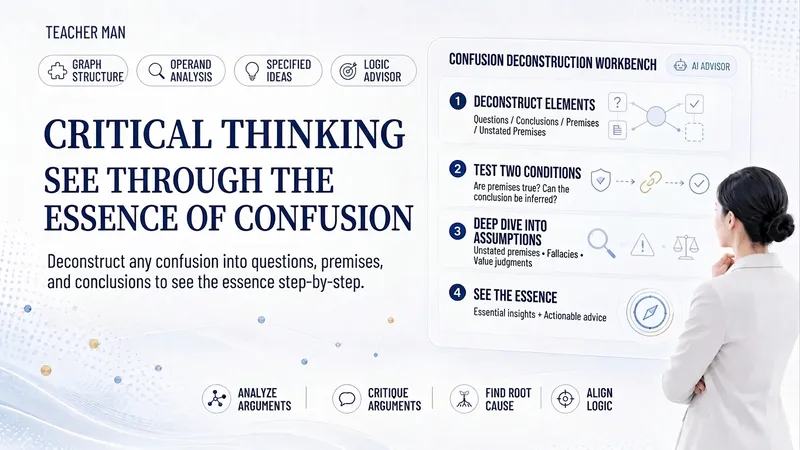
Slow Teacher · Think Clearly
Share any confusion—about work, study, life, relationships, emotions, decisions, or anything else. Using the framework from Tian Hongyun's “General Course in Critical Thinking: Methods for Thinking Correctly,” the Skill breaks it down into “question—premise—conclusion—unstated premise,” then tests it with two questions: “Is the premise true?” and “Can the premise support the conclusion?” It identifies unstated premises and common fallacies, distinguishes factual judgments from value judgments, and ultimately helps you see the essence of the situation and define a practical next step. The tone is equal, gentle, and conversational, with hand-drawn marker-style illustrations added automatically for key steps.
Power of True Stories
Find verifiable real experiences from historical and modern books, respond to confusion with warm storytelling, and extract practical action steps.
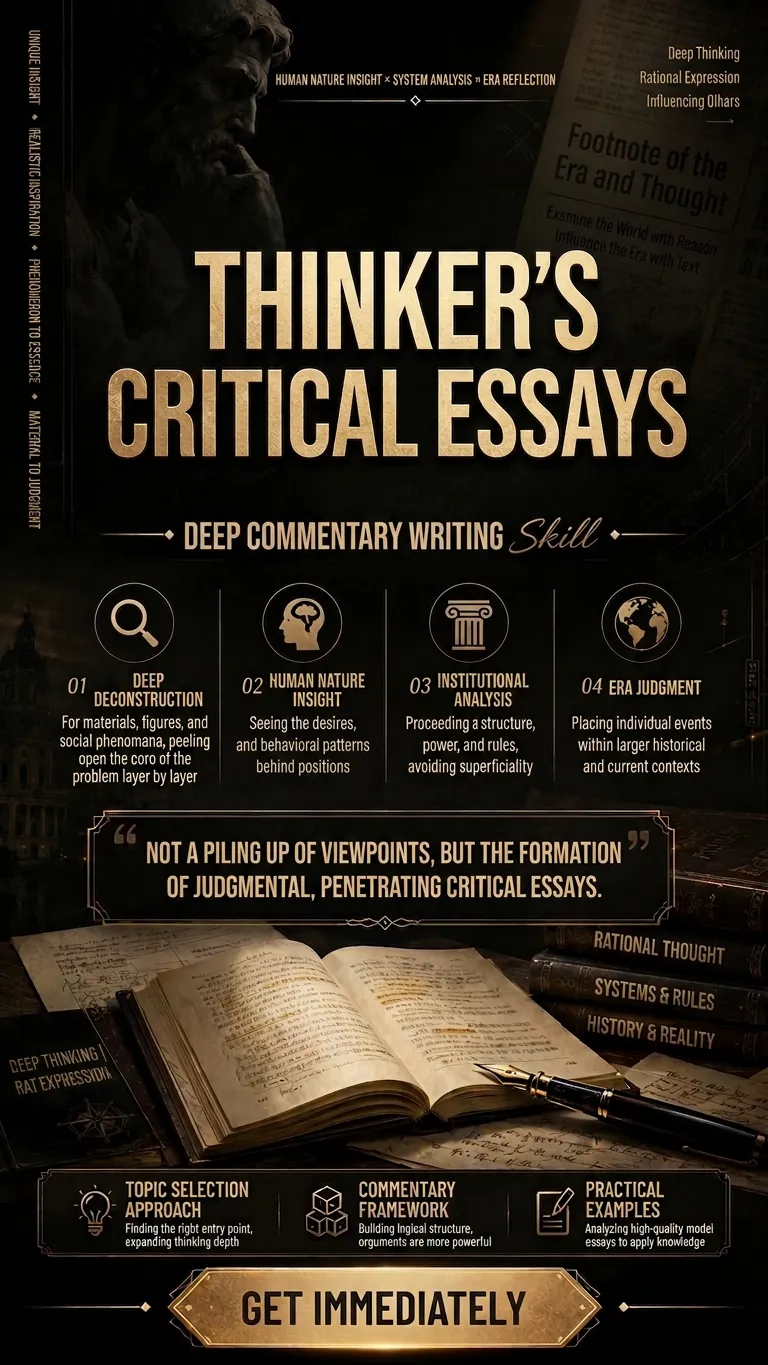
Deep Insight Commentary
The Sage's Commentary helps you deeply analyze materials, people, or social phenomena, going beyond the surface to reach the core. Based on reading, it integrates insights from history, institutions, human nature, and inner depth to provide unique perspectives and practical inspiration. Whether you're taking book notes, analyzing historical figures, commenting on social phenomena, or deconstructing political power structures, this tool helps you start from the text, deconstruct common sense, and deeply analyze structure, human nature, institutions, and the trends of the era, ultimately forming personal judgments that guide action. It advocates learning from history and breaking attachments with the heart, not blindly following authority or being trapped by emotions—seek the truth first, then judge. You can use it to organize scattered ideas into layered long-form writing or elevate ordinary material into thought-dense articles. It's especially suited for analyzing literary character psychology, reinterpreting classical ideas in modern contexts, and reflecting on personal situations and creative challenges, as well as deep discussions on topics like AI and knowledge production in the information age. In the end, it provides judgments that are both sharp and restrained, rather than empty slogans or feel-good platitudes.
Information
- Version
- v6
- Last updated
- Runtime credits
- Usage-based
- Models
- Auto
- Use cases
- Research & analysisPersonal growth
- What you get
- ReportDocument
