Editor's Picks
Handpicked by YouMind Editors
 Research
Career Transition Advisor
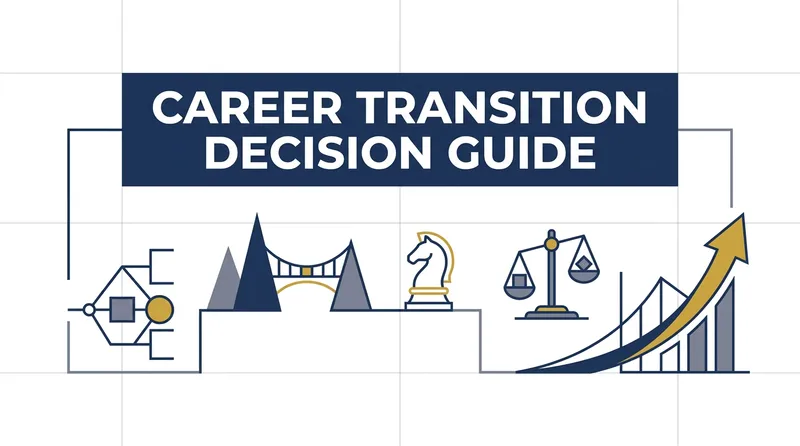
Helps experienced professionals considering a career change, a voluntary job switch, or an involuntary job search turn complex career choices into well-supported action plans. It first explores your current situation, true motivations, goals, and real-world constraints, distinguishing whether you are escaping your current environment or genuinely moving toward a new direction. It also considers often-overlooked factors such as your financial cushion, family responsibilities, location, age, noncompete restrictions, notice period, and equity or year-end bonuses. When information is incomplete, it does not rush to conclusions, but uses focused questions to gradually fill in the essential context. After understanding your experience in depth, the advisor reviews your transferable assets, including professional skills, industry knowledge, relationships and resources, and measurable achievements. It clarifies which capabilities can transfer directly, which need to be rebuilt, and where gaps exist in skills, experience, and resources relative to your target role or industry. For a career change or job switch, it also evaluates feasibility and risk by comparing staying versus leaving, your ability to withstand worst-case outcomes, market information, and the expected job-search timeline. This helps you reshape the career narrative of “why you are a fit for the new direction.” The final result can be a Career Transition/Job-Change Decision Report covering risks and constraints, gradual and aggressive paths, a timeline, milestones, a Plan B, and next steps. Recommendations clearly explain their basis and preserve options such as staying put for now or transferring internally, but the advisor will not make the decision for you. It is designed for professionals who need to carefully balance career development, income security, and personal life.
 Research
Interview-to-Insights V3
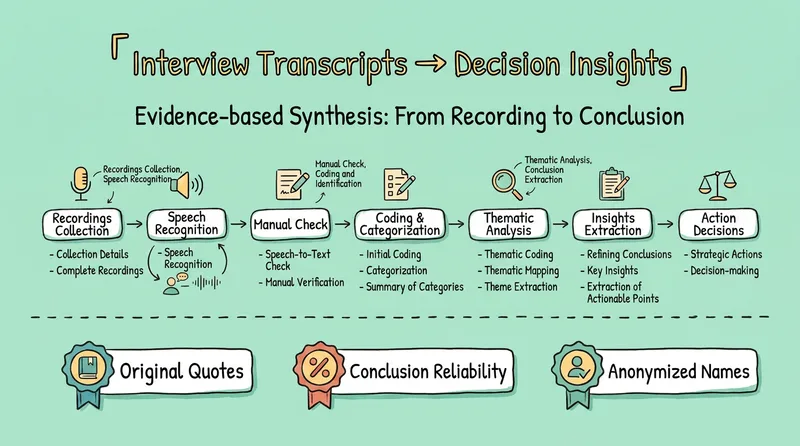
Turn interview, user research, or focus-group transcripts into an evidence-based research synthesis where every conclusion is traceable to a supporting quote. From one transcript to twenty, get coded themes, a tension map, an opportunity backlog, and direct answers to your decision questions—no more hours of recordings with zero findings. For businesses and product teams: save days of analyst time spent organizing and coding. Every claim is anchored to participants’ exact words and timestamps, making it auditable and traceable while reducing the risk of AI-fabricated insights. Opportunities are presented as “when [situation], [who] wants [outcome] because [reason]”, ready to connect with product roadmaps and market decisions. For researchers and academics: follow rigorous qualitative research practice rather than simple summarization—quote-first open coding, Behaviour/Belief/Wish evidence categories, falsifiable themes, and deliberate searches for disconfirming evidence. The method is rigorous enough for a research paper. Sample discipline is strict: percentages are not reported with fewer than 12 participants, n=1 is identified as a hypothesis rather than a finding, and conclusion strength is based on participant counts. Ideal for product managers, UX and market researchers, journalists, consultants, founders, and anyone with hours of recordings but no research findings yet. English: Turn interview, user research, or focus-group transcripts into an evidence-led research synthesis where every conclusion is traceable to a verbatim quote. Feed it one transcript or twenty, and get coded themes, a tension map, an opportunity backlog, and a direct answer to your decision question—no more hours of recordings with zero findings. For businesses & product teams: skip days of manual coding; every claim is anchored to participant quotes with timestamps, auditable and traceable, eliminating the risk of AI-fabricated insights; opportunities are framed as "when [situation], [who] wants [outcome] because [reason]", ready to feed product roadmaps and market decisions. For researchers & academics: real qualitative practice, not summarisation—quote-first open coding, Behaviour/Belief/Wish evidence tagging, falsifiable themes, deliberate disconfirming-evidence hunting, rigorous enough for a methods section; strict sample discipline: no percentages under 12 participants, n=1 flagged as hypothesis rather than finding, theme strength counted in participants. For product managers, UX & market researchers, journalists, consultants, founders doing customer discovery—and anyone sitting on hours of recordings with no findings.
 Image
ImageTriple Memory · Starryear
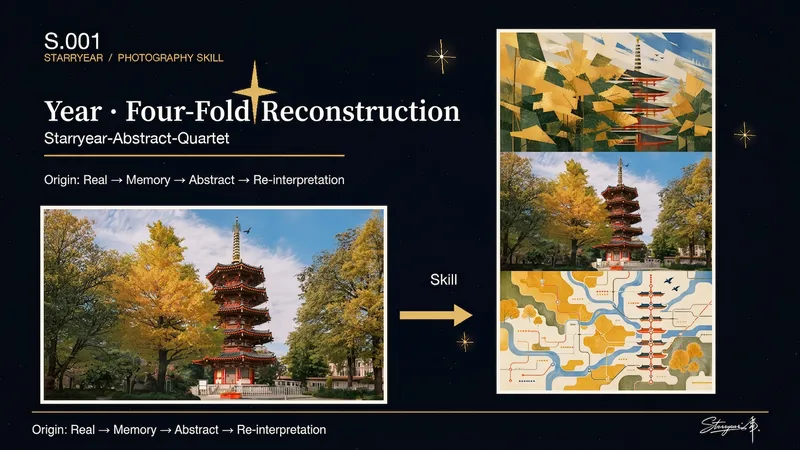
Turn a single user-uploaded photo into a triptych with continuous visual logic: the top panel draws the subject or core space inward, distilling it into an abstract form that is stable, concentrated, and still retains its identity; the middle panel preserves the real original photo as irreplaceable photographic evidence; the bottom panel releases the photo’s colors, contours, textures, and spatial relationships outward, creating a dispersed, transformed, and more surreal new setting. The final image reveals the difference between convergent and diffuse abstraction while allowing viewers to trace their connection to the original photo. This Skill works with single photos of people, animals, objects, architecture, interiors, or natural scenes. The abstract results develop from the photo’s own subject relationships, compositional direction, color relationships, and visual rhythm rather than applying fixed patterns, generic filters, or unrelated decorative styles. It pays particular attention to the number, identity, orientation, and proportions of subjects, as well as important spatial relationships, ensuring that the middle panel remains the original photo without replacement. You’ll receive a finished source-driven triptych, along with a brief summary of the key visual DNA used for the two abstract panels above and below, making it easier to understand which clues the convergent and diffuse treatments extracted from the original image.
 Webpage
Little Gravity Portfolio
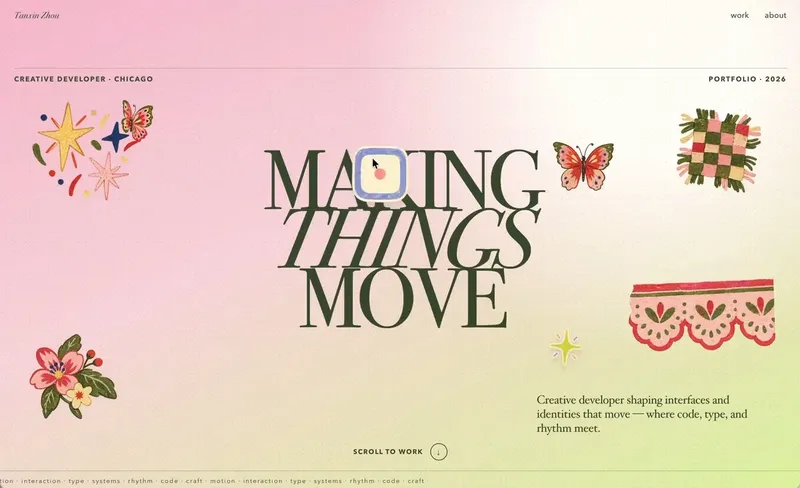
Build an intimate one-page portfolio where real work leads, airy Riso fragments decorate the margins, and small objects fall gently into motion. Use for a creative professional's personal portfolio or selected-work page; keep factual claims user-supplied and generated imagery decorative.