Labor Arbitration Assistant
Claim double pay without a contract
Labor Arbitration Assistant
Claim double pay without a contract
Showcase
Description
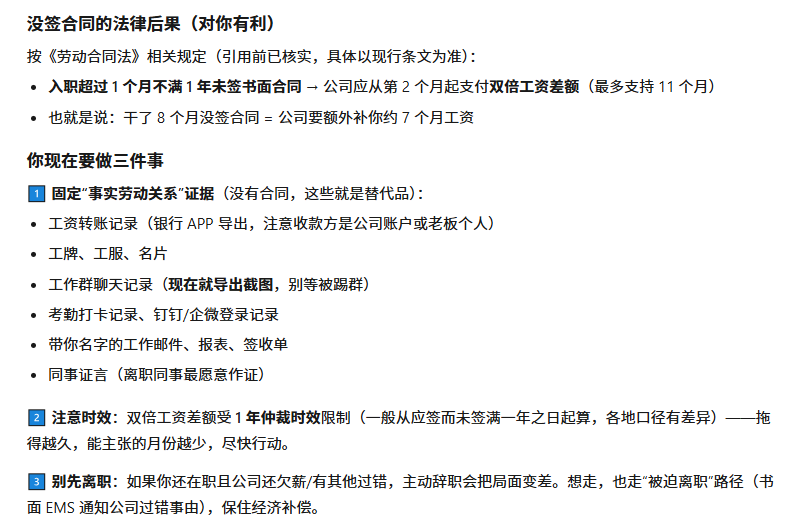
Labor Arbitration Rights Protection Specialist: Users describe their labor dispute situation (such as unpaid wages, wrongful termination, overtime pay, missing contracts, social security back-pay, severance pay, etc.), and receive a three-part package — 1) Evidence Checklist (customized by dispute type, noting existing/pending/where to obtain), 2) Arbitration Process Timeline (jurisdiction confirmation -> application -> acceptance -> hearing -> ruling, including deadlines), and 3) Scripting for each stage (negotiation, complaints, arbitration application, trial). Trigger words: "labor arbitration", "company owes wages", "what to do if fired", "labor dispute", "unpaid overtime", "no labor contract", "constructive dismissal", "N+1". Core rules: Provide processes and information only without constituting legal advice; consult a practicing lawyer for major cases. Statutory citations must be verified against original texts without fabrication. The evidence checklist must be actionable (stating where to obtain items). Scripts must be objective and restrained, avoiding instigating confrontation. Output is a structured rights protection action package.
Recommended by
Dancang
Why we love this skill
Transforms labor disputes such as unpaid wages and wrongful termination into actionable rights protection action packages, organizing evidence, arbitration procedures, deadlines, and practical scripts by city. Especially suitable for workers without contracts, addressing double pay claims while strictly adhering to legal verification and lawful evidence collection boundaries.
Best for
Ideal for workers who need to organize labor dispute evidence, procedures, and communication preparation.
How to use this Skill
Provide your input
Provide the type of labor dispute, key dates, amount involved, city, employment status, and any existing evidence you currently have.
Run the Skill
Based on your description, it organizes an actionable evidence preparation checklist, processing workflow, and communication points, while noting timelines and the boundaries of informational reference.
Review your result
Receive a structured rights protection action package, including an evidence checklist, workflow timeline, and communication references for negotiation, complaints, or arbitration.
Related Skills
View all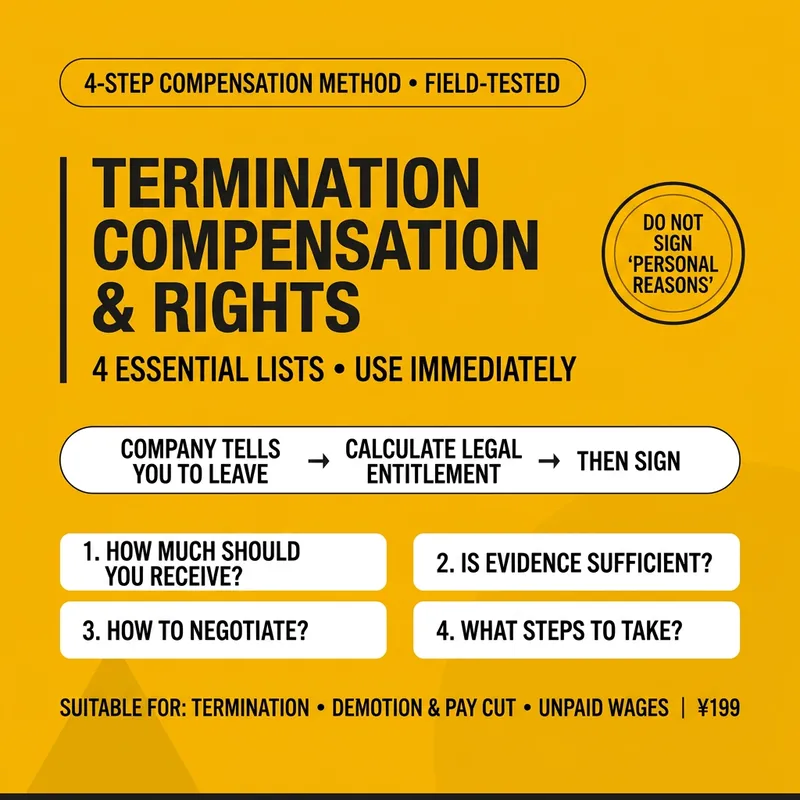
Severance & Rights Guide
A rights-protection skill for workers facing termination, job reassignments, or unpaid wages. Triggered when users ask questions about severance amounts, unlawful layoffs, N+1 calculations, forced voluntary resignation letters, pay cuts, required evidence for arbitration, or year-end optimizations. It uses a four-question framework (How much is owed / Is the evidence sufficient / What to say / What path to take) to generate four actionable rights-protection checklists. Version 1.0.0. Your personal rights-protection checklist generator: turns HR tactics, your evidence, and statutory compensation into four ready-to-use lists detailing what to claim, what you hold, how to respond, and where to go next. How to Use - Four-Question Framework: 1. How much is owed: Calculates N, N+1, or 2N tiers plus easily missed items such as notice pay, unpaid wages, overtime, unused annual leave, and commissions. 2. Is the evidence sufficient: Provides a prioritized checklist plus immediate 24-hour preservation steps (such as screenshotting attendance before deletion). 3. What to say: Matches HR pressure tactics with response guides, emphasizing the most crucial rule - never sign a "personal resignation" letter. 4. What path to take: Outlines a three-step route involving labor inspection (12333), arbitration (1-year statute of limitations, free), litigation, and legal aid (12348). What You Get: A compensation calculation table, evidence checklist, conversation scripts, and action route package ready for direct copying and use. Compliance Notice: This skill does not constitute legal advice, replace a lawyer, or predict case outcomes. All figures are estimates based on your account and must be verified against contracts, bank statements, and local regulations. For large monetary disputes or complex evidence, consult legal aid at 12348 or a labor arbitration committee.
Rental Rights Coach
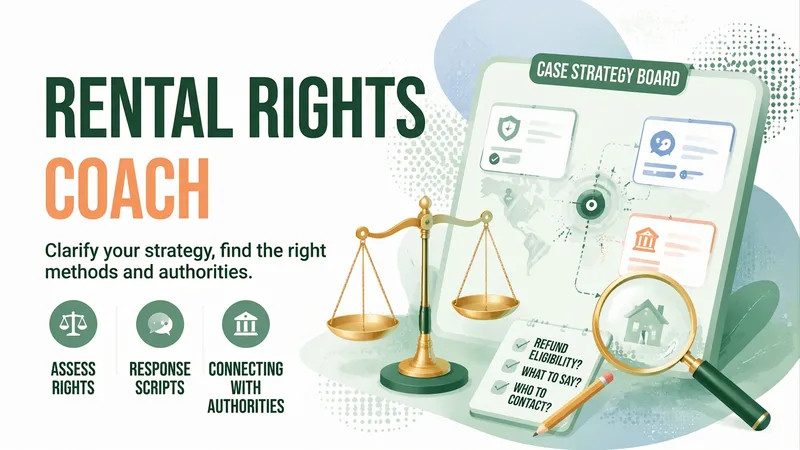
“Consumer Rights Coach” helps turn “I’ve been cheated” into “I know what to do next.” It doesn’t offer broad, generic legal education. Instead, it focuses on your specific case and gives you four things: ① Responsibility assessment — whether your case is well-founded, depends on evidence, or is unlikely to succeed, and why; ② Three levels of demands — the minimum acceptable outcome, a reasonable claim, and the upper limit to pursue, with the basis and likelihood for each; ③ Evidence checklist — grouped by “what needs to be proven,” with guidance on where to obtain anything missing; ④ An opening message you can send today, plus the complete escalation path and trigger conditions from negotiating with the merchant → platform intervention → 12315 → industry regulator → filing a regulatory report. Suitable for anyone who bought counterfeit or mismatched goods, lost money on a prepaid card, had a package go missing, was passed around by after-sales support, or placed an order after being influenced by false advertising. Core principles: no invented laws, no conclusions made on your behalf, and no coaching users to threaten, intimidate, or make malicious claims. Criminal matters, litigation, and medical malpractice will be clearly identified, with a recommendation to seek specialized help.
 Write
Payment Collection Coach
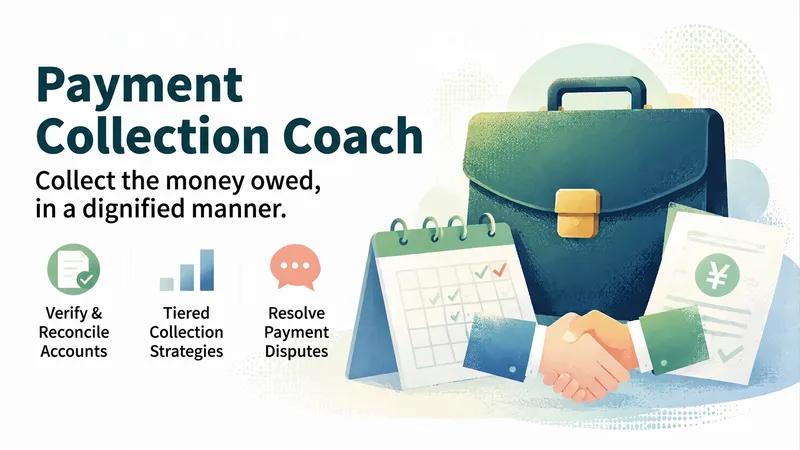
The work is done, but the payment hasn’t arrived—that’s a hurdle no one who takes on client work can avoid. The hardest part isn’t waiting; it’s not knowing how to bring it up. Push too gently and it feels like you’re begging. Push too hard and you worry about losing the client. They say, “Finance is processing it,” and you wait another two weeks. When payment finally comes through, part of the balance is withheld for “poor results.” This Skill helps you collect what you’re owed professionally. Share the details—who owes you, how much, when payment was promised, and how much you’ve already received. It will reconcile the account first, then give you the one message to send today. ✨ Core capabilities 1. Reconcile before requesting payment: Check the amount due, invoices issued, and payments received item by item. Classify the difference into five categories (invoice not issued / invoice issued but unpaid / payment terms not triggered / disputed deduction / inconsistent figures). Requesting payment before the account is clear means giving away your leverage. 2. Escalate in stages: L0 heads-up → L1 friendly → L2 firm → L3 serious → L4 formal. Set the level based on days overdue, then adjust it according to the importance of the relationship—so you know what to say at each stage. 3. Give you only the message to send today: One version each for WeChat, email, and a phone opening, with the tone and risks labeled, plus three likely responses from the other party. 4. Handle final-payment disputes: Separate approaches for clients withholding payment over “poor results,” saying “Finance is processing it,” going silent, or leaving the money stuck with an MCN. 5. Accounts receivable overview: See all unsettled jobs in one table, sorted by days overdue, with the most urgent at the top. 6. Preserve evidence and facts: When agreements were only verbal and there is no contract, learn how to clearly state the facts shown in your chat history (not legal advice). 🛡️ Three firm principles · Reconcile first, then request payment · No legal advice and no threatening language; the highest level is only “Handle this according to the contract.” · If the amount or name is missing, always ask—never use placeholders like “Dear Customer.” 📱 Who it’s for Creators whose payments are overdue, YouTubers, freelance designers, writers, photographers, indie developers, and small studio owners. 💡 How to use it Describe your situation; you can also use /对账 /催 /升级 /争议 /序列 /总览 /档案 for precise actions. The goal of requesting payment isn’t to win an argument—it’s to get your money back.
Information
- Version
- v2
- Last updated
- Runtime credits
- Usage-based
- Models
- Auto
- What you get
- DocumentPlan
