Salvador Dalí Surrealism
Transform subjects into surrealist paintings
Showcase
Description
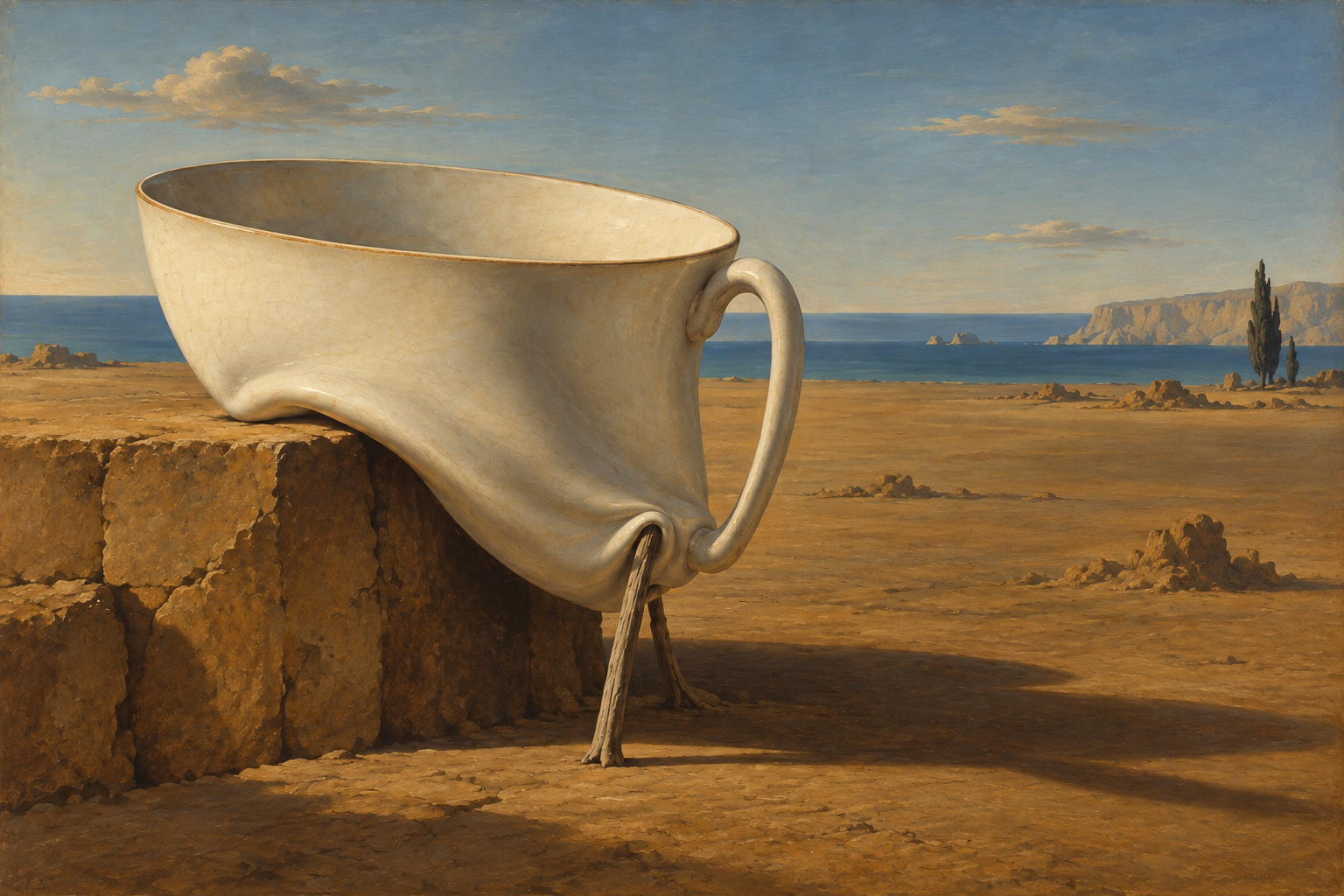
Transform a subject into precise, uncanny, and recognizable Salvador Dalí-style surrealist paintings, making familiar objects take on new meaning through impossible connections, proportions, and support relationships. Rooted in 1930s hallucinatory oil painting styles, the works combine crisp outlines, sculptural volume and shading, actively deformed shapes, and selective details to evoke a distant, silent, and unsettling space. Whether creating wordless paintings from brief concepts, keeping specified objects based on detailed descriptions, or turning photos into surreal scenes, you can build visual relationships around the theme such as hard-soft swaps, morphological transformations, double images, or scale imbalances. When appropriate, recognizable Dalí motifs like soft watches, delicate supports, and slender animals carrying architecture can be integrated to participate in the composition and narrative rather than acting merely as decoration. Portrait identities, product structures, architectural features, and explicitly preserved items from photos are fully respected. You will receive a completed image tailored to the subject and aspect ratio needs, along with the actual creation prompts used. You can also request only prompts, visual analysis, or image reviews. When generating posters, you can further incorporate legible text design that echoes the imagery, though by default, works contain no titles, signatures, or captions.
Recommended by
Shuting@YouMind
Why we love this skill
Transforms subjects into recognizable yet impossible shape relationships, building surreal imagery that actively tells a story through hard-soft swaps, shared contours, and unbalanced scales. Precise outlines, sculptural volume, and restrained color planes set it apart from mere melting effects or piled-up grotesque elements.
Best for
Ideal for visual creators looking to turn themes, descriptions, or photos into distinct surrealist paintings.
How to use this Skill
Provide your input
Provide a theme, detailed description, or photo, and specify the aspect ratio, medium, objects to keep, and whether text, prompts, or a review are needed.
Run the Skill
Transforms themes or images into surreal paintings with precise outlines, distorted shapes, scale imbalances, and quiet spatial depth, or analyzes and reviews existing works.
Review your result
Receive a text-free or text-inclusive surreal painting, along with requested creation prompts or visual review results.
Related Skills
View all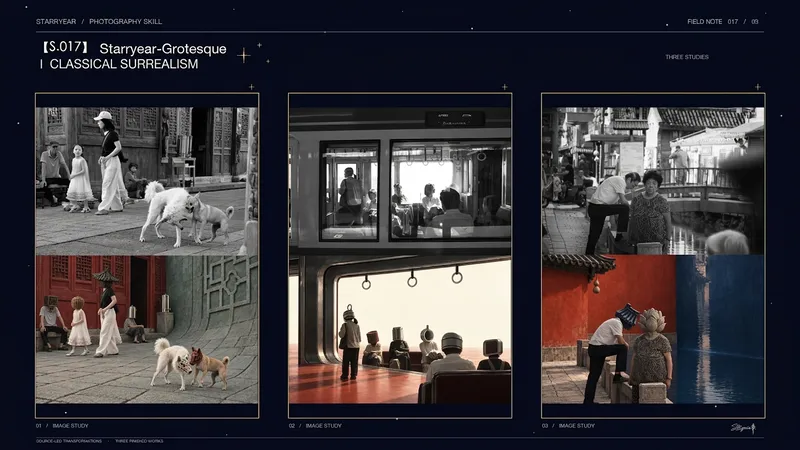 Image
【S.017】Surreal Photo·Starryear
Transform travel, street, cultural event, or portrait photos into vertical classical surrealist diptychs with a documentary feel. The top half preserves the original photo as evidence of reality, while the bottom half reconstructs a visual scene through cinematic spaces, saturated structural colors, monumental scale, bold negative space, and impossible relationships—creating a world that feels both familiar and strange. This Skill is especially suited to creators who want to preserve the context of the original image while exploring conceptual photography and surrealist storytelling. Figures in the image will not show identifiable faces. Instead, based on clothing, gestures, props, and cultural clues from the setting, their heads are replaced with animals, plants, objects, architecture, celestial bodies, or other imagery. The concealment becomes part of the composition and story rather than a standard filter or decorative headpiece. Simply provide a suitable photo to receive a complete diptych that combines the original image with a reconstructed scene. It is suitable for personal photography experiments, travel visual records, street-image re-creations, and noncommercial art research. For personal learning, nonprofit research, and noncommercial creative use only.
 Image
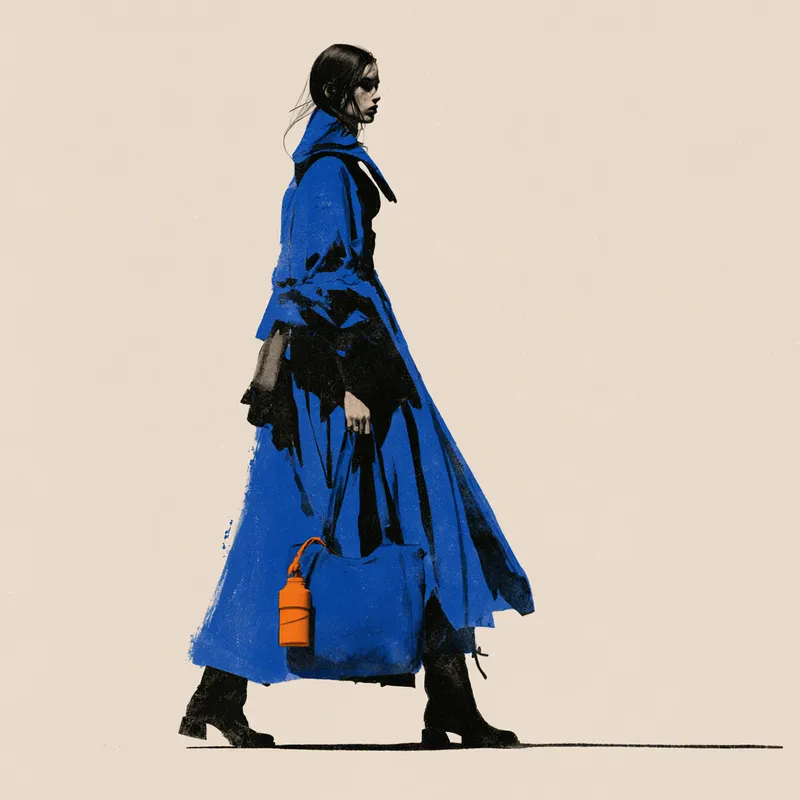
Limited-Color Photo Print Ad
Turn a product or person into prompts for a limited-color photographic print advertising poster, while preserving realistic human proportions, clothing folds, object thickness, and key structural details. Use electric blue as the dominant color with small amounts of orange for contrast, combined with warm-white negative space, bold black shapes, and compressed light and shadow. The subject should have strong contours and clear layout relationships—without becoming an ordinary color photo, vector cartoon, or an image covered in dirty, distressed grain. Whether the input is text or a product reference, organize the composition around the product’s identity, the person’s pose, relationships between components, and the requested aspect ratio. User-specified product colors, proportions, and portrait or landscape orientation take priority; do not add text, trademarks, or unrelated props without instruction. By default, provide Chinese prompts for AI image generation and English Midjourney prompts, or generate only one type on request. Textures can range from a clean warm-white background to controlled, localized printed halftone dots, making this suitable for e-commerce visuals, portrait posters, and brand concept art.
 Image
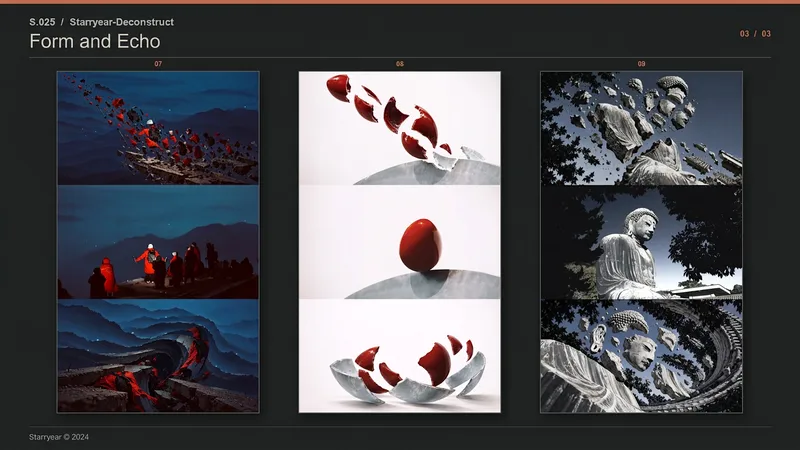
【S.025】Year · Deconstructed | Photo Skill · Starryear
Transform a single photo into a unified-tone triptych that deconstructs its source subject, suited to architecture, sculptures, natural landscapes, objects, and other subjects with distinctive contours and material qualities. The final piece uses a 16:27 vertical canvas composed of three equal-sized horizontal panels joined vertically, with a default output of 1920×3240 pixels and no added text, borders, or decorative elements. The top panel captures the moment the subject bursts outward from a clearly defined point of force, forming an orderly explosive deconstruction through separated primary fragments, a shared direction of motion, and ample negative space. The middle panel preserves a centered 16:9 crop of the input photo, serving as the only original color reference in the composition. The bottom panel develops the forms and environment in the photo into a more intense, source-specific surreal spatial echo, continuing the deconstruction with a different center of gravity, viewpoint, and motion relationship from the top panel. Changes in materials, environment, and space across the top and bottom panels remain traceable to the original photo while avoiding the addition of unrelated subjects. All three panels maintain continuity in white balance, dominant colors, saturation, tonal contrast, and overall brightness, allowing the creative transformations to connect naturally with the original image’s color identity. Suitable for visual posters, art imagery, and serialized creative work that calls for a narrative of “photographic original + explosive deconstruction + surreal afterecho.”
Information
- Version
- v3
- Last updated
- Runtime credits
- Usage-based
- Models
- Auto
- Use cases
- Images & designResearch & analysis
- What you get
- ReportImagePrompt
- Visual styles
- Oil paintingSurrealist
