Mountain Infographic Poster
Create Chinese-style mountain posters
Mountain Infographic Poster
Create Chinese-style mountain posters
Showcase
Description
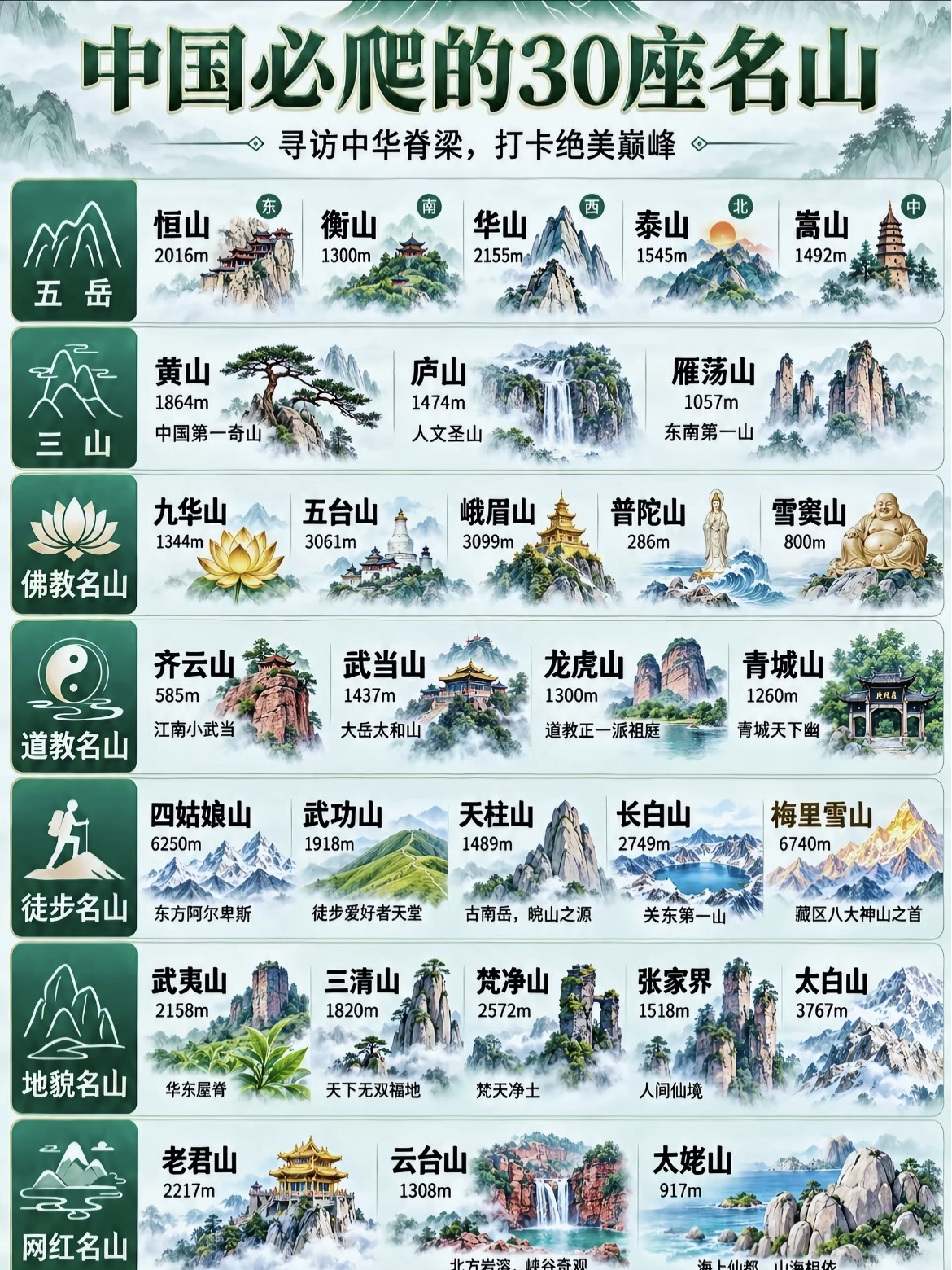
Generate Chinese-style infographic posters of must-visit mountains in China. It creates text-free Chinese watercolor illustration cards for each mountain and assembles them into a complete poster with real Chinese text including mountain names, elevations, and slogans using an HTML template. Use this when users upload mountain or travel guide infographics to recreate, request mountain illustrations, or want to make a must-visit attraction series poster.
Recommended by
Dancang
Why we love this skill
Featured because it solves the problem of distorted Chinese text in image generation by combining text-free illustration generation with HTML real-text layout. It unifies the Chinese-style visuals, mountain data, and grouping structure to reliably replicate exportable mountain infographic posters.
Related Skills
View all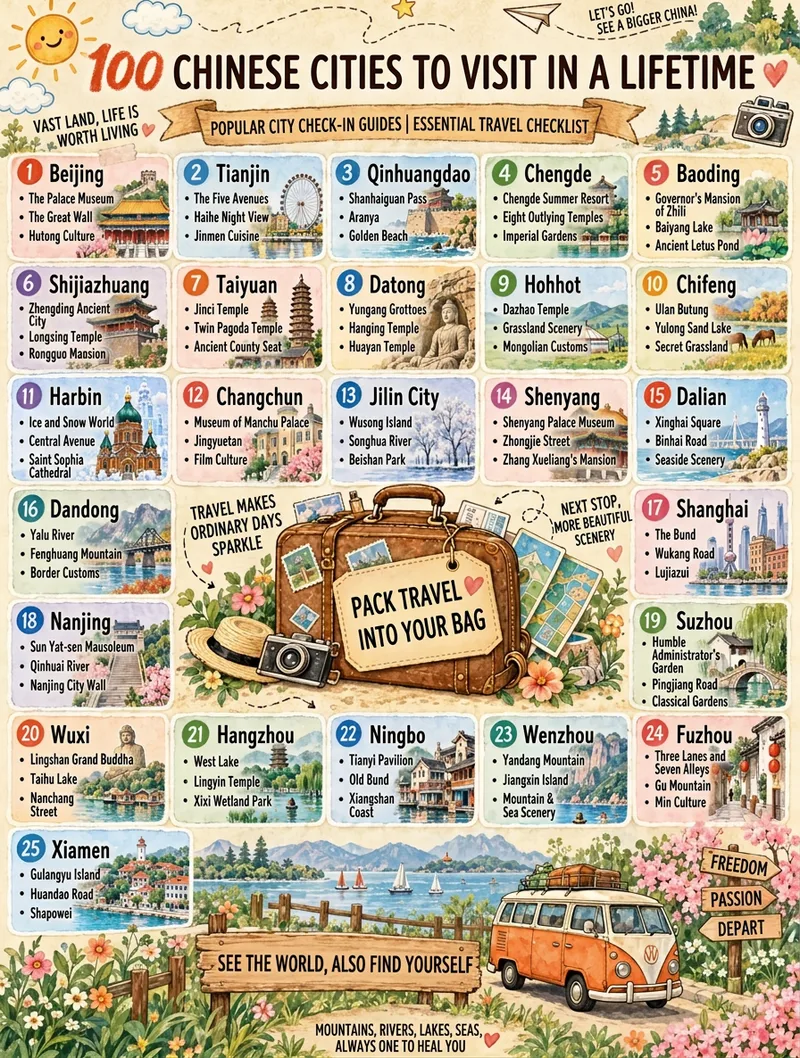 Image
Travel Checklist Poster
Turn any theme (like "25 Chinese Travel Destinations") into a vertical hand-drawn watercolor checklist poster. It features a warm beige textured paper background, travel journal collage style, marker art typography, numbered item cards, a vintage suitcase main illustration, and a scenic landscape band. You can fine-tune the item count, title, subtitle, footer, domain, and aspect ratio. It applies a base template by default and generates the image in one pass using the best image generation model with no watermark.
 Image
Landscape Scroll Generator
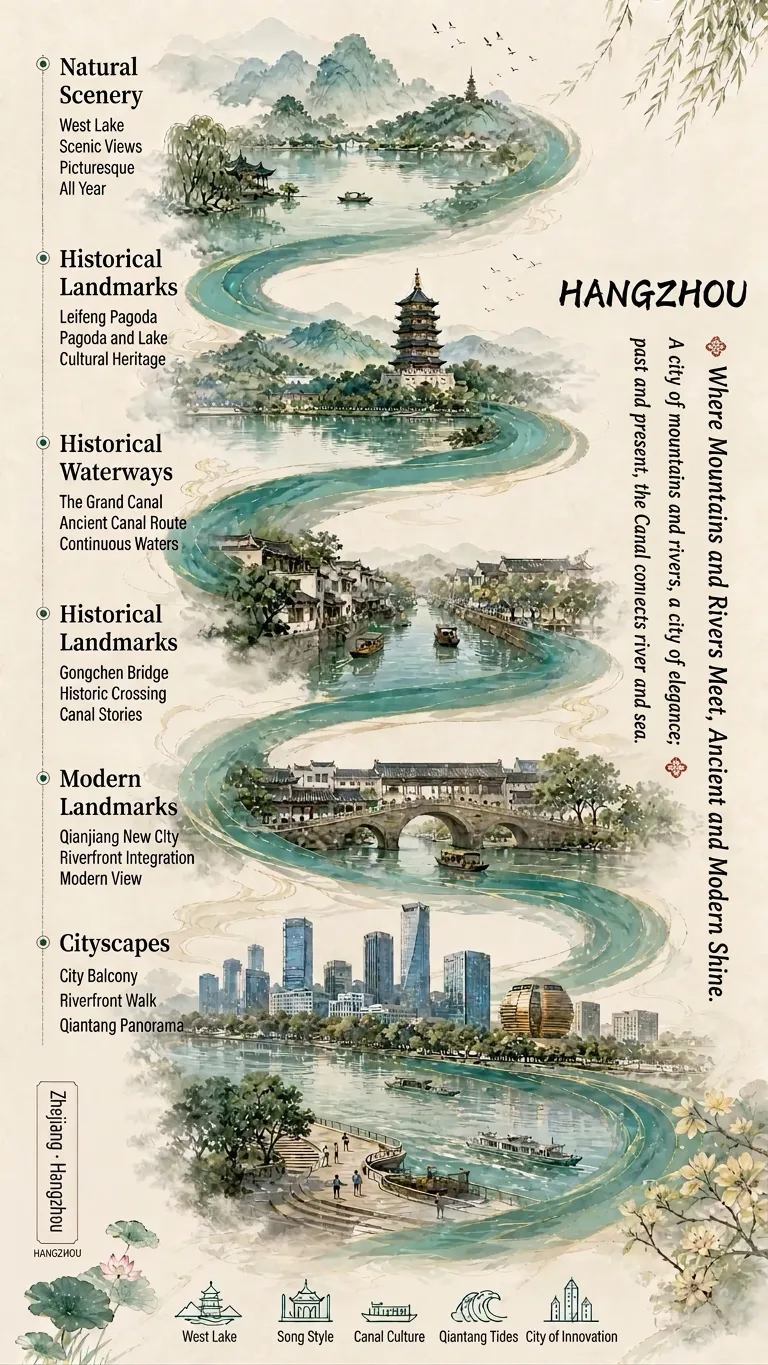
Enter a city or province name to generate a cyan-green landscape tourism poster blending local elements. The artwork extends from natural landscapes and history to modern cities, capturing regional character through cyan-green tones, ink washes, rice paper textures, and detailed architecture linked by a continuous landscape motif. It is ideal for city branding, tourism promotion, and cultural communication. The content incorporates representative natural sights, historical buildings, cultural symbols, and modern landmarks: cities focus on the local area, while provinces balance features from different regions while avoiding misattributed sights. The poster includes prominent location names, vertical slogans, city overviews, and landmark descriptions with cultural tags, offering both visual appeal and rich information. For ambiguous locations, you will be prompted to clarify first; otherwise, the image is generated directly. The final output includes selected representative elements and reference sources for verification. Since small text in images may have minor rendering errors, please review all place names, landmark titles, and captions carefully before official printing or publishing.
 Image
One Character, One World
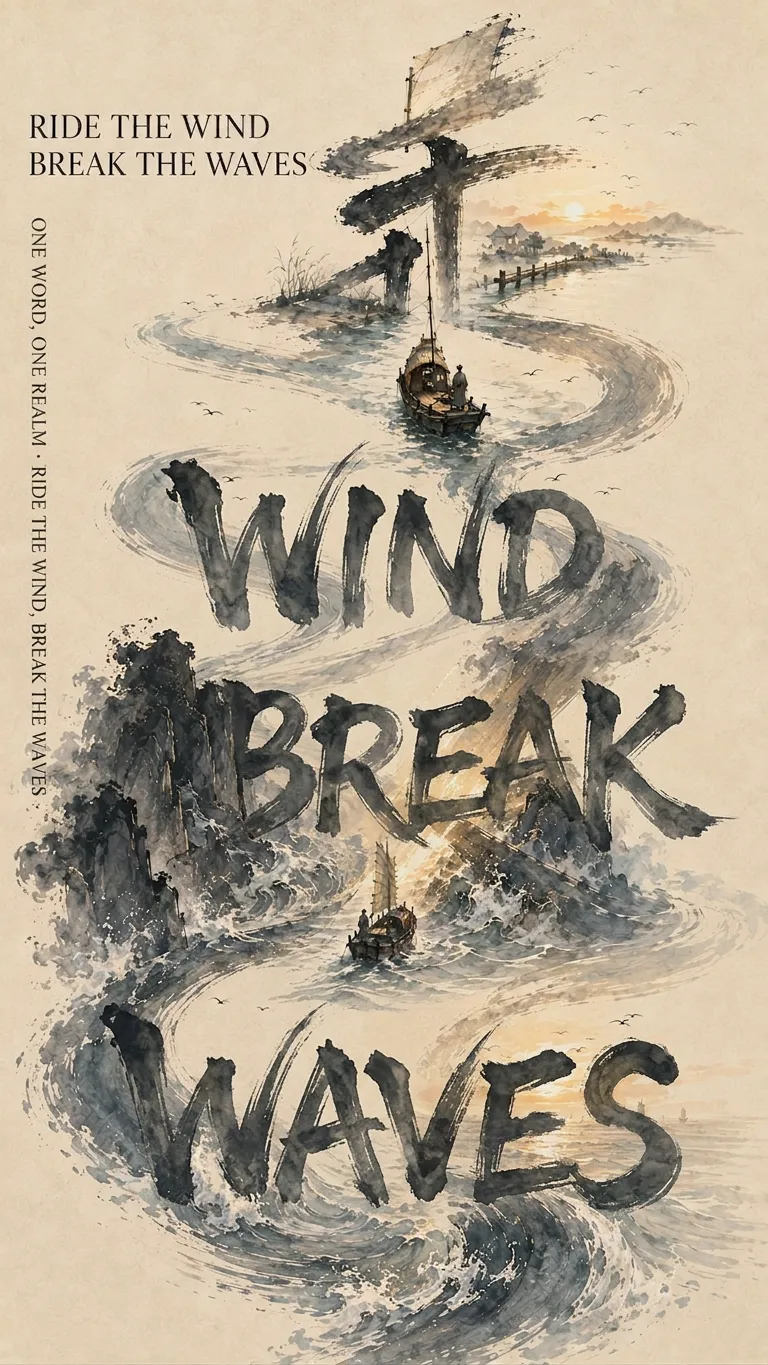
This Skill does not simply apply an ink-wash filter to Chinese characters. It first understands the core meaning of the text in its full context, then determines how the imagery, calligraphy, and layout should work together. Give it a Chinese character, name, place name, idiom, line of poetry, or public-domain classical Chinese poem or prose passage. It first interprets the meaning, then transforms the character’s strokes into mountains, rivers, bridges, figures, architecture, or narrative paths, making the calligraphy itself the framework of the composition. Different meanings automatically call for different brush movements, colors, and compositions, rather than being forced into a fixed template. It supports single-character posters, multi-character series, combined-character compositions, and storyboard sequences based on classical poetry and prose. Names, place names, and idioms can be turned into sequential series with one character per poster, or idioms, poetic lines, and parallel phrases can be combined into a single poster. Classical poetry and prose can be divided into 6–12 consecutive posters according to the original order and emotional arc, with nine posters by default for WeChat Moments, while naturally incorporating the corresponding original text into the imagery. The Skill actively avoids common failures: illegible characters, calligraphy that looks like a computer font, misinterpretations caused by checking characters one by one, forcing the entire image into a character-shaped mask, changing only the text while leaving the narrative unchanged across a series, placing the main text in an awkward standalone white box, and presenting garbled small text as a finished design. It is suited to Chinese posters, urban cultural visuals, name-based gifts, idiom and poetry projects, nine-image WeChat Moments posts, Xiaohongshu graphics, and collectible Eastern editorial design. The final result is influenced by YouMind’s current image model. When long text must be accurate character by character, the Skill prioritizes editable text layers for typesetting; when that is not possible, it clearly labels the result as a conceptual base and provides accurate typesetting specifications.
Information
- Version
- v3
- Last updated
- Runtime credits
- Usage-based
- Models
- Auto
