Kevin Peng
 Image
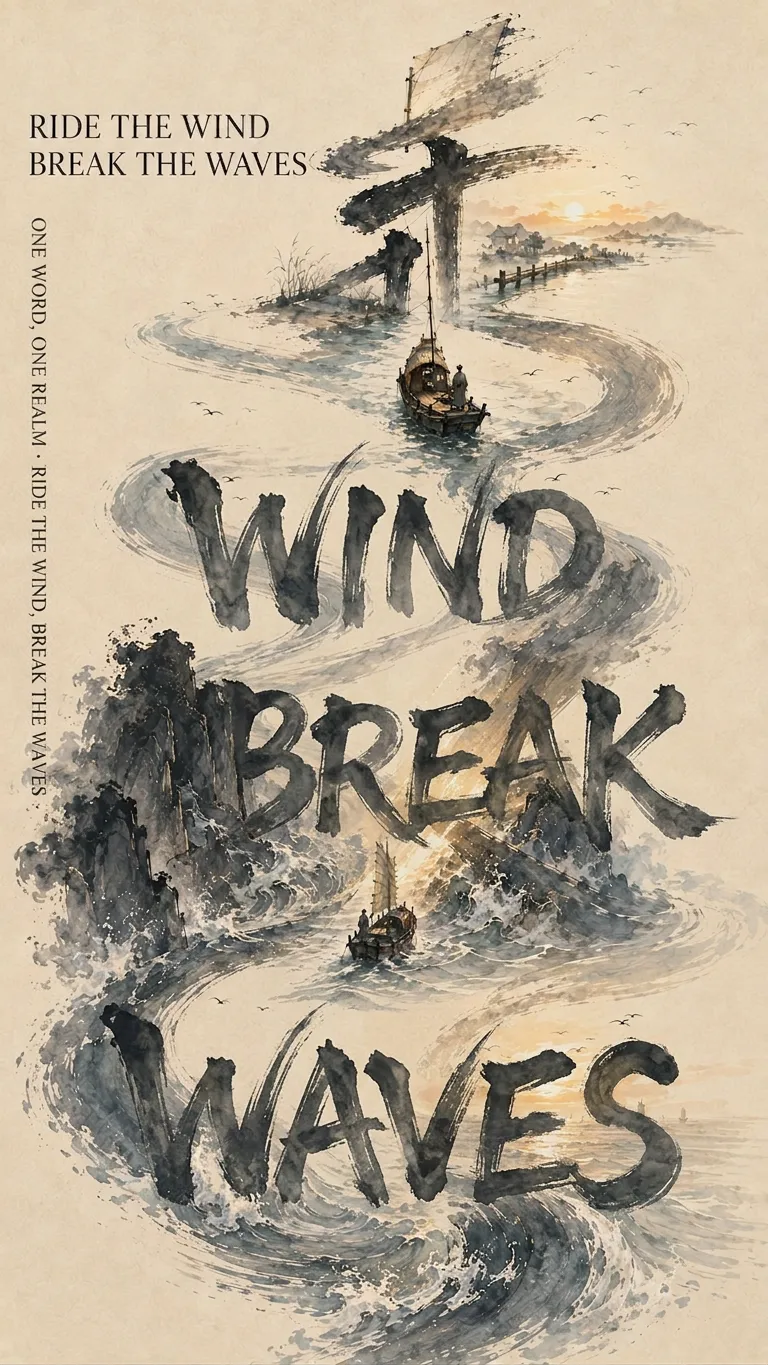
ImageOne Character, One World
This Skill does not simply apply an ink-wash filter to Chinese characters. It first understands the core meaning of the text in its full context, then determines how the imagery, calligraphy, and layout should work together. Give it a Chinese character, name, place name, idiom, line of poetry, or public-domain classical Chinese poem or prose passage. It first interprets the meaning, then transforms the character’s strokes into mountains, rivers, bridges, figures, architecture, or narrative paths, making the calligraphy itself the framework of the composition. Different meanings automatically call for different brush movements, colors, and compositions, rather than being forced into a fixed template. It supports single-character posters, multi-character series, combined-character compositions, and storyboard sequences based on classical poetry and prose. Names, place names, and idioms can be turned into sequential series with one character per poster, or idioms, poetic lines, and parallel phrases can be combined into a single poster. Classical poetry and prose can be divided into 6–12 consecutive posters according to the original order and emotional arc, with nine posters by default for WeChat Moments, while naturally incorporating the corresponding original text into the imagery. The Skill actively avoids common failures: illegible characters, calligraphy that looks like a computer font, misinterpretations caused by checking characters one by one, forcing the entire image into a character-shaped mask, changing only the text while leaving the narrative unchanged across a series, placing the main text in an awkward standalone white box, and presenting garbled small text as a finished design. It is suited to Chinese posters, urban cultural visuals, name-based gifts, idiom and poetry projects, nine-image WeChat Moments posts, Xiaohongshu graphics, and collectible Eastern editorial design. The final result is influenced by YouMind’s current image model. When long text must be accurate character by character, the Skill prioritizes editable text layers for typesetting; when that is not possible, it clearly labels the result as a conceptual base and provides accurate typesetting specifications.

Career Experience Analyzer
After years of work, the real challenge is often not a lack of experience, but knowing which parts are facts, which are your interpretations, and which experiences are still worth validating outside your original company. This Skill works with one anonymized, real-life experience: it organizes evidence cards, explains what the current material can and cannot prove, identifies the earliest evidence gap, and provides one low-cost validation path, one thing to hold off on, and a 7-day action plan. It is not a psychological test and does not assign an overall experience-asset score. It does not use your job title, years of experience, salary, certifications, praise from colleagues, or a single internal success as substitutes for external demand and payment evidence. When the material is insufficient, it will say directly: “Insufficient material; no judgment for now.” Please do not submit names, companies, clients, phone numbers, WeChat IDs, email addresses, government ID numbers, contracts, or unpublished business data. If identifiable information is detected, the Skill will stop the analysis and ask you to anonymize the material locally before resubmitting it. This is a preliminary self-guided assessment. It does not replace a professional evaluation, does not include manual review by Kevin, and does not promise income, traffic, career transitions, or business results.

Science-Based Goal Planning
Turn vague wishes like “I want to become better” into clear, specific goals you can truly start pursuing. The goal achievement assistant applies evidence-based goal-setting principles to assess whether your goal is clear and measurable, whether its motivation comes from personal needs or external expectations, and whether you are more focused on proving yourself or making steady progress. It then identifies the key reasons your goal may be difficult to move forward. Based on this diagnosis, it helps you reshape your goal using the SMART framework, connect it with your personal values and long-term motivation, and design “if…then…” action plans that include a time, place, or triggering situation. Using the WOOP method, it also helps you clarify your wish, picture the desired outcome, identify potential internal and external obstacles, and develop corresponding strategies. Whether you are pursuing career development, improving your learning, managing your health, or building habits, you will receive action recommendations tailored to your personal situation. In the end, you will receive a clearly structured goal achievement plan covering goal refinement, daily actions, obstacle management, self-control, prioritization, and progress reviews. It helps you rely less on willpower, handle key tasks when your energy is at its peak, and turn setbacks into opportunities to adjust and learn.