
Anchor Economics Drama
Three props, three twists, one economic principle.
Anchor Economics Drama
Three props, three twists, one economic principle.
Showcase
Description
Transform a counter-intuitive business principle (such as pricing, premium pricing, demand, or branding) into a 3-minute historical apprenticeship short drama: a modern father and daughter argue over a small matter, flash back to an ancient marketplace, and encounter a real historical figure (like a Fan Li-style merchant) who skips the lecture and uses three tweaks on three small props—changing names, keeping flaws, and altering terms—to overturn the daughter's common sense one by one. Finally, they flash back to the present and draw a parallel using a contemporary product. Suitable for popularizing business thinking, introductory economics, branding and pricing lessons, modernizing traditional culture, and corporate knowledge short videos. Triggered when users mention phrases like turning business principles into stories, the secrets of pricing, how ancients taught me business, economic short dramas, or acting out concepts. Not suitable for: financial statement analysis requiring data charts, purely verbal business commentary, historical battles requiring 3D maps, process descriptions without counter-intuitive conclusions, or academic videos requiring rigorous paper citations.
Recommended by
Dancang
Why we love this skill
Three props and three counterintuitive changes turn abstract economics into a short drama that makes sense even without sound. The contrast between ancient and modern adds credibility.
Related Skills
View all Video
Proverb Debunker
Transform universally accepted proverbs (such as high volume with low margins, blessing in disguise, great wine needs no bush, or cheap goods are never good) into 3 to 4 minute dual-timeline short films bridging ancient and modern times. Modern father and son propose a plan, flash back instantly to an ancient market street where an ancient character uses three observations and a grounded stone-counting calculation to overturn it, and finally return to the modern day for the protagonist to voice the conclusion. Suitable for commercial thinking education, fresh interpretations of idioms and proverbs, workplace and life philosophy, and the modernization of traditional culture. Triggered when users mention fresh proverb interpretations, ancient-modern contrasts, acting out morals as stories, commercial enlightenment shorts, or explaining things in a single sentence. Not applicable for: textbook-to-film adaptations without text changes, campaign reviews requiring 3D maps, pure CG documentaries, pure talking-head knowledge explanations, or academic videos requiring lengthy argumentation.
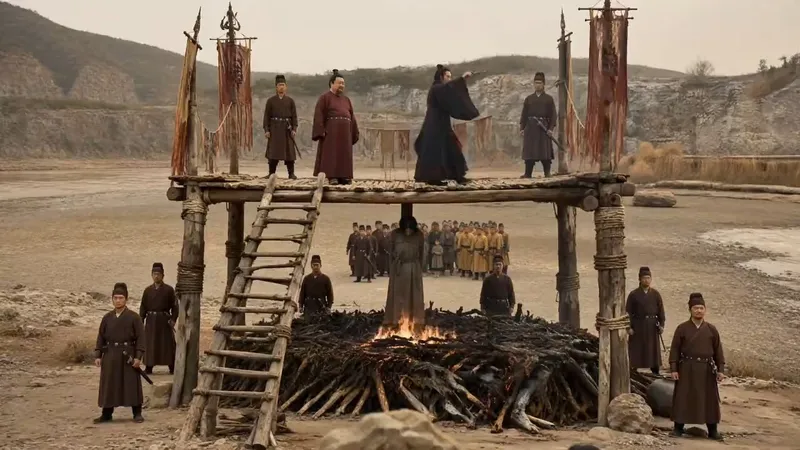 Video
AI Short Drama Pipeline
【What it does】Built around a “storyboard artist” workflow, it moves a short drama through six automated steps: 1. Project setup and requirements: Understands your script, asks only about things you cannot determine from it, and creates three sample images of the same scene in different visual styles so you can choose a direction at a glance; 2. Final script + two tables: Adds filming instructions without changing a single line of dialogue, then creates a “segment table” and a “continuity table” to lock down the details most likely to cause continuity errors; 3. Asset design: Creates a three-view sheet and a distinctive identifying feature for each character, along with settings and a dedicated voice style, to keep the cast consistent throughout the video; 4. Storyboard prompts: Specifies the camera position, duration, performance, ambient sound, and constraints for every segment. Text in the frame is rendered precisely using “first and last frames”; 5. Generation and selection: Generates candidates segment by segment, filters them against hard criteria first—does it look right, is it correct, did it break?—then selects based on performance; 6. Assembly and self-review: Combines everything into an editable video timeline and fixes flash frames, continuity errors, and fake-looking text during editing. It only interrupts you at the three points where your decision is needed: choosing the visual style, approving the assets, and reviewing the footage. 【Who it’s for】 · Independent creators and social media creators who want to complete the entire AI short-drama workflow alone; · Screenwriters and web novel authors with a script or novel who want to adapt it for the screen quickly; · Producers and directors on short-drama and micro-drama teams who want to greatly improve efficiency and reduce costs; · Advertising, e-commerce, and knowledge-commerce teams that need to produce narrative content in volume at low cost; · People who understand storytelling but have no idea how to write prompts or edit video. 【Ways to monetize】 · Platform revenue sharing: Short-drama and mid-length video incentive programs on Douyin, Kuaishou, WeChat Channels, and Bilibili; · Custom commissioned projects: Branded short dramas, product story ads, and corporate promotional videos; · Paid short dramas: Paid episode unlocks in mini programs and revenue sharing from novel promotions; · Account networks and managed operations: Launching multiple accounts at scale and producing dramas for clients; · Copyright and IP: Licensing and adapting scripts and finished videos. 【What makes it different】 It does not just “teach” you how to make short dramas—it does the work directly. You do not need to write prompts or edit the video; you keep only the director’s judgment: deciding whether the scene works. The methodology is built into every step, so it can adapt when you change the genre, visual style, or platform.
 Video
AI Time-Travel Sales Video
This skill generates complete first-person POV short video campaigns featuring modern physical products in ancient settings, solving the common challenges physical merchants face with creative ad scripts, storyboard design, and AI video prompts. The core logic places product flaws or standout features into ancient scenarios, letting historical figures use industry jargon to tell a complete character story rather than a hard sell. Using an eight-shot closed-loop story arc—dilemma, accident, proactive attempt, trouble, twist, enlightenment, and resolution—the product's core attributes drive dramatic impact four times to build memorable characters. Ideal for steel, wontons, river snail rice noodles, building materials, liquor, agricultural products, equipment, and most other physical goods, it helps you produce viral AI time-travel promotional videos while also letting you take custom video orders from physical merchants for monetization.
Information
- Version
- v4
- Last updated
- Runtime credits
- Usage-based
- Models
- Auto
- Use cases
- Writing & contentVideo & audioLearning & education
- What you get
- ScriptPromptPlan
- Visual styles
- CinematicPhotorealisticTraditional Chinese
