MM-Article
MM-Article
Showcase
Description
A lightweight topic research and writing Skill based on sources from the last 3 days. It extracts anchor points (Anchor Bank) from your sources, then recommends 5 candidate topics (3 consensus hot topics + 2 forward-looking signals). After you select a topic, it deep-dives into materials and generates an editable outline. Only proceeds to full writing after you explicitly confirm the outline.
Why we love this skill
Ideal for deep content creators, this Skill accurately captures the latest hot topics and forward-looking signals from vast information, providing well-structured, traceable topic and article outlines to ensure content is both in-depth and timely.
Related Skills
View all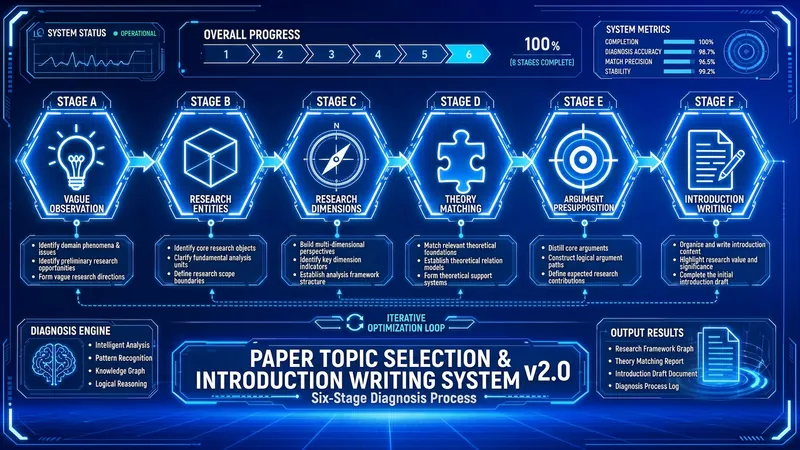 Research
Thesis Topic & Intro v3.2
Read in 10 seconds: turn a vague observation into a defensible topic, then into an introduction that can pass review. Throughout, it uses only the real materials you provide — no fabricated references. Trigger words: thesis topic, topic selection, introduction, research gap, academic writing, thesis proposal, topic selection before literature review. Applies to: journal papers / dissertations / conference papers / course papers, across all disciplines — humanities and social sciences, STEM, agriculture, medicine, and life sciences. Up and running in 3 minutes: lock in your discipline and starting point → shape the topic layer by layer → strict evidence-chain gate → module-by-module introduction → ratchet finalization. [Division of labor with other skills] The health check comes first, writing comes after, and polishing comes last. This skill handles the middle stretch: topic shaping + introduction draft. It does not write the full paper (that's the Academic Paper Full-Process Writing System v4.x), and it does not polish language sentence by sentence (that's the Academic Paper Three-Track Polishing System v8.x). [Six gates] 1. Discipline placement: classify into one of four categories — 1A humanities/arts, 1B social sciences, 2A STEM, 2B agriculture/medicine/life sciences — and load the corresponding red-line norms; for category 2B, ethics review status is always checked. 2. Stage positioning: are you at a vague observation, have a unit but no angle, have an object but no theory, lack a method, lack a viewpoint, or only lack an introduction? Start from the corresponding gate instead of starting over from scratch. 3. Topic shaping: research unit → dimension compass → theoretical perspective → research method → research viewpoint, locked layer by layer; before locking each layer, first judge whether the previous layer holds. 4. Strict evidence-chain gate: before the introduction, your references are registered into an M1/M2… material library, each entry verified on four elements — author/year/title/locator; if fewer than 3 references are registered in the conversation, the system refuses to generate the research-gap statement — not a downgrade, a refusal. 5. Module-by-module generation: the introduction is produced in five inverted-pyramid modules, and each module must be annotated with citation numbers [Mn]; no source, no sentence. 6. Ratchet finalization: only versions that have passed receive credit; qualifying modules are locked and no longer changed; scores only go up, never down. [Deliverables] A '[Topic Keyword] · Topic & Introduction' document + a sentence-level traceable citation mapping table + a ⚠️ to-verify checklist + an AFP archive code. The archive code works across four systems — the proposal health-checker, the v4.x full-process system, and the three-track polishing system — so switching skills doesn't require re-stating your discipline, topic, journal, or material library. [Explicitly not done] It does not fabricate authors, years, volumes, issues, page numbers, or DOIs; any bibliographic records retrieved online are marked ⚠️ to-verify and can only be written into the reference list after you verify them; it makes no promises of acceptance or passing review. Authorship and responsibility are yours — please verify every citation and data point.
Low-Altitude Economy Planner
A low-altitude economy topic-planning skill for content creators. After clarifying the platform and audience, it scans the web for low-altitude economy trends from the past 7–14 days, including policy releases, airworthiness certifications, route pilots, order financing, and landmark events. It produces a pool of topics with two headline options, suggested angles, and highlight assessments for you to select from, then expands your chosen topics into writing-ready plans with 3–5 section outlines, a 150-word sample opening, a fact-checking checklist, and distribution recommendations. It uses only information with clear sources, citing the source and date throughout. It does not fabricate order values, financing figures, or policy details. Delivery ends at the outline stage: it does not write the full article and does not develop stock recommendation topics.
 Write
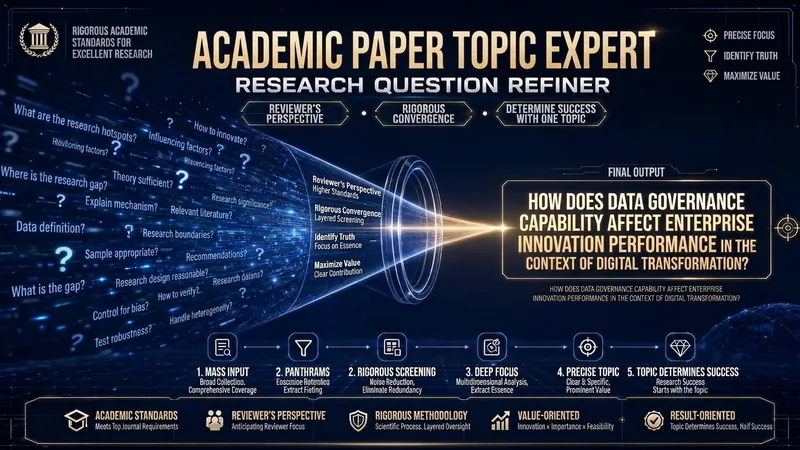
WriteAcademic Research Question
• Diagnose candidate topics: Identify overly broad topics, unclear subjects, uncontrolled boundaries, and false novelty before determining whether the topic is ready to be finalized. • Narrow the research scope: Remove nonessential subjects, variables, and objectives to reduce “trying to study everything” to one central question. • Derive the core question: Identify a single research direction based on subject clarity, question sharpness, scope control, and fit with available materials. • Generate a standardized title: Produce one Chinese title aligned with the research question, with an English title and a specific contribution statement when needed. After opening, say: “I have 3 candidate topics and want to submit to a CSSCI journal. Help me finalize the topic.” It will first check the research subject, core question, scope, and practical constraints, then provide a well-supported final research question. If information is insufficient, it will ask follow-up questions instead of forcing a polished title. Suitable for: Researchers with candidate topics who are struggling to choose one / scholars who need to focus quickly before submission / anyone who does not want to be rejected by a reviewer’s one-line criticism that the research question is unclear. ✅ This version has undergone two months of refinement, testing, and iteration.
Information
- Version
- v3
- Last updated
- Runtime credits
- Usage-based
- Models
- Auto