
Low-Altitude Economy Planner
Scan trends, shortlist ideas, build outlines
Low-Altitude Economy Planner
Scan trends, shortlist ideas, build outlines
Showcase
Description
A low-altitude economy topic-planning skill for content creators. After clarifying the platform and audience, it scans the web for low-altitude economy trends from the past 7–14 days, including policy releases, airworthiness certifications, route pilots, order financing, and landmark events. It produces a pool of topics with two headline options, suggested angles, and highlight assessments for you to select from, then expands your chosen topics into writing-ready plans with 3–5 section outlines, a 150-word sample opening, a fact-checking checklist, and distribution recommendations. It uses only information with clear sources, citing the source and date throughout. It does not fabricate order values, financing figures, or policy details. Delivery ends at the outline stage: it does not write the full article and does not develop stock recommendation topics.
Best for
Content creators who regularly plan low-altitude economy content, quickly filter trends, and develop writing frameworks.
How to use this Skill
Provide your input
Provide the publishing platform, target audience, existing materials or topics to research, update frequency, and desired number of ideas.
Run the Skill
Scan recent low-altitude economy developments and organize an idea pool with headline options, angles, and highlight assessments. After you select ideas, expand them into writing plans.
Review your result
Get writing-ready topic plans with section outlines, a sample opening, a fact-checking checklist, and distribution recommendations.
Related Skills
View allLow-Altitude Economy Lessons
A lesson-planning assistant for K–12 teachers covering low-altitude economy topics. It customizes the instructional design by grade band and class type, first providing learning objectives and a page-by-page outline for teacher approval. After verifying regulatory requirements and case details online, it generates a ready-to-teach page-by-page lesson script or PPT, including image prompts and speaker notes. Safety and regulatory content is included for all age groups, with factual accuracy prioritized over entertainment.
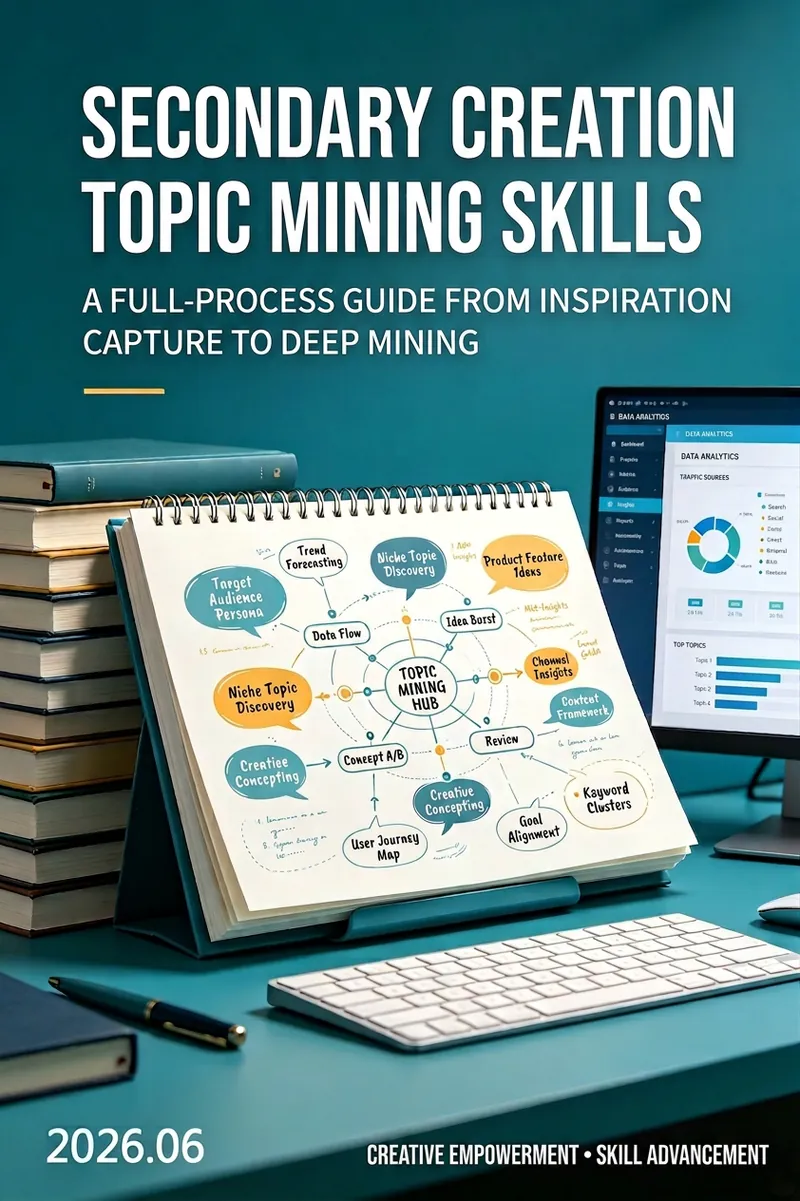
Secondary Content Topic Mining
Based on original materials provided by the user (full articles, video subtitles, interview transcripts, etc.), systematically mine derivative content topics with high viral potential, serving WeChat Official Account / image-text content creators. Each time, it outputs 5 candidate topics, with viral potential analysis and creation suggestions for each. For example, when feeding the article or article link 'Why implement zero tariffs on African diplomatic relations countries?', the skill outputs the following: 【Topic 1】 📌 Title: Today A-shares fell for the fourth straight day, but I saw a message that changes your wallet 🎯 Target audience: General finance readers interested in personal finance/stock market, middle class with asset anxiety ✍️ Creation direction suggestion: Use the original author's emotional transition of 'drop phone → pick up phone' as the narrative framework, do a knowledge popularization of 'a retail investor understands zero tariffs'. Structure: market opens red → anger → push notification → curiosity → deep dive → discover relevance → relief. Core selling point: Make readers feel 'big policies are not far from ordinary people,' coffee cheaper, fruit prices down, maybe investment opportunities. 💡 Material source hint: The beginning of the original article 'A-share three major indexes collectively retreated' 'account green and bright' and the dialogue with wife paragraph 【Topic 2】 📌 Title: China earned $735 billion trade surplus last year, but this may be the most dangerous 'win' in history 🎯 Target audience: Business/finance professionals with macroeconomic awareness, in-depth readers interested in international affairs ✍️ Creation direction suggestion: Use the 'surplus paradox' as entry point for a counterintuitive macroeconomic analysis. Structure: present data (735 billion) → break down logic (surplus for dollars → buy US treasuries → locked in → resources limited) → case study (Zimbabwe lithium ban 'midnight phone tremble') → way out (zero tariff 'water inlet valve' logic). Core selling point: Subvert readers' naive understanding of 'surplus' and provide a new thinking framework. 💡 Material source hint: Original 'On paper you are the winner, but ecologically you are the fragile side' and foreign exchange reserve analysis paragraph 【Topic 3】 📌 Title: Behind zero tariffs, full map of Africa concept stocks: coffee, lithium, helium – who benefits most? 🎯 Target audience: Individual investors focusing on A-share short-term opportunities, industry analysts ✍️ Creation direction suggestion: Use 'investment map' format to sort zero tariff beneficiary sectors. Three sections: ① Consumer goods (coffee – Ethiopia, flowers – Kenya, fruit – South Africa/Benin, nuts – Zambia), focus on signed listed companies like 三顿半, 晨光生物; ② Strategic resources (lithium – Zimbabwe, cobalt – DRC, helium), focus on helium concept stocks that hit daily limit; ③ Cross-border payment/logistics (Standard Bank of South Africa connected to CIPS, rail-sea intermodal). Mark risk points in each sector, no stock picks but provide information framework. 💡 Material source hint: Original paragraphs on 晨光生物 statement, helium concept stock limit-up, 三顿半 cooperation with Ethiopia, etc. 【Topic 4】 📌 Title: Why did a Benin pineapple farmer's pineapple win a tens of millions of dollars deal at the Shanghai CIIE? 🎯 Target audience: General readers interested in international development, globalization stories, knowledge groups with interest in human narratives ✍️ Creation direction suggestion: Use the Benin pineapple 'sweet bread' as protagonist for a globalization narrative that sees the big from the small. Structure: journey of a pineapple (Benin fields → shipping → CIIE → Chinese table) → fate change for 200 farming households → behind it the system design of zero tariff policy → ultimately pointing to China's new global division of labor logic: 'using consumption growth to activate African production capacity'. Core selling point: Translate cold large policies into a warm story of a pineapple. 💡 Material source hint: Original Benin pineapple paragraph – 'nicknamed sweet bread' 'signed millions of dollars deal at CIIE' 'driven 200+ farming households to expand production' 【Topic 5】 📌 Title: South African bank quietly connected to China's payment system, the dollar's wall in Africa begins to crack 🎯 Target audience: In-depth readers interested in international finance, geopolitics, de-dollarization topics ✍️ Creation direction suggestion: Use Standard Bank of South Africa's connection to CIPS as entry point to tell a story of 'RMB quietly going overseas to Africa'. Structure: traditional China-Africa trade process (USD settlement → commissions → reliance on SWIFT) → changes after CIPS connection (direct RMB settlement → bypass intermediaries → cost reduction) → coupled with zero tariffs, forming 'trade + settlement' twin engines → larger picture: if more African countries follow, the US dollar's 'seigniorage' on the African continent will gradually dissolve. Core selling point: This is not a grand narrative, but a reality already happening at Standard Bank of South Africa. 💡 Material source hint: Original paragraph 'Standard Bank of South Africa has connected to CIPS RMB cross-border payment system' and de-dollarization analysis paragraph
Low-Altitude Economy Radar
Research and verify policy and industry information for a specified region and low-altitude economy segment. Confirm the outline first, then generate a polished HTML industry radar report with maturity ratings, tables, and source links.
Information
- Version
- v3
- Last updated
- Runtime credits
- Usage-based
- Models
- Auto
- Use cases
- Writing & contentResearch & analysis
- What you get
- BriefPlan