
AI Video Storyboard Sheet
Turn scripts into shot-by-shot prompts
AI Video Storyboard Sheet
Turn scripts into shot-by-shot prompts
Showcase
Description
Two of the most common ways AI videos go wrong are unclear instructions to the model (for example, “a vibrant person welcoming a new day” is too vague to execute) and characters who look different from one shot to the next. 【AI Video Storyboard Sheet】 breaks your script into a table you can copy and paste into an AI video tool for shot-by-shot generation. Each shot covers five elements: subject (who is performing what visible action), environment (what appears in the foreground and background), lighting (direction, softness, and color temperature), camera (shot size, camera height, and movement), and a style line (materials and color palette). The most important part is the “three-step consistency method”: write the main character description as a fixed text block and copy it exactly each time while changing only the action; repeat the same lighting and scene description in every shot; and anchor the sequence with a first-frame image before letting the video tool use it as a reference, which is much more effective than repeatedly revising text prompts. It also provides duration breakdowns and transition suggestions, along with six common failure points and ways to avoid them: distorted faces when multiple people appear together, warped forms during fast movement, garbled text in the frame, incorrect hands in close-ups, blurry reflective materials, and clothing color changes between shots. Strict rules: it does not generate videos, use real-person portraits, or perform face swaps; it does not include existing cartoon, anime, game, or film characters; it does not imitate living directors or artists, even without naming them; it does not generate images of minors or exposed content; and it does not teach users to present generated footage as real news.
Best for
Content creators, marketers, and video producers who need to turn scripts into AI video storyboards and shot-by-shot generation prompts.
How to use this Skill
Provide your input
Provide a voiceover script, product introduction, or story, along with its purpose, duration, aspect ratio, overall tone, subjects or scenes that must stay consistent, and the tool you'll use.
Run the Skill
Break the script into a shot-by-shot storyboard with visible actions, environment, lighting, shot size, camera position, movement, and style, while keeping character and scene descriptions consistent.
Review your result
Get shot-by-shot prompts you can copy into an AI video tool, plus first-frame descriptions, timing, transition suggestions, and tips for avoiding common visual problems.
Related Skills
View all Video
AI Motion Comic Storyboard Master
1. Continuity First: Keep scenes, lighting, and core character features highly consistent across shots. Shot transitions must follow audiovisual logic. 2. 50-Second Golden Pacing: Strictly control the total duration to 50 seconds, divided into 5 to 7 core storyboards. 3. Vivid Expressions & Actions: Avoid empty psychological descriptions. Express all emotions through micro-expressions, body movements, and physical reactions. 4. Multi-dimensional Audio Visual: Accurately match each storyboard with visual descriptions, prompts, voiceover, dialogue, environmental sound effects, and background music emotions. The ultimate director in AI short dramas. Input a script or a single idea to generate a complete 50-second production plan with core storyboards, camera work, bilingual prompts for Kling, Seedance, or Midjourney, voiceover copy, and timed sound effects. Features a character cross-stage consistency locking mechanism to prevent visual drift.
AI Video & Storyboard Prompts
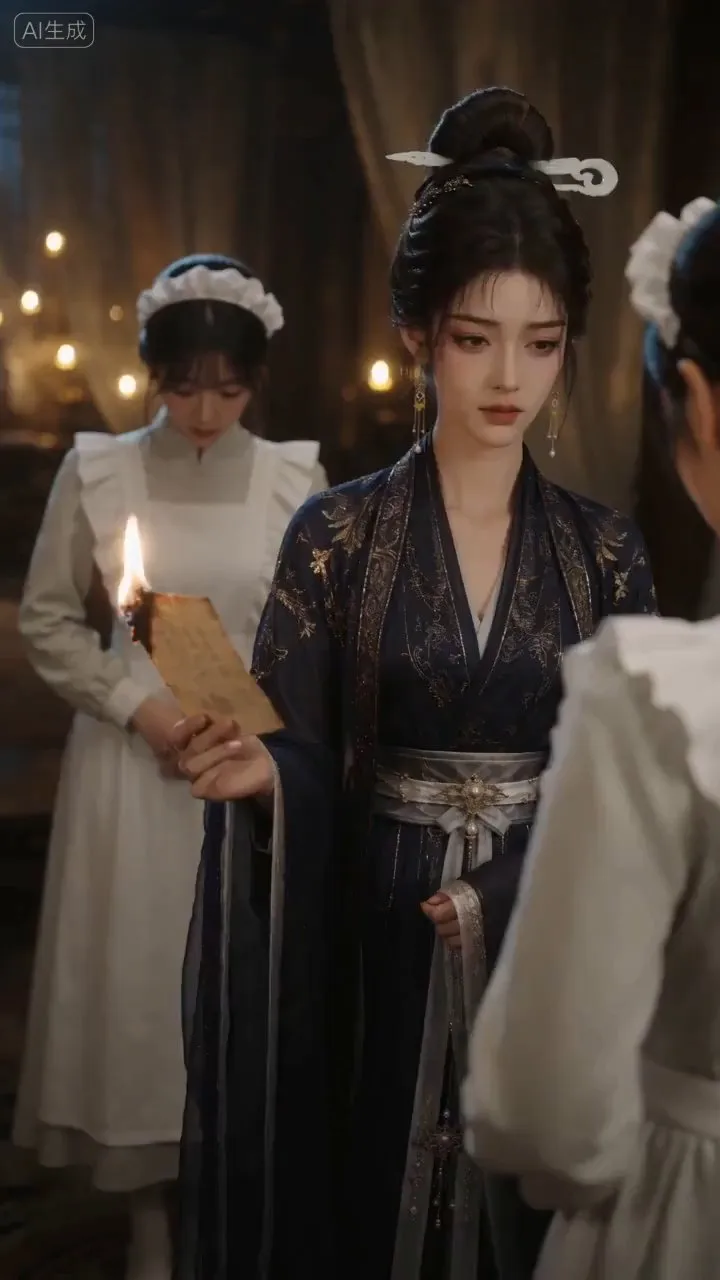
Turn storylines, character profiles, or existing video prompts into professional storyboards and ready-to-use shot prompts for AI video generation. Whether the scene involves contemporary life, historical drama, mystery, romance, or high-payoff drama, the skill focuses on character relationships, pacing, and emotional hooks. It clearly defines shot scale, camera position, perspective, camera movement, composition, lighting, ambient sound, and dialogue, giving every shot a clear visual focus and actionable movement. The skill pays close attention to character consistency and scene continuity. It helps lock in each character’s appearance, clothing logic, identity and status, and defining details, reducing generation issues such as facial changes, visual drift, spatial confusion, and unclear actions. A character’s gaze, expressions, breathing, hand movements, and physical reactions are also translated into visible performance changes, strengthening conflict, tension, twists, and emotional progression. You can start with a complete storyline or provide existing character assets, storyboards, or prompts for targeted optimization. When you already have an established character profile, it can be reused directly to avoid redesigning it. The complete sequence can then be organized into clips of 15 seconds or less for generation with mainstream AI video models, while preserving visual, audio, and duration details for easy copying, use, and further editing.
 Video
Single-Image Video Generator
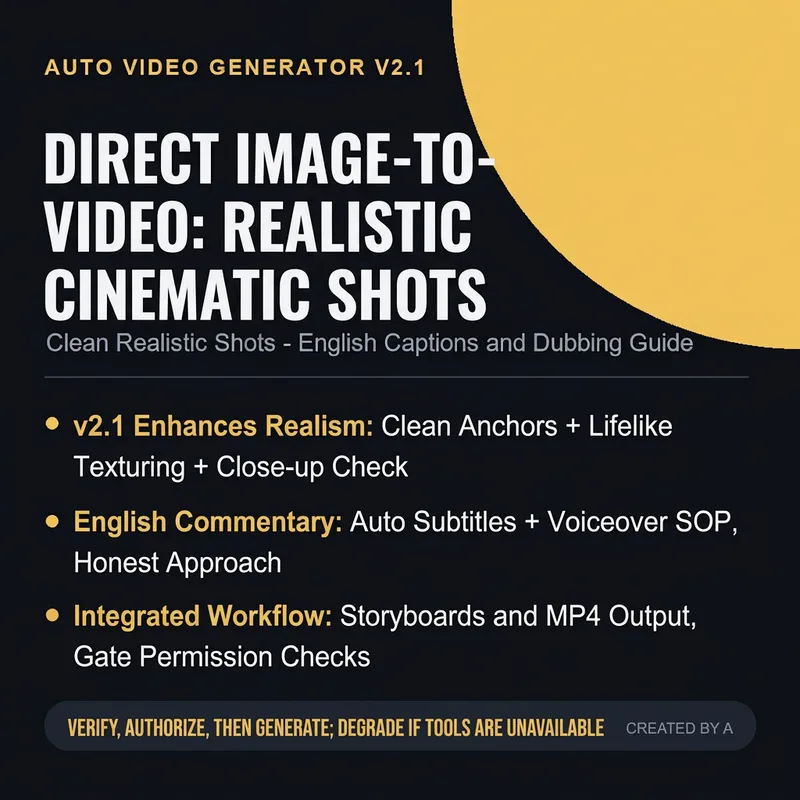
This Skill actively calls available image and video generation tools right inside the chat, delivering actual storyboard image files and stitched video files rather than just a sheet of prompt text. Starting from v2.0.0, models can also introduce products in English—not just moving their lips on screen, but actually building English voiceovers into the final output. ## Summary **Instead of giving you prompts to run yourself, it detects tools in the chat, gets your confirmation, directly creates storyboard images and a stitched MP4 file, and provides English subtitles plus step-by-step instructions for adding English vocals at the publishing stage.** ## Detailed Description When you upload an image, this Skill performs three tasks in the chat first: detects truly available image, video, and stitching tools in the current session; checks material ownership, trademark text, character compliance, authorization, content safety, advertising terms, AI labeling, and tool boundaries item by item; and clearly states how many times it plans to call tools and the resulting credit consumption, waiting for your explicit agreement before generating. Generation offers two paths. **Path A**: Generates six storyboard first-frame images, checks the subject, text, characters, and lighting frame by frame, turns each frame into a short clip, and finally stitches them into an MP4—preventing text drift and character shifting during the image stage. **Path B**: For single subjects, single actions, and no-text quick tests, use the input image plus a prompt to generate a video directly, falling back to Path A if it fails, avoiding repeated point consumption on a single path. Multiple neutral, fictional, or adult character descriptions can be applied to the same image. A sample video set is generated first for your confirmation before batch processing. Each batch ends with a report of actual tool calls and real file paths for easy consumption verification. **How English Narration Works (Tested and Honestly Explained)**: First, it locks in a verifiable product fact anchor (parameters, certifications, and prices that cannot be found are marked as "to be verified" without fabrication), then writes graded English scripts according to character tones—one for casual sharing, one for calm explanation, and one for professional review. Each sentence is 6 to 12 words and can be spoken within the corresponding shot duration. It creates an audio-video alignment table pinning down "which shot, what to say, where to place subtitles," checking English ad compliance sentence by sentence (zero tolerance for absolute terms, and parameters/certifications must have sources). **An Honest Platform Fact**: Video modes on platforms like YOUMIND only generate visuals, and audio tracks are usually background music, **without automatically generating English vocals**. Therefore, English narration is delivered in two layers: ① English subtitles are always generated and placed in the visual negative space as "visible English," independent of any voice tools; ② If no voice tool is detected in the current environment (common in YOUMIND), it provides you with the English script, alignment table, and step-by-step instructions for the publishing layer (paste English sentences into Jianying / CapCut's "Text to Speech," select an English voice, and trim/overlay according to the alignment table). **The final output video only contains subtitles, not English vocals, which you must add at the publishing layer**—it does not call background music English narration nor fake voiceovers. If the environment happens to have a voice tool, it directly generates and overlays the English audio track into the final video. **v2.1 Fixing "Grime" and "AI Look" (Fixed based on test feedback)**: Four layers of prompts add product clean anchors (clean, pristine, no smudges) and live-action texture anchors (natural skin texture, fabric weaves, handheld feel, natural light). The negative layer excludes stains, grime, wax skin, over-smoothing, plastic feel, and cartoon rendering. Close-up product shots are enlarged and checked shot by shot for cleanliness and realism. If dirty or too fake, anchors are added and re-adjusted, avoiding the delivery of dirty items or wax-like appearances as final work. **If the input image itself is dirty, please switch to a clean and clear product image first**—prompts cannot save a dirty image. **When no generation tools are available in the current environment, the Skill directly states "unable to automatically generate video" and provides a complete prompt package and storyboard table as a fallback delivery**. Regardless of the scenario, it never fakes generation, fakes voiceovers, or fabricates file paths. **It consumes credits**: Every image or video generation call incurs platform credit or subscription quota consumption, subject to the platform's current display. This Skill does not promise specific figures or claim zero cost. Generation results are probabilistic and do not guarantee one-shot success, viral hits, earnings, or platform approval. AI-generated content labeling is handled according to the target platform's current official requirements, with unclear rules marked as "to be verified." Available models and account status depend on your creation interface's real-time display. The Skill first detects tool support, and if unsupported, clearly states so and offers alternatives without faking the use of specified models. ## Three Selling Points 1. **Truly Produces Files**: Delivers storyboard images, video clips, and stitched MP4s, not just a sheet of prompt text. 2. **Reliable English Narration**: Fact anchors -> Graded English scripts -> Audio-video alignment -> Ad compliance -> Mandatory English subtitles + Publishing-layer English voiceover SOP. Honestly explains that the video itself does not speak English and vocals must be added later, avoiding treating background music as narration. 3. **Cures Grime and AI Look (v2.1)**: Clean anchors + Live-action texture anchors + Shot-by-shot enlarged QA ensure close-ups are clean and avoid plastic wax looks. It detects tools, passes 9 gates, reports consumption, and confirms before acting, gracefully falling back if tools are missing.
Information
- Version
- v2
- Last updated
- Runtime credits
- Usage-based
- Models
- Auto
- Use cases
- Writing & contentVideo & audioMarketing & growth
- What you get
- DocumentPromptPlan
