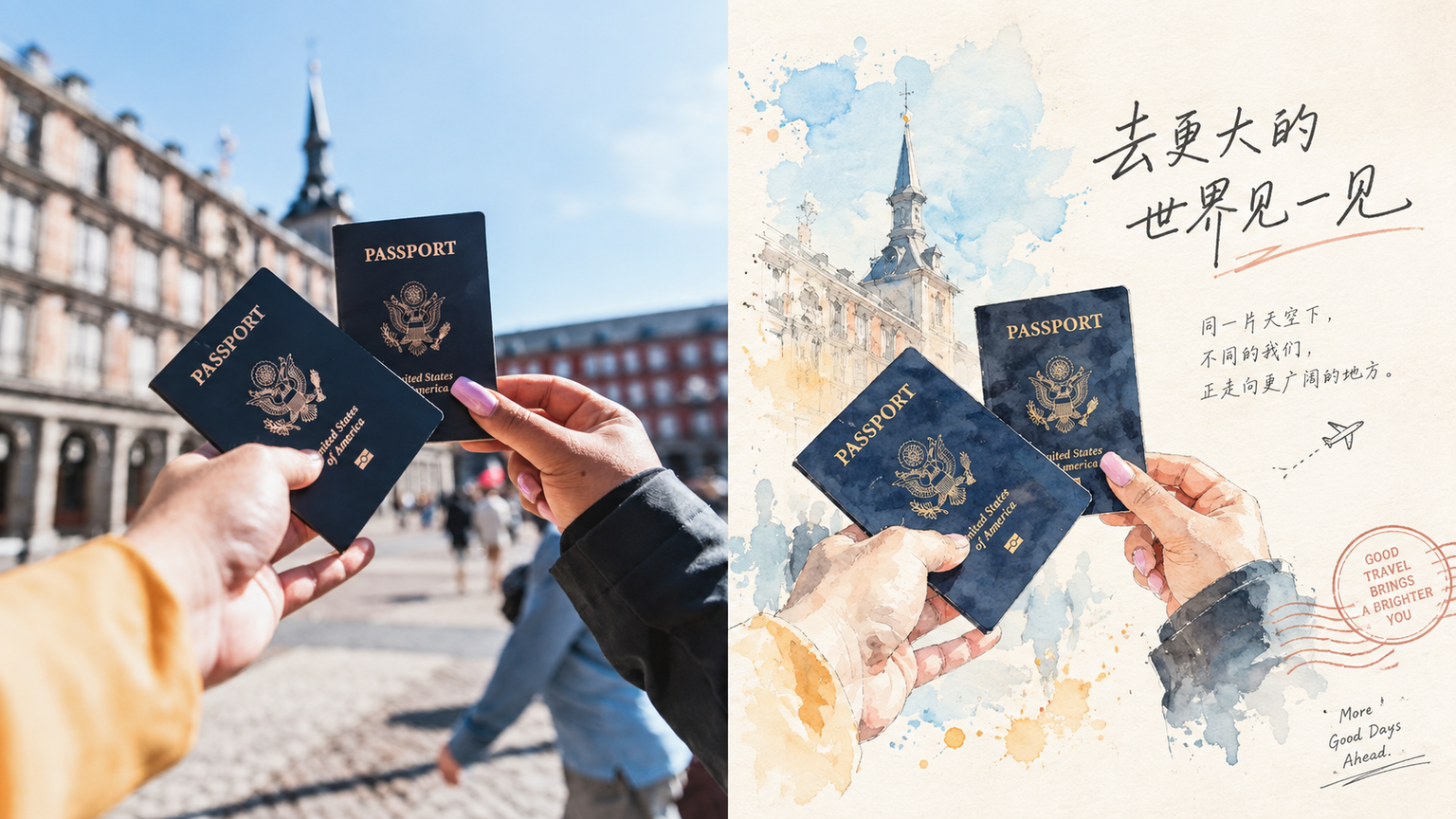
Travel Log · xiaoxiaodong P248
By xiaoxiaodong
Travel Log · xiaoxiaodong P248
By xiaoxiaodong
Showcase
Description
Ideal for turning a photo into a preserved page from an old travel journal. The original photo occupies the upper half; the lower half actively removes unrelated objects, keeping only cues that convey the subject’s spirit. The subject may be small, off-center, or placed near the edge. Negative space becomes air, distance, and time. Transparent watercolor, pale ink, and paper texture retain natural diffusion and pauses. Marks and collage serve only as minimal emotional cues. Avoid showing a complete landscape or adding excessive decoration.
Recommended by
淡苍
Why we love this skill
Turns photos into watercolor memories from an old travel journal, with an intentionally small, offset subject, extreme negative space, light ink, hand-drawn lines, and subtle paper texture. It avoids loud decoration and mechanical realism.
Best for
For anyone who wants to turn a photo into a restrained, spacious old travel journal-style illustration.
How to use this Skill
Provide your input
Provide one photo or image folder.
Run the Skill
Rework the image as an old travel journal page, preserving the subject’s key cues and generous negative space, with light watercolor, pale ink, and subtle paper texture.
Review your result
Generate a finished PNG travel journal page illustration.
Related Skills
View all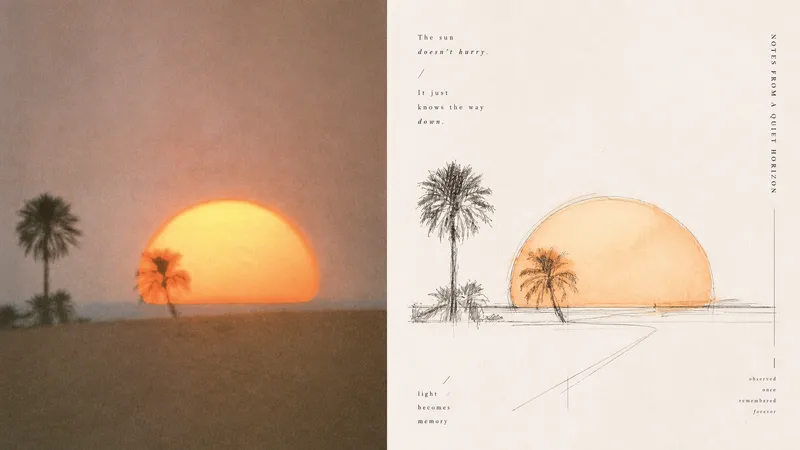 Image
Imagexiaoxiaodong x Sketch Wash P079
Ordinary photo outline filters mechanically copy edges; full watercolor treatments tend to fill the background, making the subject, space, and editorial rhythm feel heavy. Panel 079 keeps only the structures, spaces, gestures, and relationships in the scene most worth remembering: long straight perspective lines, angular lines, and geometric axes build a rational framework; free organic curves, searching lines, and broken lines retain a tactile feel; a small amount of transparent watercolor extracts recognizable colors from the original. Broad areas of natural paper white create air and pauses. Text follows structural lines and whitespace to join the composition, resulting in something like an art-directed architectural travel sketchbook or an independent visual publication. Best suited for these situations - **Architecture, travel, and on-site observation:** Use the strongest straight lines, turns, facets, and proportional relationships to build the space. - **You want to preserve the vitality of an “in-progress drawing”:** Embrace exploratory repeated lines, broken lines, slight misalignment, and unfinished edges. - **You want color drawn from the photo without overfilling the image:** Use a small amount of transparent wash only where needed, layering ink lines, color, and paper white. - **You need flexible delivery:** Supports portrait, landscape, design-only, multiple aspect ratios, and four-edge wallpaper formats, and can batch-process image directories.
 Image
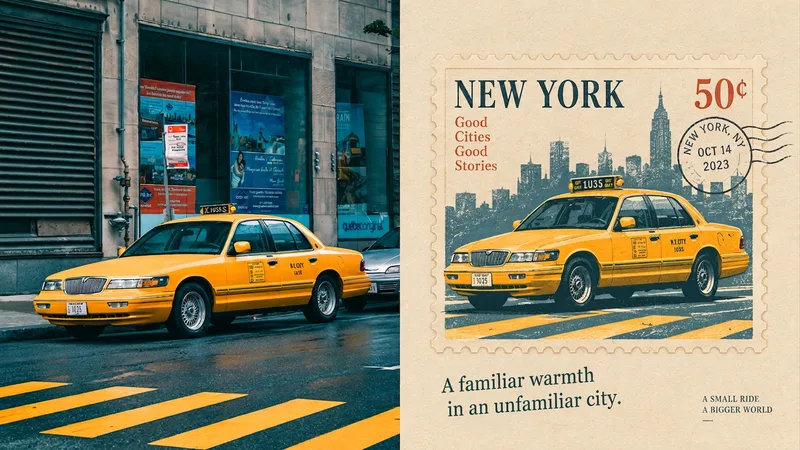
ImageTravel Memory Stamp | xiaoxiaodong P255
Perfect for turning ordinary moments into collectible personal memories. The original image fills the upper half; the lower half keeps only the anchor that best establishes its identity, resolved as a stamp. The stamp is the creative core, not a decorative border. It can be centered, offset, placed at the edge, or slightly cropped. Keep the colored-pencil, crayon, paper-grain, and uneven screen-print qualities. Lines may wobble slightly, and colors may stray slightly beyond the edges. Avoid complete scenes, smooth digital illustration, and stamps used only as borders.
 Image
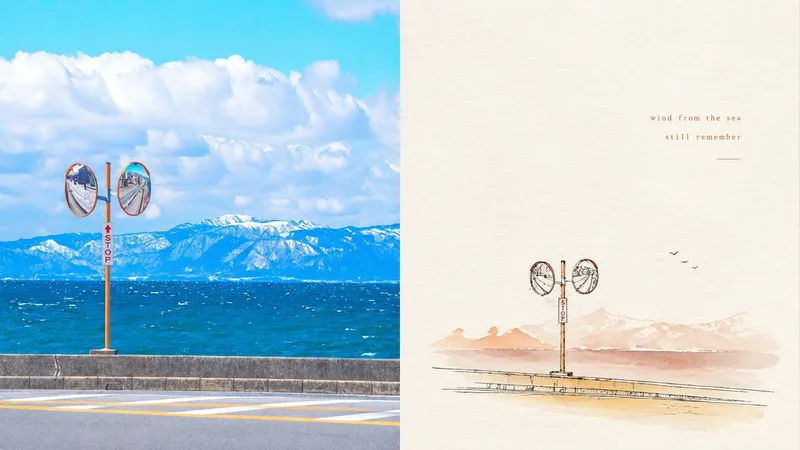
Imagexiaoxiaodong P132 Travel Sketch
Suitable for organizing personal photography, independent publishing, exhibition practice, and lifestyle-focused visual creation. Even when the original photo has an ordinary composition, a cluttered background, or a small subject, you can reestablish its visual focus through subtraction, reorganization, cropping, and changes in scale—instead of simply applying a filter. The lower section extracts only the most recognizable subjects, contours, structures, poses, and narrative relationships from the photo, then reconstructs them as architectural and scene illustrations in a pen-and-ink watercolor style. Do not copy the photo in full, redraw every object individually, or retain all objects and background details. Remove most irrelevant details and keep only the structures, visual flow, and visual cues that best represent the original subject and theme, so the connection between the illustration and the photo above is immediately recognizable.
Information
- Version
- v3
- Last updated
- Runtime credits
- Usage-based
- Models
- Auto
- Use cases
- Images & design
- What you get
- Image
- Visual styles
- WatercolorInk washPaper art