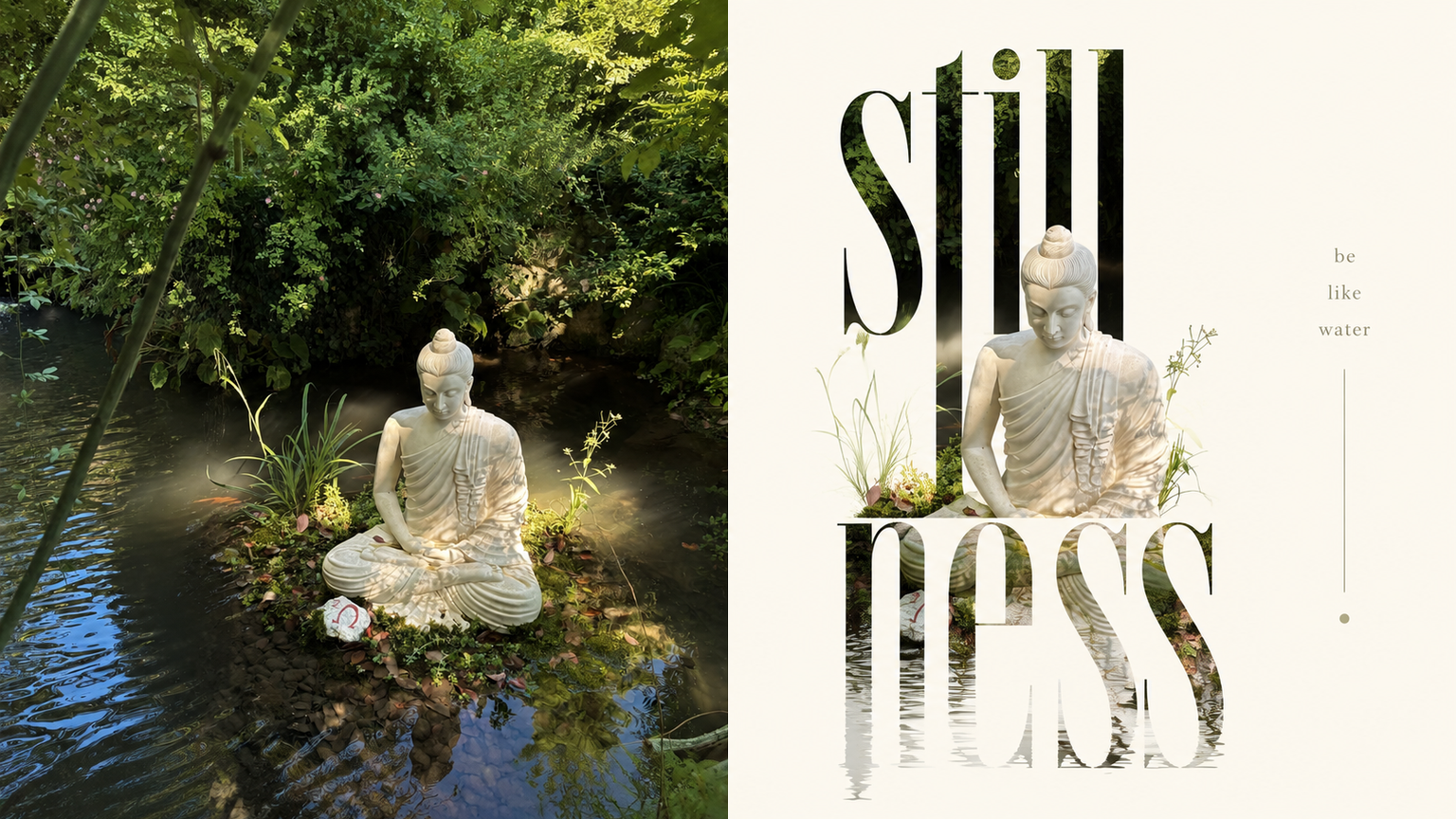
xiaoxiaodong P142 | Type Mask
By xiaoxiaodong
xiaoxiaodong P142 | Type Mask
By xiaoxiaodong
Showcase
Description
Suitable for organizing personal photography, independent publishing, exhibition studies, and lifestyle-oriented visual work. Even when the original composition is ordinary, the background is cluttered, or the subject is too small, you can reestablish a visual focus through subtraction, rearrangement, cropping, and changes in scale—rather than simply applying a filter to the photo. The lower section extracts only the most recognizable subject, outline, structure, pose, and narrative relationships from the photo. It then applies fresh artistic judgment to reconstruct them as a conceptual poster centered on type-as-image, type masks, and type–image fusion. Do not reproduce the photo in full or simply place the entire photo inside the text. Instead, remove most of the background and irrelevant information, retaining only the key visual memories so the subject remains clearly connected to the photo above.
Recommended by
Dancang
Why we love this skill
Using the original image as the sole creative anchor, it fuses real imagery with glyph masks, material texture, and whitespace into a polished two-zone work, following the original brief and supporting flexible layouts and wallpaper output.
Related Skills
View all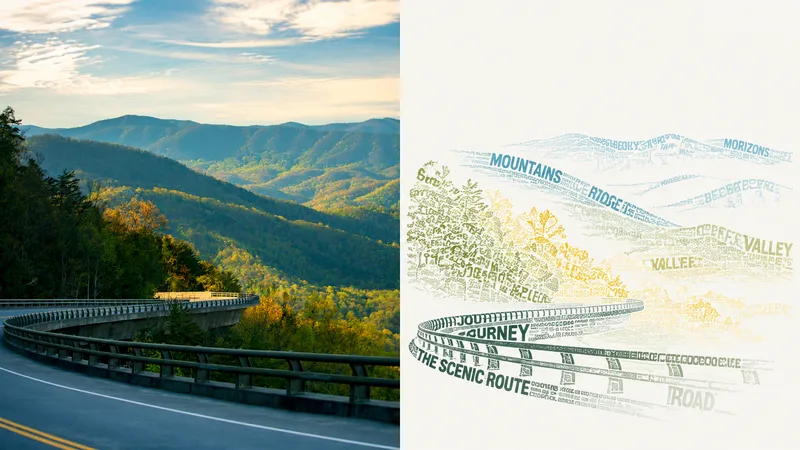 Image
xiaoxiaodong P143: Visual Poem
Ideal for organizing personal photography, independent publishing, exhibition studies, and lifestyle visual projects. Even when the original photo has an ordinary composition, a cluttered background, or a small subject, its focus can be re-established through reduction, reorganization, cropping, and changes in scale, rather than simply applying a filter. The lower section extracts only the most recognizable subjects, outlines, structures, poses, and narrative relationships from the photo, reconstructing them as a typographic illustration in which “text is image.” Do not copy the photo in full or retain every object. Instead, remove most of the background and unrelated details, using text as points, lines, planes, and grain. Through repetition, scaling, rotation, variations in density, path-based arrangement, and localized layering, reshape the subject’s outline, mass, direction, and defining features so that its correspondence with the photo above is immediately recognizable.
 Image
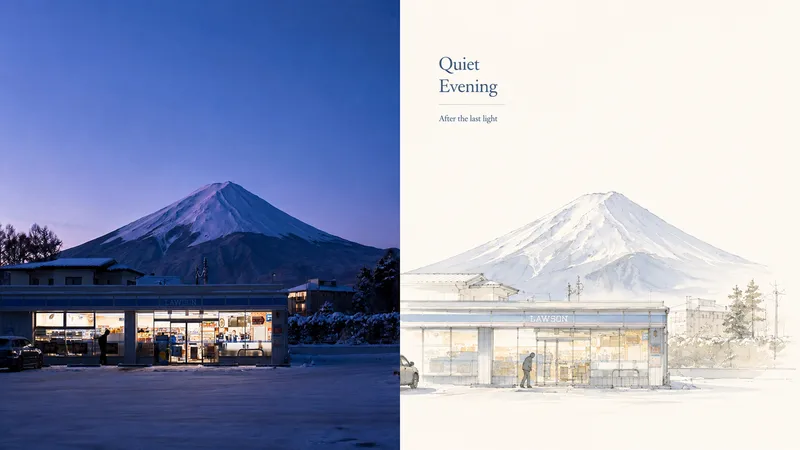
xiaoxiaodong P155 | 1-Point
For organizing personal photography, independent publishing, exhibition practice, and lifestyle visual creation. Even when the original image has an ordinary composition, a cluttered background, or a small subject, its focus can be re-established through subtraction, reorganization, cropping, and changes in scale—not by simply applying a filter. In the lower section, extract only the most recognizable subject, outline, structure, pose, and narrative relationships from the photo, and reconstruct them as a one-point-perspective interior design sketch / softly colored architectural interior rendering. Do not copy the photo in full or retain every object. Remove irrelevant details and keep only the structures, directional flow, and visual memory cues that best represent the original, then summarize and reinterpret them so the relationship to the photo above is immediately recognizable.
 Image
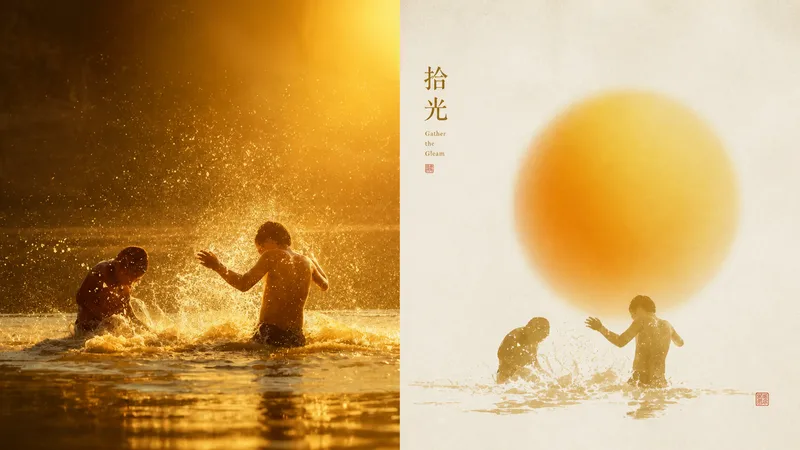
xiaoxiaodong P129 | Open Space
Ideal for organizing personal photography, independent publishing, exhibition studies, and lifestyle-oriented visual work. Even when the original composition is ordinary, the background is cluttered, or the subject is too small, you can reestablish a focal point through reduction, rearrangement, cropping, and changes in scale instead of simply applying a filter to the photo. The lower section extracts only the most recognizable subjects, contours, structures, gestures, and narrative relationships from the photo, then reconstructs them as a new Chinese-style Eastern minimalist graphic poster. Do not copy the photo in full, redraw every object individually, or retain all the objects and background. Remove irrelevant details and keep only the visual cues that best represent the original subject and theme. Reexpress them through silhouettes, symbols, geometric forms, and imagery so viewers can immediately recognize the connection to the photo above while clearly experiencing a considered redesign rather than a replica.
Information
- Version
- v3
- Last updated
- Runtime credits
- Usage-based
- Models
- Auto
