
Exit Checklist
Scripts, handoff, and reference-check prep
Exit Checklist
Scripts, handoff, and reference-check prep
Showcase
Description
The costliest part of leaving a job isn’t the money you might lose—it’s saying the wrong thing. First, it identifies what stage you’re at and what you most want to protect: money, your reputation, or speed. Then it gives you a practical exit plan you can use right away: what to say when resigning, how to respond to four common company tactics, what to watch for in the handoff and employment certificate, and what others may ask during a reference check. Ground rules: no legal advice (for severance or non-compete matters, it will always suggest consulting a lawyer), no coaching for confrontation, and no deciding for you whether to leave. It’s for people who are debating whether to go or have already resigned and don’t know what to do next.
Related Skills
View all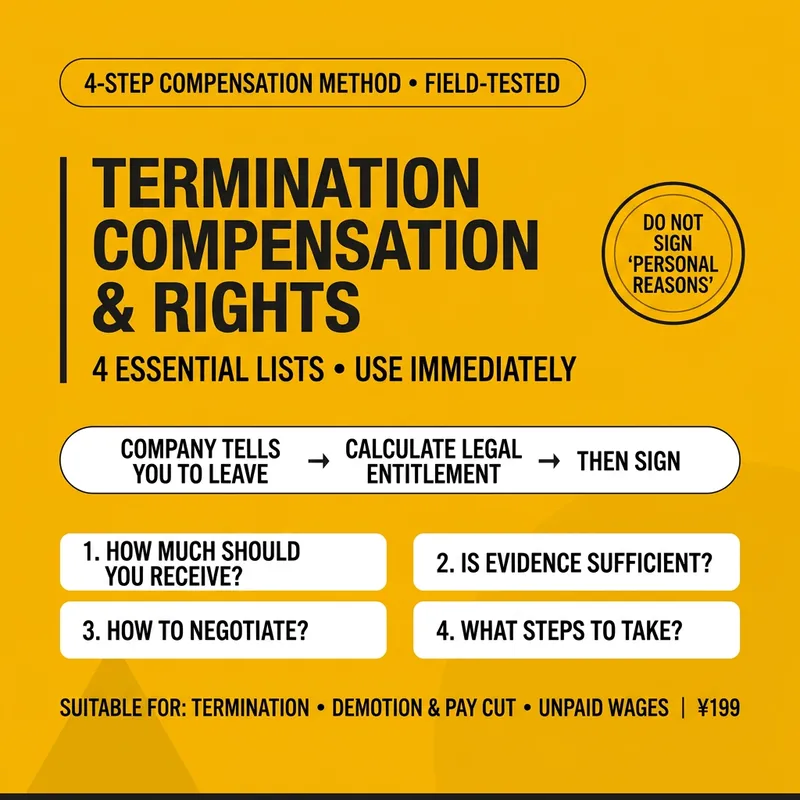
Severance & Rights Guide
A rights-protection skill for workers facing termination, job reassignments, or unpaid wages. Triggered when users ask questions about severance amounts, unlawful layoffs, N+1 calculations, forced voluntary resignation letters, pay cuts, required evidence for arbitration, or year-end optimizations. It uses a four-question framework (How much is owed / Is the evidence sufficient / What to say / What path to take) to generate four actionable rights-protection checklists. Version 1.0.0. Your personal rights-protection checklist generator: turns HR tactics, your evidence, and statutory compensation into four ready-to-use lists detailing what to claim, what you hold, how to respond, and where to go next. How to Use - Four-Question Framework: 1. How much is owed: Calculates N, N+1, or 2N tiers plus easily missed items such as notice pay, unpaid wages, overtime, unused annual leave, and commissions. 2. Is the evidence sufficient: Provides a prioritized checklist plus immediate 24-hour preservation steps (such as screenshotting attendance before deletion). 3. What to say: Matches HR pressure tactics with response guides, emphasizing the most crucial rule - never sign a "personal resignation" letter. 4. What path to take: Outlines a three-step route involving labor inspection (12333), arbitration (1-year statute of limitations, free), litigation, and legal aid (12348). What You Get: A compensation calculation table, evidence checklist, conversation scripts, and action route package ready for direct copying and use. Compliance Notice: This skill does not constitute legal advice, replace a lawyer, or predict case outcomes. All figures are estimates based on your account and must be verified against contracts, bank statements, and local regulations. For large monetary disputes or complex evidence, consult legal aid at 12348 or a labor arbitration committee.

Resignation Letter
Worried about burning bridges when leaving a job? A tactful resignation letter helps protect your professional network and reference check reputation. The Resignation Letter skill crafts a letter tailored to your reasons and recipient: expressing sincere appreciation, keeping reasons clean, outlining a clear handover, and stating definite dates, complete with the recommended order for your manager meeting and talking points. Strict rules: no emotional blame; no encouragement of malicious absenteeism or destructive departures; statutory 30-day written notice reminders included at the end; no guaranteed outcomes.
 Research
Career Transition Advisor
Helps experienced professionals considering a career change, a voluntary job switch, or an involuntary job search turn complex career choices into well-supported action plans. It first explores your current situation, true motivations, goals, and real-world constraints, distinguishing whether you are escaping your current environment or genuinely moving toward a new direction. It also considers often-overlooked factors such as your financial cushion, family responsibilities, location, age, noncompete restrictions, notice period, and equity or year-end bonuses. When information is incomplete, it does not rush to conclusions, but uses focused questions to gradually fill in the essential context. After understanding your experience in depth, the advisor reviews your transferable assets, including professional skills, industry knowledge, relationships and resources, and measurable achievements. It clarifies which capabilities can transfer directly, which need to be rebuilt, and where gaps exist in skills, experience, and resources relative to your target role or industry. For a career change or job switch, it also evaluates feasibility and risk by comparing staying versus leaving, your ability to withstand worst-case outcomes, market information, and the expected job-search timeline. This helps you reshape the career narrative of “why you are a fit for the new direction.” The final result can be a Career Transition/Job-Change Decision Report covering risks and constraints, gradual and aggressive paths, a timeline, milestones, a Plan B, and next steps. Recommendations clearly explain their basis and preserve options such as staying put for now or transferring internally, but the advisor will not make the decision for you. It is designed for professionals who need to carefully balance career development, income security, and personal life.
Information
- Version
- v3
- Last updated
- Runtime credits
- Usage-based
- Models
- Auto
