
Scale Data Precheck
Pre-EFA/CFA data quality screening
Scale Data Precheck
Pre-EFA/CFA data quality screening
Showcase
Description
Triggered when raw scale development data (Excel/CSV) collected by a professional survey firm needs to be reviewed for psychometric data quality before proceeding to EFA/CFA or final reliability analyses. It comprehensively evaluates missing data, outliers, careless responding, response bias, item quality, and sample adequacy, then produces a Go/No-Go decision. It does not modify the data; it only provides a diagnostic audit report.
Related Skills
View all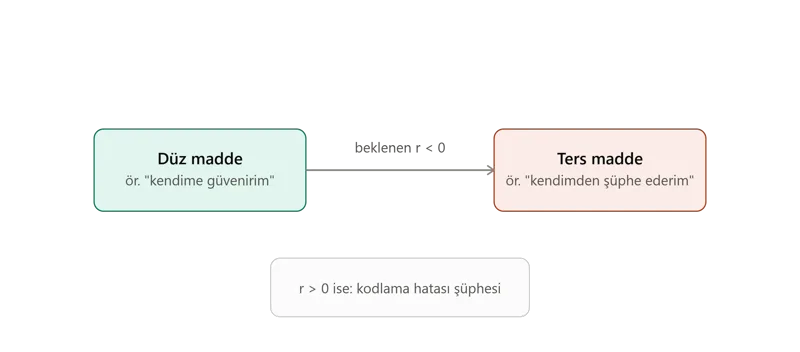
Scale Development Data Audit
This skill systematically audits raw survey data collected as part of a scale development study for missing data, outliers, careless responding (straightlining, longstring, random responding), item-level distribution problems, and the prerequisites for reliability and factorability. It does not produce final EFA/CFA results; instead, it provides an evidence-based “go/no-go” decision on whether the data are ready for subsequent analyses, along with a recommendation for a stratified sample split (EFA/CFA split). All calculations are performed by running real code (Python: pandas, scipy, factor_analyzer, pingouin); no assumed numbers are generated.
 Research
Validity & Reliability Writer
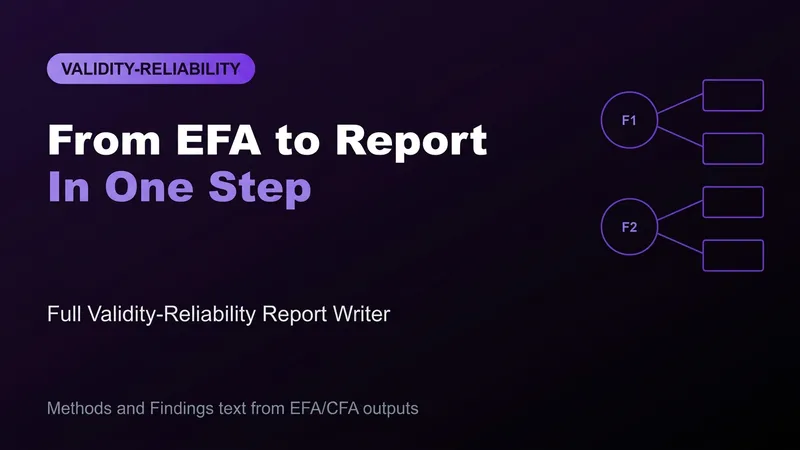
Generates a complete, publication-ready Methods + Results section from your EFA or CFA analysis outputs, including KMO, Bartlett’s test, factor loadings, fit indices, and Cronbach’s alpha/CR/AVE. Correctly classifies fit index thresholds (CFI/TLI ≥ .90, RMSEA ≤ .08, etc.) and reports validity concerns such as AVE < .50 without hiding them. Suitable for academics and graduate students conducting scale development or adaptation studies.
 Research
PLS-SEM Report & Rebuttal
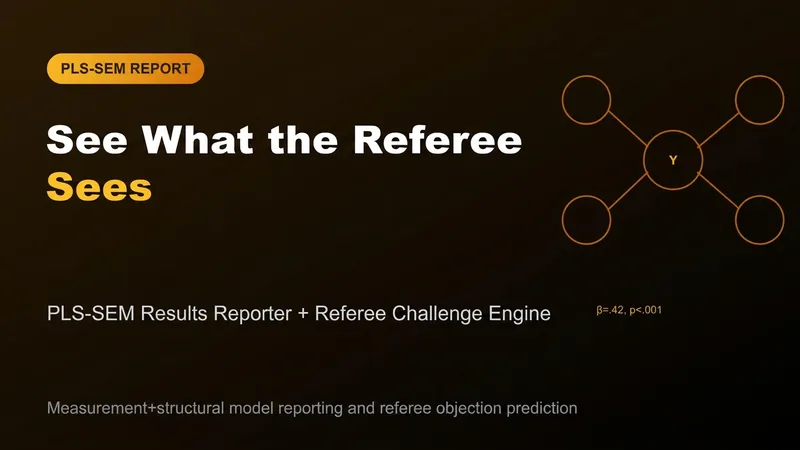
Generates a complete Measurement Model + Structural Model report from your PLS-SEM analysis outputs (outer loadings, CR/AVE, HTMT discriminant validity, path coefficients, R²/f²/Q², SRMR). Applies the correct HTMT threshold and R² interpretation (Cohen/Chin criteria) and avoids causal language. It also anticipates at least 4 common journal reviewer objections (e.g., “Why was PLS chosen instead of CB-SEM?” and “CMB was not tested”) and provides a defense statement for each. Suitable for business and social science researchers conducting structural equation modeling with PLS-SEM, and for those seeking methodological rigor before submitting to a journal.
Information
- Version
- v2
- Last updated
- Runtime credits
- Usage-based
- Models
- Auto