
Photo to Stippled Specimen
Turn a photo into a dual-section natural history guide
Photo to Stippled Specimen
Turn a photo into a dual-section natural history guide
Showcase
Description
Transforms a photo into a 3:4 vertical split-section guide page: the upper half preserves the original photo with very light color grading, keeping the subject uncropped and undistorted. The lower half places the same subject into an antique natural history specimen book, rendered in a strictly side-profile stippled pose built entirely from uniform dark ink dots that cluster densely in shadows and space out along highlights with no continuous solid lines. A companion object is outlined with broken dotted lines, set against a light solid background derived from the photo, finished with a tiny serif catalog entry at the bottom. Suitable for portraits, pets, and still lifes requiring a restrained, minimalist specimen look with generous whitespace.
Recommended by
Dancang
Why we love this skill
Rigorously translates a photo into a split-half natural history specimen page: the top preserves the original, and the bottom reconstructs the same subject using uniform monochrome stippling. Its uniqueness lies in the strict review of profile poses, negative space, broken dotted lines, and caption text, balancing retro plate-making logic with portrait recognition.
Related Skills
View all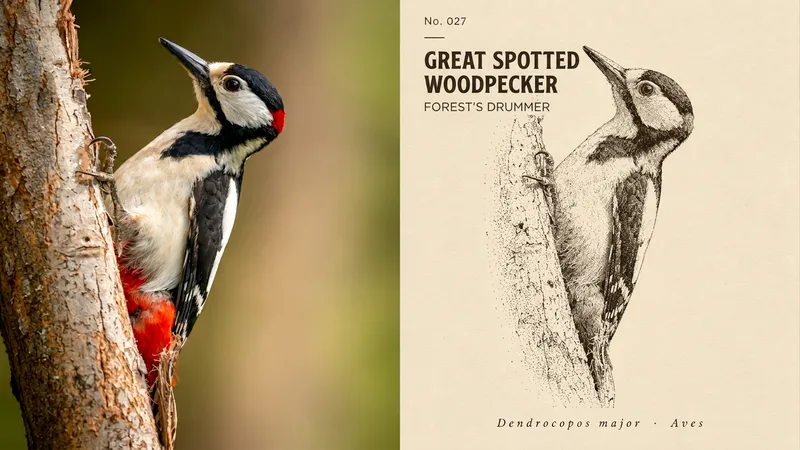 Image
Ink Dot Specimen
Perfect for placing your photo subject inside a vintage natural history encyclopedia. The top half shows the original photo; the bottom half transforms the subject into a recognizable side specimen pose, rendered entirely with near-black ink dots. The shaded areas are dense enough to nearly merge, while lit areas are left blank without a single continuous solid line. The dots are nearly uniform in size with a handcrafted uneven arrangement, and the subject is placed diagonally across a lightened background derived from the photo, with no color other than black ink. The text follows encyclopedia entries: a small code and common names in two languages in the upper left, and a line of italicized serif Latin-style scientific names at the bottom, hiding a touch of humor within seriousness. Avoid photos that rely on color or frontal expressions to be recognizable, whole streets, multi-person scenes, as well as color realism, gray washes, line drawing outlines, and neat halftone dots.
 Image
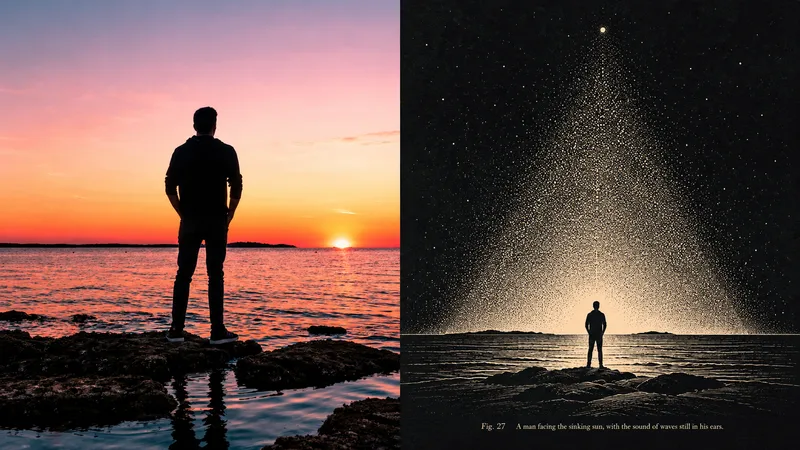
Pointillist Light Cone|xiaoxiaodong P353
Ideal for turning a quiet, single subject into a page from a scientific catalog featuring wood engraving style. The top half shows the original photo; the bottom half deepens the darkest tones of the photo to near-ink coverage, with a huge triangular light cone rising from the center of a low horizon, formed entirely by countless dense bright dots, wider at the bottom and narrower and fading as it goes up. The subject is reduced to a small dark silhouette at the foot of the light cone, rendered with parallel fine engraved lines and only a few bright lines left on the light-facing side. The entire image uses only one dark tone and one slightly creamy light tone, with a very small bright point next to the peak. A single line of small classic serif text is centered at the bottom: a figure number and a caption, like a catalog author calmly recording a curious phenomenon. Avoid photos that require clear subject details, expressions, or colors, full streetscapes and lively scenes, as well as color, photographic realism, soft focus halos, and stage spotlight effects.
 Image
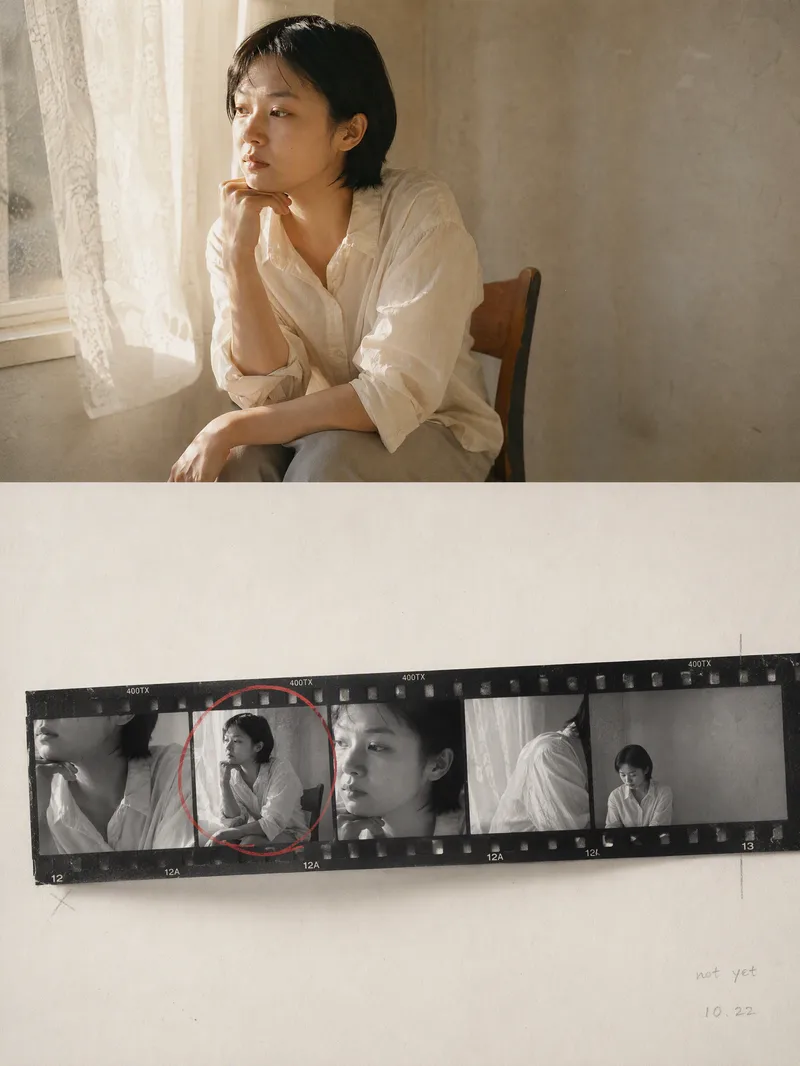
Contact Sheet Poster
Transform one or more photos into contact sheet posters with a darkroom storytelling feel: each photo becomes an independent layout without collage. The top half preserves the original subjects, poses, clothing, settings, lighting, and colors with only subtle darkroom texture adjustments. The bottom half uses a warm white silver halide photo paper background with continuous black-and-white negative frames from the moments right before and after, revealing the documentary process leading up to the final shot. The negative strips expand around the original photo with close-ups, near-final compositions, slightly out-of-focus gazes, empty transition shots, and wide environmental views, with a single red wax pencil circling the best-matched frame. The overall style features silver-halide black, charcoal gray, warm gray, and paper white, complemented by realistic film bases, sprocket holes, grain, paper fibers, and minimalist handwritten frame numbers, avoiding templated collages and unnecessary decoration. Great for portraits, indoor documentaries, lifestyle photography, and storytelling single photos. You can replace characters, scenes, handwritten words, and dates, or request a two-strip negative structure. Multiple photos are processed sequentially into independent posters, complete with layout logic, selected frame notes, and adjustable elements.
Information
- Version
- v2
- Last updated
- Runtime credits
- Usage-based
- Models
- Auto
- Use cases
- Images & design
- What you get
- Image
- Visual styles
- MinimalistPrintmaking
