Floating Pixel Art by xiaoxiaodong
Created by xiaoxiaodong
Floating Pixel Art by xiaoxiaodong
Created by xiaoxiaodong
Showcase
Description
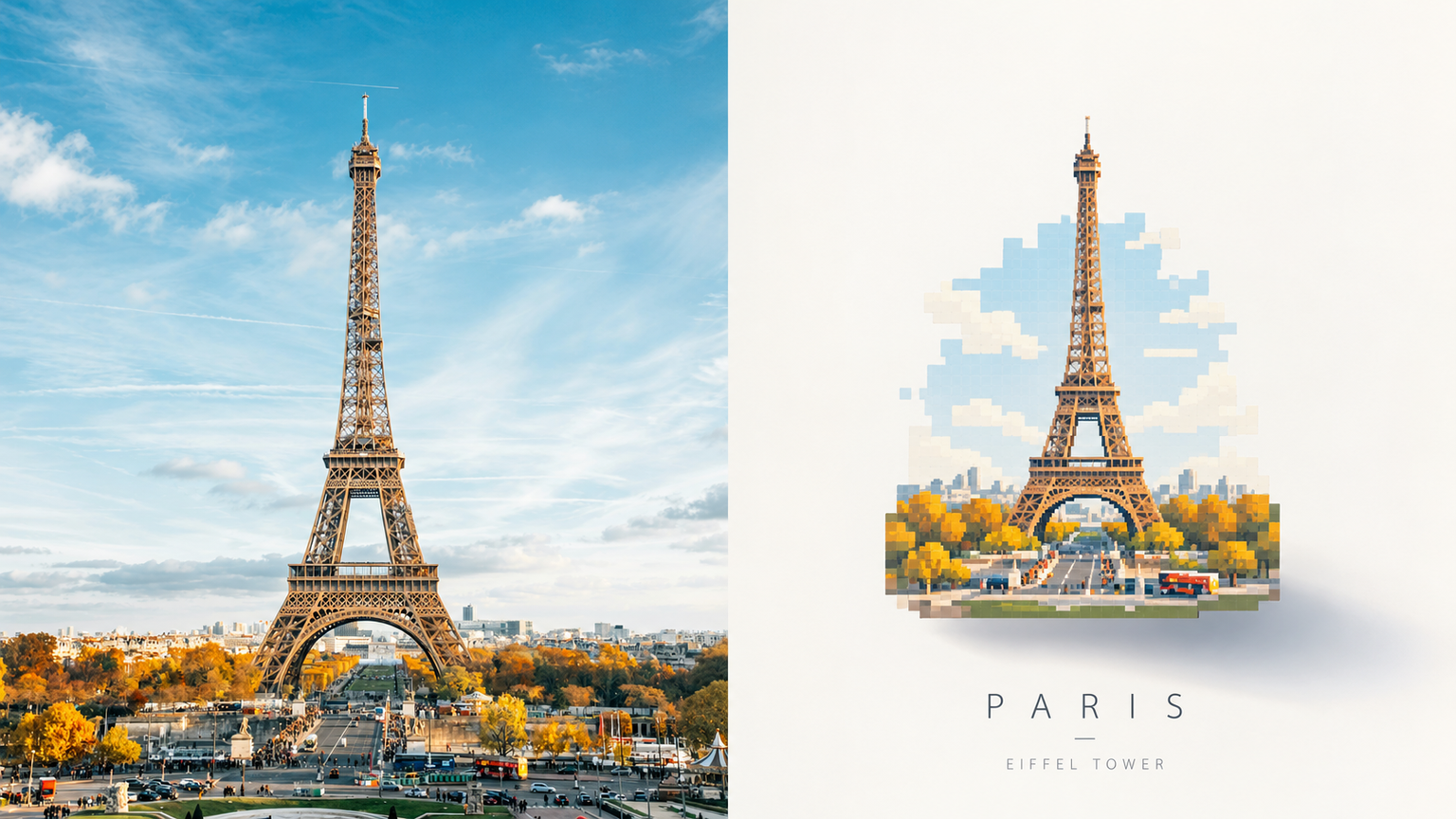
Perfect for turning photo subjects into a floating, pastel pixel art piece. The top half shows the original photo; the bottom half redraws the subject as a self-contained small art piece centered in a large expanse of light negative space, with a soft shadow offset from the piece at the bottom right that fades into the distance. The artwork uses uniform pixel grids, breaks curves into horizontal and vertical steps, merges details into grouped rectangles, and features no black outlines. Colors are sampled from the photo into four to six high-lightness pastel shades, with a small amount of muted dark tones and a single highlight, resulting in clean and flat color blocks. A thin, light sans-serif caption may appear outside the artwork. Avoid photos that require clear facial recognition or fine textures, scenes intended to fill the entire frame, or cartoon styles, smooth curves, plastic textures, and old paper textures.
Recommended by
Dancang
Why we love this skill
Transforms photos into refined pixel art cards floating in low-saturation negative space, balancing recognition and polish through uniform pixel grids, stepped outlines, and soft shadows.
Best for
Ideal for content creators and visual design scenarios looking to transform photo subjects into minimalist pixel art visuals.
How to use this Skill
Provide your input
Provide a photo or image reference where the subject is suitable to be summarized as a small art piece, avoiding materials that rely on clear faces or fine textures.
Run the Skill
Redraws the image subject into a centered, pastel pixel art piece set within wide light-colored negative space, accompanied by a soft, fading shadow at the bottom right.
Review your result
Receive a PNG output: a floating pixel art piece with complete borders, uniform pixel grids, clean color blocks, and optional short sans-serif text.
Related Skills
View all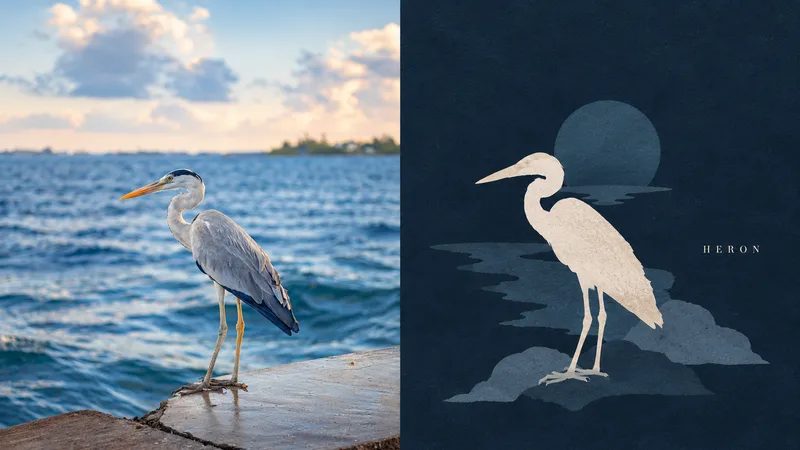 Image
Dark Silhouette by xiaoxiaodong
Ideal for turning a main subject and a few nearby items into a dark-background silhouette still life. The top half shows the original photo; the bottom half converts them into front-facing or profile flat silhouettes with no outlines and almost no internal details, staggered in height and overlapping in a cluster like quiet objects on a tabletop. The background color deepens the darkest tone of the photo, and the silhouettes are rendered as low-saturation pink-gray blocks with only one accent brightened to near warm white as if illuminated. The entire surface features fine, dry-gouache-like textures. The silhouette group leans slightly to one side, leaving empty space on the other side featuring a slender serif uppercase word. Avoid photos requiring perspective, 3D lighting, or clear facial features, as well as entire streets, full rooms, bright backgrounds, pure black backgrounds, gradients, outlines, and high-saturation colors.
 Image
xiaoxiaodong P116 | Doodle
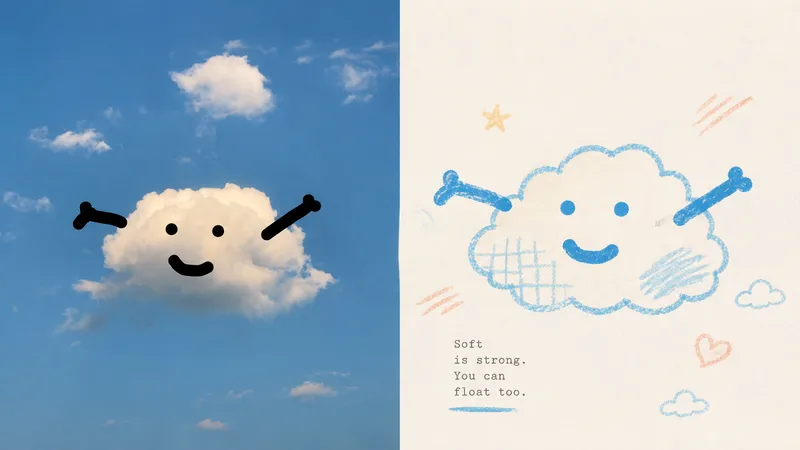
Some photos are truly moving not because of how much information they contain, but because of a single subject, a particular pose, a few colors, and the emotion captured in the image. Panel 116 keeps the real photo in the upper half, then translates the lower half into pastel crayon doodles on an extremely light paper surface: coarse-grain outlines, a few soft color blocks, minimal symbols, and small-scale subjects that leave room to breathe. Ideal for these situations You want to preserve the photo’s identity and natural texture while creating a lighter poster that feels more like an art publication. You don’t want to trace every object, create a realistic redraw, or fill the background with details. You only want to retain the core subject, relationships, and visual memories. You like bright, soothing pastel colors but don’t want anything gloomy, low-contrast, fluorescent, or cheaply candy-colored. You need the same style to produce consistent results across top-and-bottom layouts, left-and-right layouts, pure designs, multiple aspect ratios, four-end wallpapers, or catalog batch processing. What it solves for you It removes secondary information from complex photos so the subject isn’t overwhelmed by details and decoration. It uses clear colored lines and a light paper background to maintain recognizability and keep the subject from blending into the background. It ensures the split composition contains exactly two 50:50 regions, with no title strip, bottom bar, or third section. Each image is generated directly from the current original in a single pass, without sending samples, intermediate results, or work from other Panels back into the model.
Floating Block Island by xiaoxiaodong
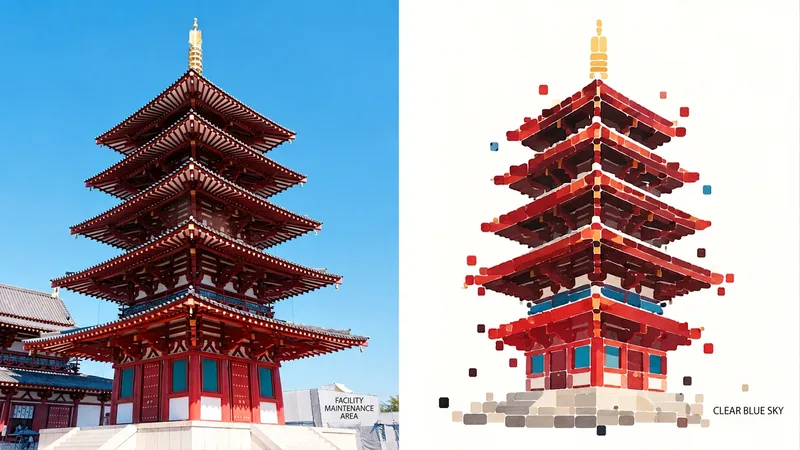
Transform your photo subject and the ground beneath it into a floating square island. The top half is the original photo, while the bottom half is entirely redrawn into large, rounded rectangular flat color blocks stacked horizontally and slightly offset with no photo texture remaining. Edges feature no outlines, instead breaking into a ring of outward-drifting small squares that shrink and thin out further from the center. Dark blocks contain thin white lines resembling cascading water, accented by delicate dark strokes. The palette uses only one bright color, one dark color, and a few mid-tones, heavier at the bottom with marker-like water stains along the edges. The entire composition floats on a white background with quiet handwritten text in the lower right. Avoid using photos where facial details or photo textures must be preserved, complex horizons, complete streetscapes, neat pixel grids, outlines, realistic watercolor washes, or many colors.
Information
- Version
- v3
- Last updated
- Runtime credits
- Usage-based
- Models
- Auto
- Use cases
- Images & design
- What you get
- Image
- Visual styles
- MinimalistFlatPixel art
