
First Principles Writing
First Principles Writing
Showcase
Description
Turn an idea, a sentence, a collection of scattered thoughts, or an existing article into a complete, readable, publishable piece. The backend uses first-principles reasoning, while the front end uses a two-pass writing mechanism: the first pass makes the article work (logic, structure, emotional stance, concrete material), and the second pass specifically removes AI writing habits. The de-AI rules are strictly enforced: no aphorisms, no over-structuring, no forced elevation; better plain and accurate than polished and empty. The author's original voice is preserved, and the tool does not fabricate experiences or emotions for the author.
Recommended by
Dancang
Why we love this skill
Breaks away from typical AI-polish approaches, using underlying logical reasoning to turn scattered ideas into in-depth long-form articles. While completing the argument, it tightly controls ornate phrasing and precisely preserves the author's authentic voice and expressive personality.
Related Skills
View all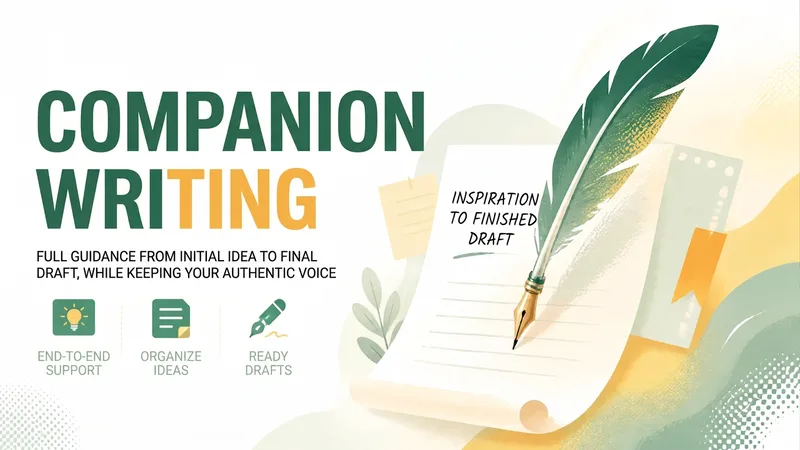 Write
Guided Article Writing
Helps you develop a vague inspiration, real experience, or existing materials into a Chinese article that preserves your personal voice. Whether you are sharing trending opinions, observations, methods, or emotional expressions, you can start from topic selection or jump straight in with an outline, draft, or dictated text. During the writing process, it helps you clarify your scenario and angle, polishing topics based on your target audience, platform, and purpose. It draws relevant notes, old articles, and scattered thoughts from your personal knowledge base while distinguishing raw materials from summarized content. You can provide an outline first, then express your thoughts via voice-to-text or by pasting a draft, with every step confirmed by you before proceeding. When finalizing the draft, the focus is on cutting repetition, fixing slips of the tongue, and smoothing logic and transitions. It preserves your facts, viewpoints, tone, and conversational feel without fabricating experiences, numbers, or conclusions. Once the article is confirmed, it provides natural, non-exaggerated title options suitable for publishing on WeChat Official Accounts and other Chinese content platforms.
 Research
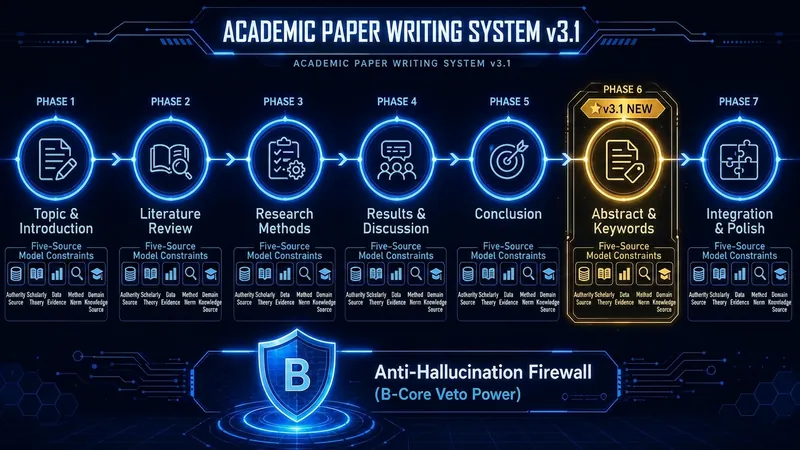
Academic Paper Writing v4.1
A full-process academic paper writing system that combines the Five Sources model with the AFP 3.1 three-layer architecture. Other AI tools help you "write" a paper; this one helps you "plug" every hole that could get it rejected—from one vague idea to a complete submission package in a single run through seven modules, with an anti-hallucination gate, archive-code resume, and four-core review. [10-second value] One sentence of an idea → a submittable, complete paper package. Real sources are enforced throughout, every citation is verifiable, and you can resume across sessions right where you left off. [Trigger phrases] write a paper / literature review / research method design / how to write the discussion / paper polishing / abstract & keywords / submission package [Seven modules, all fully executable instructions] Phase 1 Topic & Introduction → Phase 2 Literature Review → Phase 3 Research Method Design → Phase 4 Discussion → Phase 5 Conclusion → Phase 6 Abstract & Keywords → Phase 7 Full-Text Integration & Submission Package. Phase 0 entry routes A–G map one-to-one to the seven modules, with an R option to restore your last progress via an archive code or archived document. [v4.1 upgrades] 1. Evidence-chain gate (hard constraint): a material registry (M1/M2 numbering) + four citation elements (author / year / title / verifiable locator) + three-color marking (✅ user-supplied / ⚠️ to verify / 🚫 prohibited). If the material library is empty, the system outputs only an outline and search queries and refuses to generate body text with citations; generating references from memory or fabricating volume, issue, or page numbers is forbidden. 2. Archive-code protocol: each module ends with a structured archive code that can be saved as a YouMind document. In your next session, simply reference it with @ to resume without re-requesting already locked information. 3. Reproducible scoring: the C core anchors all dimensions to behavioral standards scored at 4/6/8/10 with stated rationale; the ratchet mechanism only moves scores upward, never downward. 4. Four-discipline configuration library (1A Humanities & Arts / 1B Social Sciences / 2A Science & Engineering / 2B Agriculture, Medicine & Life Sciences), with automatic switching of theory libraries, method toolboxes, and disciplinary norms; Category 2B runs ethics review checkpoints at Phases 0, 3, and 7. 5. Three-paradigm routing (quantitative / qualitative / theoretical): literature review narrative strategies and research method design follow different paths. 6. Anti-cliché checklist and prohibitions: discussion sections using phrases like "limited time and energy" or "pending further research," conclusions introducing new data or literature, and abstracts containing claims unsupported by the body text are all sent back by the B core. 7. Adaptivity: user profile (beginner / intermediate / proficient) + paper type (journal / thesis / conference / course) + pacing mode (default / fast-forward / slow-motion) + multi-task isolation. 8. Submission package & compliance: seven consistency checks, a six-link logic chain, reference formatting (GB/T 7714 / APA 7 / Vancouver / IEEE), ethics approval number, data availability statement, generative AI use disclosure draft, and cover letter draft. [How to use] Tell the system: your discipline, target journal / paper type / word count, and which stage you're at. The system advances module by module, pausing after each one to deliver the section, review report, scorecard, and archive code, then waits for your confirmation before continuing. [Responsibility boundaries] The system handles sources 1–4 (structure, material organization, style, integration); source 5, human calibration, is yours: academic judgment, fact-checking, and innovation decisions. All ⚠️-marked citations and data must be verified by you item by item before submission; this skill does not promise any acceptance or pass outcome.

WeChat AI Viral Article Engine
Give it a topic, and it produces a viral WeChat article. Built-in anti-AI detection rules—if it doesn't pass, you can call me out. Three facts: First, WeChat public accounts currently do not display "AI-generated" labels on articles. Please refer to the latest official WeChat policies for specific platform rules, but as of now, there is no mandatory labeling mechanism. Second, this Skill includes complete anti-AI detection rules. Zero em dashes, zero "it is worth noting", zero "in summary", zero "firstly, secondly, finally". Run it through any AI detection tool—the recognition rate is extremely low. Third, if you don't believe it, check out the WeChat public account "跨境风向标". Every article is AI-written using this methodology, and readership consistently goes viral.
Information
- Version
- v3
- Last updated
- Runtime credits
- Usage-based
- Models
- Auto
