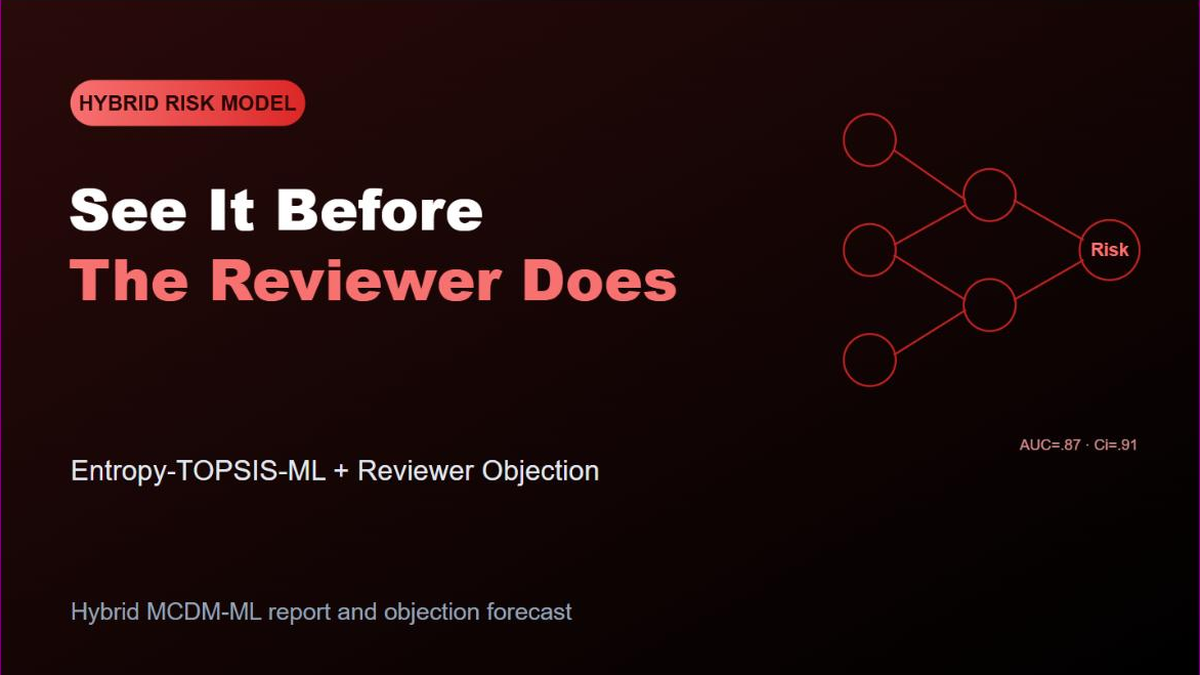
Entropy-TOPSIS-ML + Reviewer Objection
Hybrid risk model report and reviewer objection forecast
Entropy-TOPSIS-ML + Reviewer Objection
Hybrid risk model report and reviewer objection forecast
Showcase
Description
Produces a complete Methods + Results report from your entropy weighting + TOPSIS ranking + ML classifier (XGBoost, Random Forest, Logistic Regression, etc.) outputs. Correctly classifies AUC interpretation (Hosmer & Lemeshow criteria) and, if the train/test performance gap is large, states the overfitting risk explicitly. It also pre-identifies at least 4 objections journal reviewers frequently raise (e.g., "how was class imbalance handled," "no external validation set was used") and suggests a defense sentence for each. Suitable for: researchers working in health informatics, clinical risk prediction, or hybrid MCDM-ML methodology who want methodological robustness before journal submission.
Recommended by
Shuting@YouMind
Why we love this skill
An editor’s pick for studies that need both methodological rigor and reviewer readiness. It uniquely unifies entropy weighting, TOPSIS ranking, ML evaluation, overfitting checks, and objection-specific defenses while enforcing calibrated AUC interpretation and non-causal scientific language.
Best for
Researchers preparing health informatics or clinical risk-prediction studies for methodological review or journal submission.
How to use this Skill
Provide your input
Provide your entropy-weighting and TOPSIS results, machine-learning models, validation details, performance metrics, and feature-importance rankings.
Run the Skill
The Skill turns these inputs into a Methods and Results report, interprets model performance, flags potential overfitting, and anticipates common reviewer objections.
Review your result
Receive a structured report with result tables, cautious interpretations, an overfitting assessment, and draft responses to likely peer-review concerns.
Related Skills
View all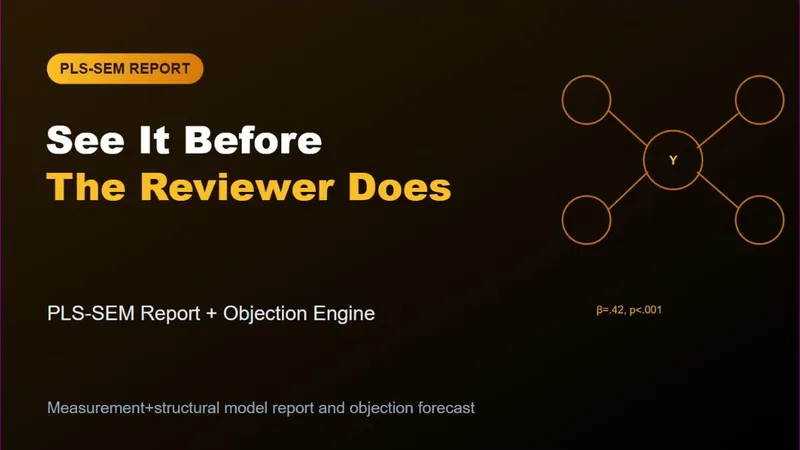 Research
PLS-SEM Report + Objection Engine
Produces a complete Measurement Model + Structural Model report from your PLS-SEM analysis outputs (outer loadings, CR/AVE, HTMT discriminant validity, path coefficients, R²/f²/Q², SRMR). Correctly applies the HTMT threshold and R² interpretation (Cohen/Chin criteria) and avoids causal language. It also pre-identifies at least 4 objections journal reviewers frequently raise (e.g., "why PLS over CB-SEM," "no CMB control reported") and suggests a defense sentence for each. Suitable for: business/social science researchers using PLS-SEM for structural equation modeling who want methodological robustness before journal submission.
 Research
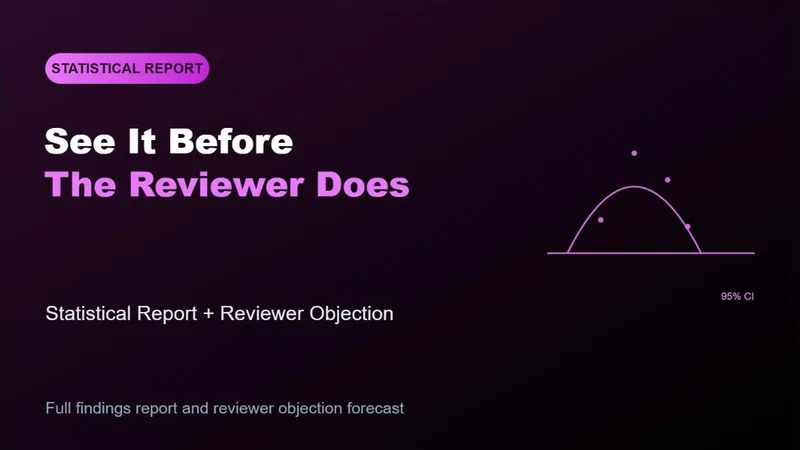
Statistical Report + Reviewer Objection
Produces a complete Results section from your descriptive + inferential statistics outputs (including assumption tests). If it detects a normality or variance homogeneity violation, it recommends the non-parametric alternative test rather than concealing it. It also pre-identifies at least 4 objections journal reviewers commonly raise (e.g., "assumption tests not reported", "effect size not stated", "no multiple comparison correction applied") and provides a defense sentence for each. Who it's for: researchers working with quantitative methods who want statistical reporting rigor before journal submission.
 Research
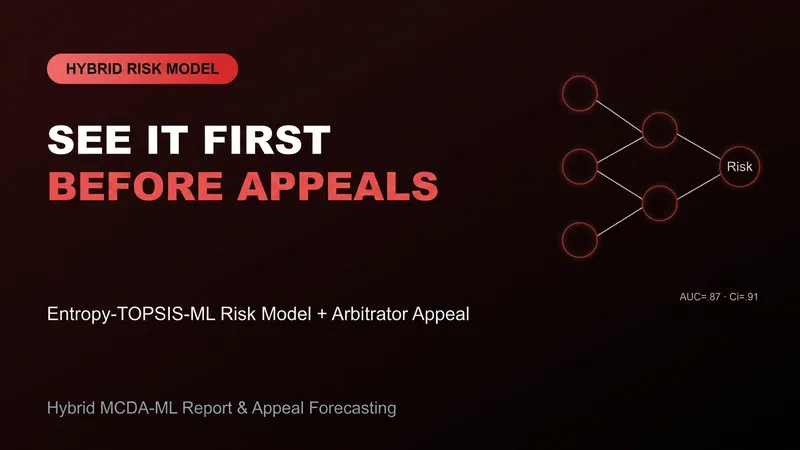
Entropy-TOPSIS-ML + Rebuttal
Generates a complete Methods + Results report from your entropy weighting, TOPSIS ranking, and ML classifier outputs (XGBoost, Random Forest, Logistic Regression, etc.). Correctly interprets AUC using the Hosmer & Lemeshow criteria and clearly flags the risk of overfitting when the training and test performance gap is large. It also anticipates at least four objections frequently raised by journal reviewers (e.g., “How was class imbalance addressed?” and “Why was no external validation set used?”) and provides a defense statement for each. Suitable for researchers working in health informatics, clinical risk prediction, or hybrid MCDA-ML methodologies, as well as those seeking methodological rigor before journal submission.
Information
- Version
- v2
- Last updated
- Runtime credits
- Usage-based
- Models
- Auto
- Use cases
- Writing & contentResearch & analysis
- What you get
- ReportDocument
