
Education Proposal Four-Pillar Framework
Build a defensible thesis proposal framework
Education Proposal Four-Pillar Framework
Build a defensible thesis proposal framework
Showcase
Description
An emergency proposal assistance skill for education graduate students and young researchers, using the vertical Four-Pillar Proposal Method. Triggers when users ask how to write an education thesis proposal, how to design education research, what to do if a proposal is rejected, how to structure a literature review, how to formulate research questions, or how to handle advisor misalignment. Uses the Four-Pillar Method (Problem Pillar / Literature Pillar / Methodology Pillar / Innovation Pillar) to generate a proposal skeleton, a literature search strategy table, and a rejection risk checklist. Version 1.0.0. * **One-Sentence Positioning** Your personal proposal skeleton generator: turns loose directions, piled-up literature, mismatched methods, and empty innovation points into four solid pillars—problem, literature, methodology, and innovation—plus advisor alignment checks, making your proposal robust rather than a word count exercise. **How to Use - The Four-Pillar Method** 1. Problem Pillar: Three cuts to narrow the direction (lock the target / set the perspective / draw boundaries), with main and sub-questions ready to use. 2. Literature Pillar: Avoid piling up; build a map by context, school of thought, debate, or gap to pinpoint your research gap. 3. Methodology Pillar: Match quantitative, qualitative, or mixed methods by disciplinary paradigm, including red flags like IRB prerequisites. 4. Innovation Pillar: Choose one from theory, perspective, method, or target, grounding it in how it differs from existing work. 5. Closing: Advisor alignment check to connect your lens back to your advisor's framework, preventing rejections due to drifting off course. **What You Receive** A proposal skeleton (four pillars filled out cell by cell), a literature search strategy table (databases + keywords + tracing), and a rejection risk checklist (top 8 reasons + avoidance tips), ready to be expanded into a full proposal. **Compliance Disclaimer** This skill does not ghostwrite complete proposals or papers; it only generates frameworks and checklists. It does not fabricate literature or data, clearly labels AI generation, requires original literature verification, does not guarantee approval, prioritizes offline confirmation for ethics reviews and advisor conflicts, and defers to institutional formats and advisor opinions.
Related Skills
View all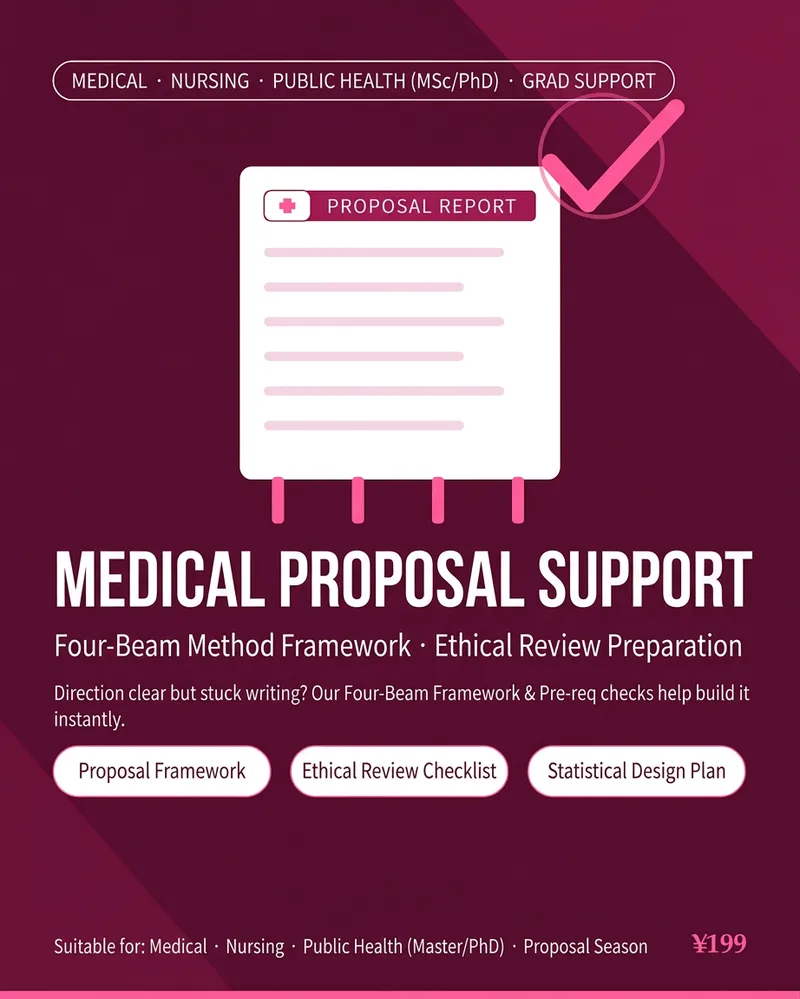 Write
Medical Proposal Rescue
Designed for master's, doctoral, and resident physicians in medicine, nursing, and public health facing urgent proposal deadlines. Triggered when users ask how to write a medical proposal, recover from a rejected clinical topic, structure a literature review, calculate sample sizes, pass ethics reviews, handle clinical registration, or resolve mentor alignment issues. It uses the Four-Pillars Method (Problem, Literature, Methodology, Innovation) along with medical-specific additions (IRB ethics, clinical registration, accessibility, and statistical design) to generate a proposal skeleton, ethics and registration checklist, and statistical design table. Version 1.0.0. - **Pain Points**: Struggling to write a proposal despite having a direction, or facing rejection over ethics, registration, or sample size. - **Method**: The Four-Pillars Method combined with dual prerequisites (IRB ethics and ChiCTR clinical registration) to build a solid proposal skeleton. - **Deliverables**: A three-part package including a proposal skeleton, an ethics and registration checklist, and a statistical design key points table.
 Write
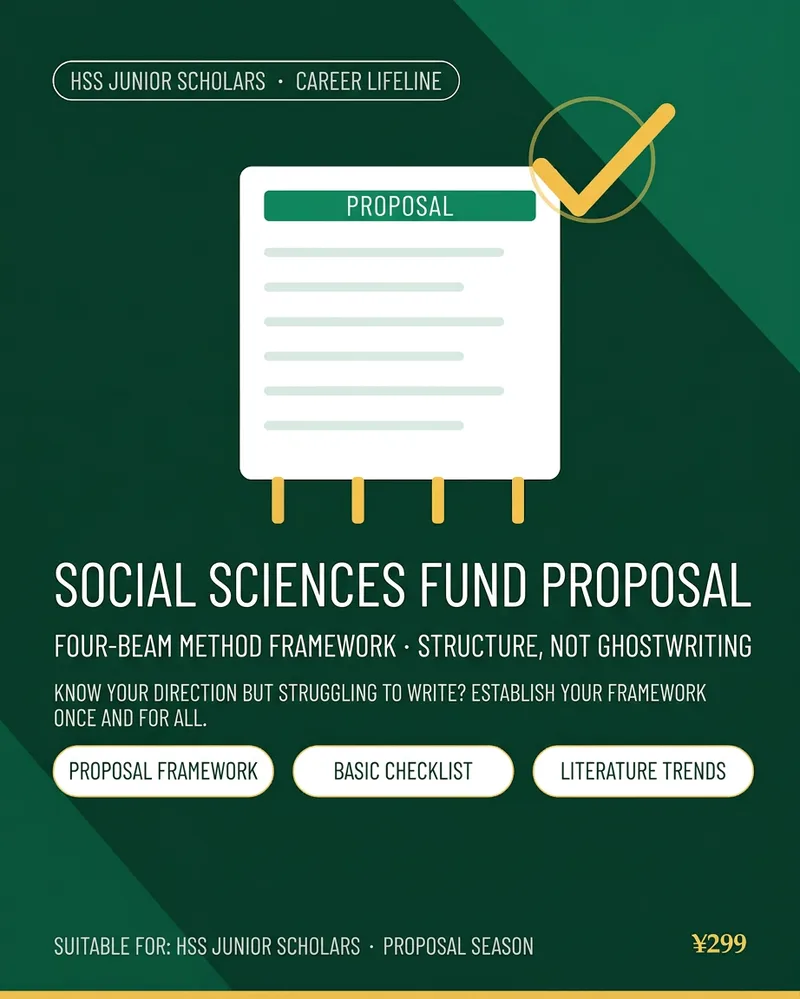
Social Science Grant Application Framework
Designed for young faculty in humanities and social sciences, this Skill uses the Four Pillars method to help build grant application frameworks and material checklists. It triggers when you need help with application strategies, literature reviews, research gaps, weak foundation handling, innovation points, blind review preparation, or restriction checks. By organizing your application into four solid pillars—foundation, content, background, and feasibility—plus restriction and anonymization checks, it turns a scattered draft into a robust proposal. Version 1.0.0. Your personal grant application framework generator: transforms weak literature reviews, unorganized content, thin preliminary records, vague innovation claims, and compliance risks into four sturdy pillars, ensuring your application stands strong. How to Use the Four Pillars Method: 1. Foundation Pillar: Ground your opening in top-level policies and build a four-part literature review to locate your research gap; 2. Content Pillar: Establish a clear objective-framework-difficulty logic chain where each section addresses your gap; 3. Background Pillar: Expand limited preliminary achievements honestly across four methods without falsification; 4. Feasibility Pillar: Select from four innovation angles and apply quantitative expected outcome templates; 5. Review Check: Self-check for grant restrictions and anonymization compliance. What You Receive: An application skeleton filled across the four pillars, a preliminary research checklist for limited backgrounds, and a literature dynamics table with gap identification and reference outlines, forming a three-piece toolkit for your proposal. Compliance Notice: This Skill does not write full proposals but generates frameworks and checklists. Falsification of preliminary results, unauthorized names, or fabricated data is strictly prohibited. AI usage should be noted, and all literature and preliminary results must be verified individually. Approval is not guaranteed. Prioritize compliance with your research office and mentor guidelines, and follow your institution's template.
 Research
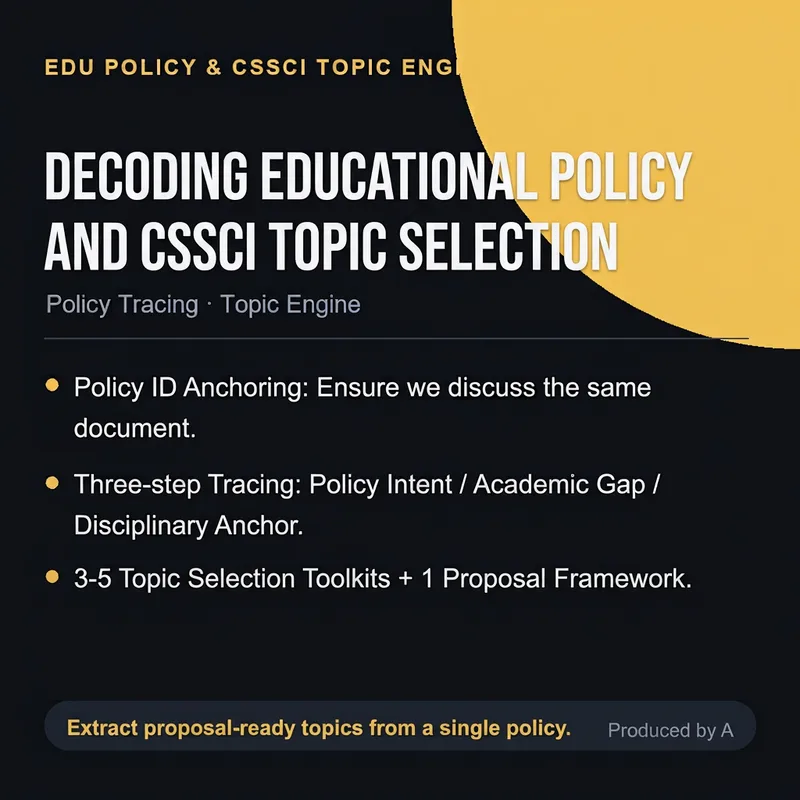
Education Policy Decoder
Activated when users send an educational policy document or name, or request help turning educational policies into paper topics, writing CSSCI or core journal articles, interpreting policies like Double Reduction, New Curriculum Standards, or Education Strong Nation Guidelines for publication, or finding National Social Science Fund or Ministry of Education project directions. It uses a policy-tracing method to deliver traceable interpretations, 3 to 5 high-potential topics, and 1 proposal skeleton without fabricating policy clauses while highlighting research gaps. ## Summary Transforms a national education policy into traceable interpretations, 3 to 5 high-potential topics, and 1 proposal skeleton ready for your report. Covers high-frequency pain points such as turning education policies into research topics, writing CSSCI and core journal papers, publishing based on major guidelines, and finding project directions. Designed specifically for education researchers and graduate students. ## What You Will Get 1. Policy ID: Issuing authority, release date, legal hierarchy, core proposition. 2. Three-Step Tracing Breakdown: Policy intent, academic gaps, and disciplinary landing points. 3. 3–5 Topics, Each with Four Elements: Policy basis, theoretical foundation, theoretical and practical significance, and publication potential rating. 4. 1 Proposal Skeleton: Research questions, literature review framework, analytical approach, and potential innovations. 5. Traceability Verification: Any clause absent from the original text is marked as unverified; no forced fabrication. 6. Case Library: Complete breakdown demonstrations of policies like Double Reduction, New Curriculum Standards, and Education Strong Nation Guidelines. ## Who It Is For Education graduate students facing proposal blocks, young university teachers and researchers aiming for CSSCI or core journals and national or ministry projects, and education faculty research secretaries and mentor groups. Note: Since primary and secondary school teachers no longer primarily rely on papers for professional titles, this Skill is not tailored for that group.
Information
- Version
- v3
- Last updated
- Runtime credits
- Usage-based
- Models
- Auto
- Use cases
- Writing & contentResearch & analysisLearning & education
- What you get
- ReportDocumentPlan
