Innovation Extraction-AFP2.0
Innovation Extraction-AFP2.0
Showcase
Description
Extraction of innovation points from academic papers
Related Skills
View all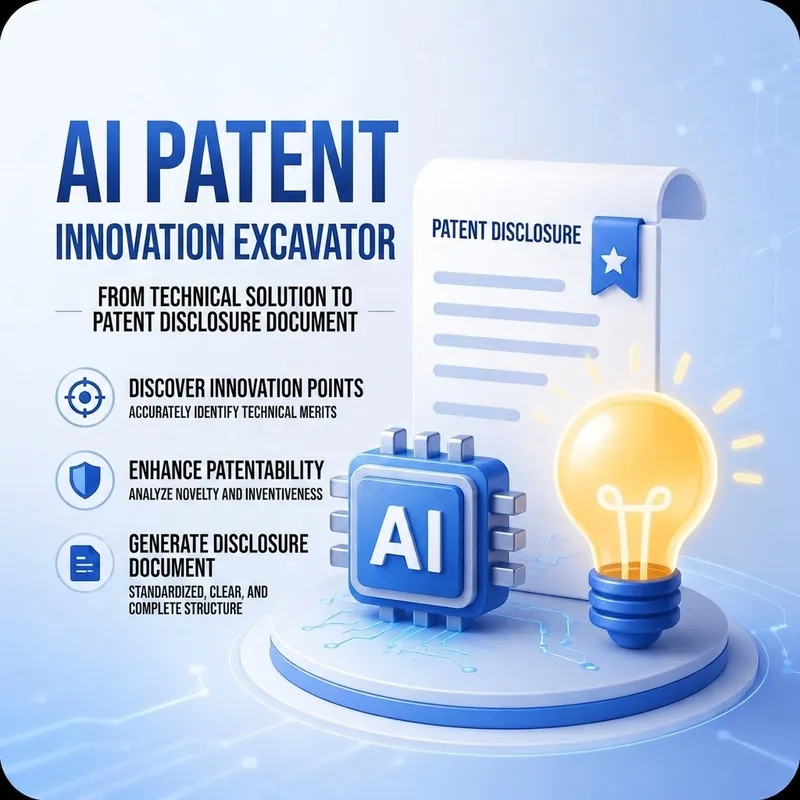
AI Patent Innovation Miner V5
Many R&D personnel are not lacking in innovation, but rather do not know where their innovation lies. This AI patent innovation miner can help you: 🔍 Find innovation points 💡 Uncover technical highlights 📄 Write technical disclosure documents 🚀 Improve patent output efficiency Whether it's product development, process improvement, experimental research, or paper results, you can quickly turn them into patent ideas. Especially suitable for: R&D personnel in food, biology, materials, medicine, AI, electronics, mechanics, and other technical fields. From technical solutions to patent disclosure documents, done in one step.
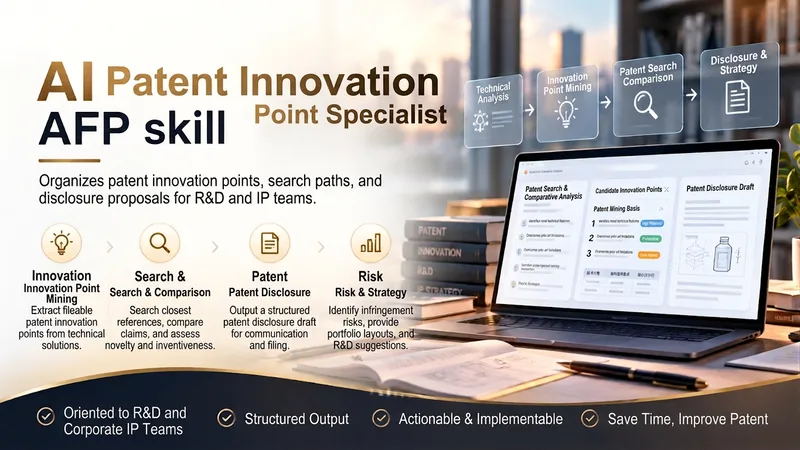
AI Patent Innovation Miner
AI Patent Innovation Miner | Turn your R&D achievements into valuable patent assets. Designed for R&D personnel, product innovation teams, and corporate intellectual property teams, this tool transforms technical pain points, solutions, experimental records, and competitor information into structured patent innovation analysis results. Five core capabilities: Innovation Mining: Generate candidate innovation points from dimensions such as technical principles, materials, structures, processes, and application scenarios. Patent Search and Comparison: Plan search keywords and classification codes, compare real published patents and key claims, and identify potential differences. Innovation Value Assessment: Screen directions worthy of further verification from angles such as novelty, inventiveness, technical effects, and feasibility. Opposing Opinion Simulation: Adopt a patent examiner perspective to identify potential issues with novelty, inventiveness, sufficient disclosure, and claim support, and propose improvements. Technical Disclosure Drafting: Output a structured draft including technical background, summary of the invention, embodiments, technical effects, and intended protection points. Applicable Scenarios: Food and beverage, packaging materials, biotechnology, chemical engineering, intelligent manufacturing, and other technical R&D fields. Core Value: Reduce repetitive work for R&D personnel transitioning from technical results to patent disclosures, improve innovation mining and internal review efficiency, and support the continuous accumulation of corporate intellectual property assets. Note: Patent search conclusions are based on actually verifiable published literature; unverified searches are explicitly noted without fabricating patent numbers, claims, or grant prospects. Final patentability, infringement risks, and filing strategies must be further confirmed by professionals.
 Research
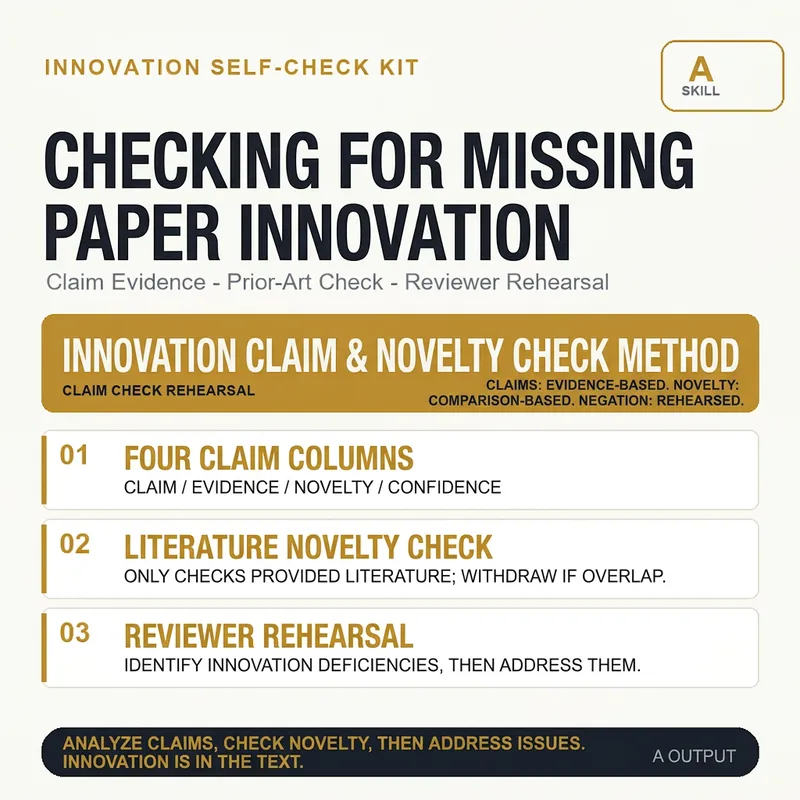
Paper Novelty and Review Rehearsal
Check your innovation points before submission: claims come with evidence and differentiators, overlap is checked against your literature, and peer review criticisms of lacking novelty are rehearsed. Tables are generated upon authorization; acceptance is not guaranteed. Key selling point: While competitors just give an innovation score, this version breaks down innovation into evidence-backed claims, runs overlap checks using your provided literature, and rehearses the reviewer's objection of lacking novelty—delivering ready-to-use tables directly to you after authorization. Who it's for: Graduate students and early-career researchers struggling to articulate innovation points before submission, those previously rejected due to perceived lack of novelty, and anyone needing a strong opening for abstracts or defenses. What to input: Paper body or abstract + closest reference literature (title/year/approach) + target journal submission guidelines (optional, marked as pending verification if unavailable). What is delivered: 8 content items + 4 finished items (12 in total). Claims feature individual evidence and differentiators, overlap is checked strictly against your provided literature, and remediation avoids fabricated data. If tools are unavailable, a paste-ready content package marked as unproduced is used instead. Exclusive Methodology: Paper Novelty and Review Rehearsal. Innovation isn't just writing that a paper is significantly novel; it's breaking down novelty into verifiable claims, checking literature overlap, and reinforcing weak spots. 1. Claims: Fill in each innovation with a claim, supporting text location, difference from closest work, and confidence level. 2. Overlap Check: Compare line-by-line using your provided literature, classifying as new, partially overlapping, or overlapping (remove if differences cannot be articulated). 3. Rehearsal and Remediation: Rehearse the reviewer's critique of lacking novelty, offering compliant remedies for weak points while strictly refusing data or literature fabrication. Remember it in one sentence: Break down claims first, check overlap second, and remediate third; every innovation points back to your own text and literature. How it upgrades on competitors: Most competitors only provide an innovation score or novelty conclusion without overlap processes or sources, leaving authors still wondering where the novelty lies. This version builds on its core mechanics with three unique additions: 1. Line-by-line evidence table for innovation claims indicating supporting text/data, differences, and confidence level, avoiding empty claims of significant novelty. 2. Peer review rehearsal for lack of novelty, self-critiquing against the target journal's standards to turn potential rejections into actionable remediation points. 3. Two-step gate: First outputs an innovation claim list for confirmation before running overlap checks and rehearsals, preventing wasted effort on incorrect directions. Traceable claims, preemptive self-critique, and two-step delivery. Grounded in rules: Anchored strictly in real public standards including current journal guidelines, user-provided literature and text, COPE, citation formats, copyright and fair use, AI generation disclosure requirements, and constraints against absolute terms or earnings promises. Items or fields that cannot be verified are marked as pending verification without relying on memory, and unrelated rules are marked inapplicable.
Information
- Version
- v1
- Last updated
- Runtime credits
- Usage-based
- Models
- Auto
