
YouTube Video Insights Pro
Turn long videos into quotable notes
YouTube Video Insights Pro
Turn long videos into quotable notes
Showcase
Description
Provide a YouTube video link, a video or audio file, or subtitles or a transcript, and this Skill will turn it into structured, quotable insight notes. Its proprietary “Seven-Track Insights” engine covers seven types of output: ① one-sentence overview ② chapter map ③ core arguments and reasoning chain ④ key cases and data ⑤ standout quotes with timestamps ⑥ actionable checklist ⑦ glossary plus controversies, limitations, and further directions. It supports Quick Read, Standard, and Deep Read modes; lets you specify the output language and request a bilingual version; and can synthesize and compare multiple videos. Every conclusion stays faithful to the original video without inventing content that was not included. Each quote includes a timestamp and source, making it easy to quote, share, or use in further creations.
Best for
For anyone who needs to quickly understand videos, organize research, verify quotes, or use content for sharing and remixing.
How to use this Skill
Provide your input
Provide a YouTube link, video or audio file, or paste subtitles or a transcript. You can also submit multiple videos for comparison.
Run the Skill
After submitting, choose Quick Read, Standard, or Deep Read, and specify the analysis sections and intended use.
Review your result
Get structured insight notes with an overview, chapter map, arguments, cases and data, timestamped quotes, action points, terms, and limitations. Multiple videos also receive a cross-video comparison.
Related Skills
View all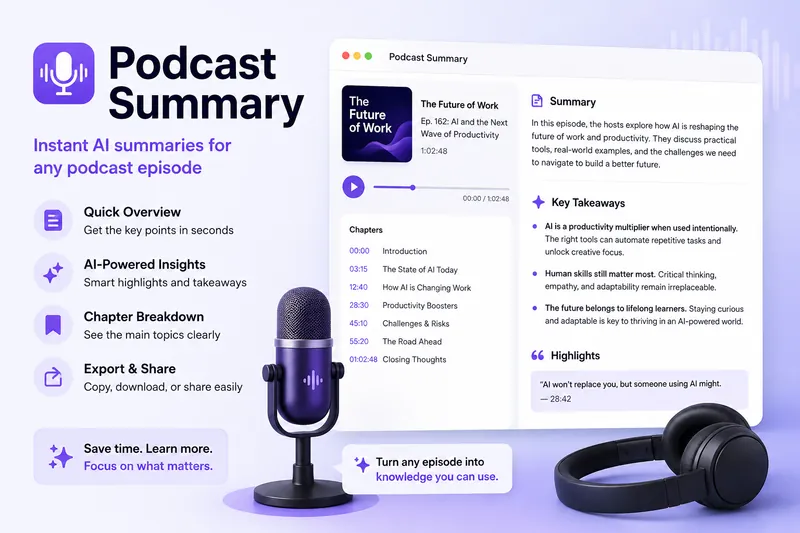
Podcast Summary
This skill provides structured summaries and analysis of podcast content, helping users quickly grasp the core ideas and value of any episode. Whether you're a listener, researcher, or content creator, you can efficiently organize and review podcast episodes using this tool. The skill can extract information from a podcast link (supports major platforms including Xiaoyuzhou, Apple Podcasts, Spotify, YouTube, and Ximalaya) or from user-provided transcripts. It intelligently retrieves metadata such as the episode title, guests, publication date, and show description, and attempts to fetch the full transcript or subtitles. Even if the original page lacks complete information, it will try to supplement content through web searches or cross-platform lookups to ensure comprehensive analysis. After content acquisition, the skill performs an in-depth analysis and generates a detailed note containing an overview, timeline, key quote highlights, and a reasoning progression. The overview summarizes the podcast topic in concise language, the timeline helps you quickly locate key discussions, the key quote highlights distill the guest's unique insights and core viewpoints, and the reasoning progression maps out the podcast's argument logic and thought development. Ultimately, you receive a clean, easy-to-read Markdown-format podcast note that supports direct download.
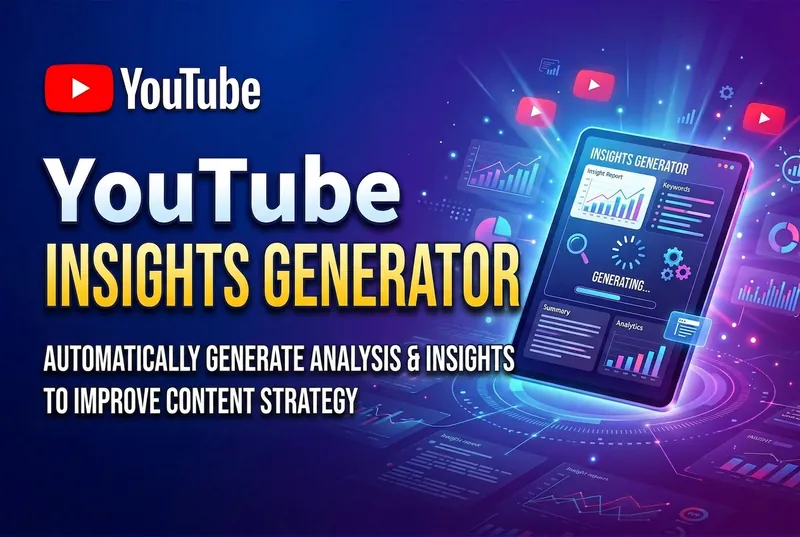
YouTube Insight Note Generator
Transforms YouTube video content (requires subtitle files) into structured, in-depth insight notes. Automatically extracts key arguments, case stories, methodology frameworks, and great quotes, producing professional articles that are easy to read and share.
 Research
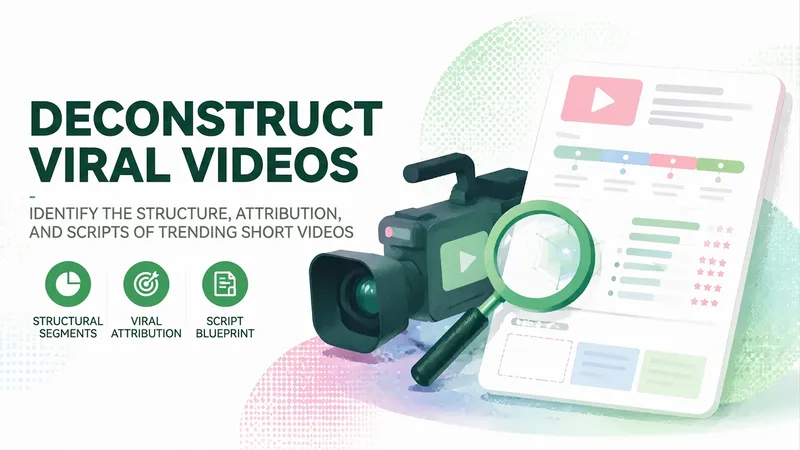
Viral Video Breakdown
Turn a popular short video into clear, learnable, and practical content methods. Whether you provide a link from Douyin, WeChat Channels, YouTube, Xiaohongshu, or another platform, a local video, screenshots, or existing dialogue and descriptions, the analysis reconstructs the material needed to examine the video itself. It also marks information that is complete or missing, so guesses are not mistaken for facts. The report includes a video profile, a time-coded transcript, structural sections, and audiovisual techniques. It further explains why the video holds viewers' attention and where it loses momentum in the middle or focus at the end. Content attribution distinguishes replicable topic and presentation methods from external factors such as account history, posting time, and platform environment. Six-dimensional scoring uses timecodes, public data, or comment evidence to evaluate hook strength, structural strength, information value, emotional tension, communication, and reach—while clearly identifying weaknesses. You will receive a Markdown breakdown report for content planning and short-video creation. It includes transferable strategies, risks that make direct imitation unsuitable, and a fill-in-the-blank script framework that can be used with replacement topics, helping you move from understanding a viral video to deciding how to shoot your next one.
Information
- Version
- v2
- Last updated
- Runtime credits
- Usage-based
- Models
- Auto
- Use cases
- Writing & contentResearch & analysisLearning & education
- What you get
- Document
