
Transcript to Notes
Turn content into structured Chinese study notes
Transcript to Notes
Turn content into structured Chinese study notes
Showcase
Description
This skill efficiently transforms learning materials you provide—such as videos, articles, conversation transcripts, or personal notes—into clear, concise study notes. It is especially suited to students, researchers, and professionals who need to extract core knowledge from large amounts of information and organize it systematically.
Best for
Ideal for students, researchers, and professionals organizing key information from courses, videos, articles, or conversations.
How to use this Skill
Provide your input
Provide learning materials such as articles, video content, dialogue transcripts, or raw personal notes.
Run the Skill
Extracts and organizes the material into structured, concise study notes, retaining key figures, cases, and core viewpoints.
Review your result
Receive structured study notes in Chinese to facilitate review, understanding, and systematic mastery of the material.
Related Skills
View all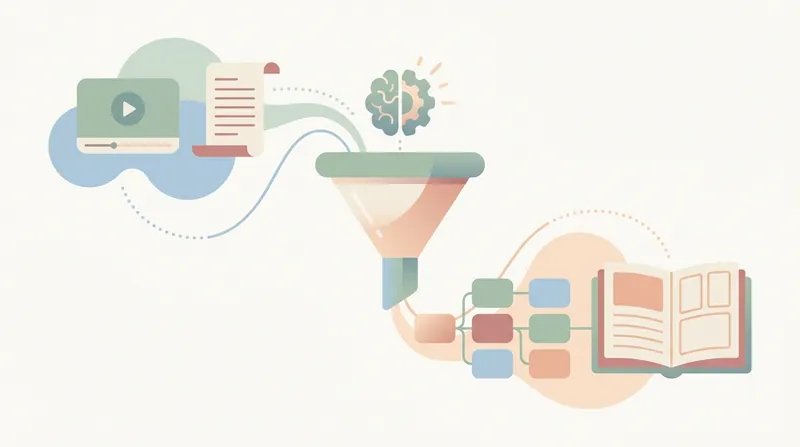
Career Skills Practice Manual
Structure content from videos and articles on AI tools, workplace, and life skills, then extract core info with one click. Forget manual notes—learn efficiently and master key points fast.
Podcast Summary
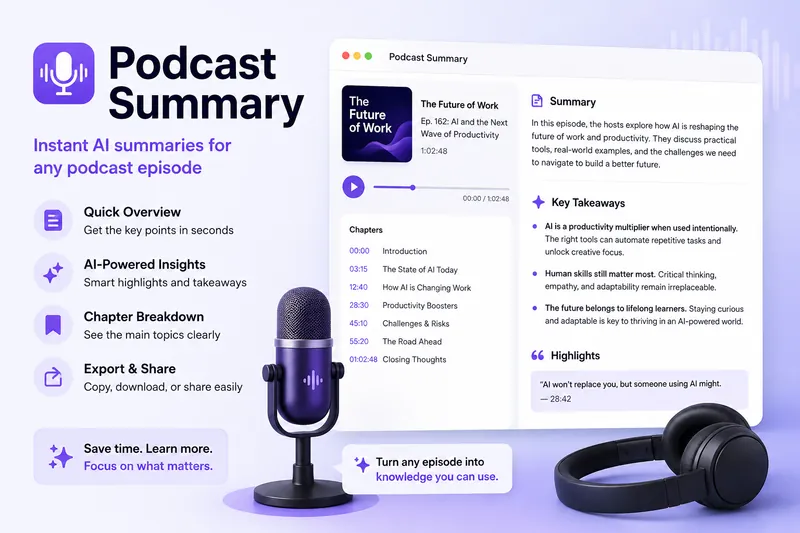
This skill provides structured summaries and analysis of podcast content, helping users quickly grasp the core ideas and value of any episode. Whether you're a listener, researcher, or content creator, you can efficiently organize and review podcast episodes using this tool. The skill can extract information from a podcast link (supports major platforms including Xiaoyuzhou, Apple Podcasts, Spotify, YouTube, and Ximalaya) or from user-provided transcripts. It intelligently retrieves metadata such as the episode title, guests, publication date, and show description, and attempts to fetch the full transcript or subtitles. Even if the original page lacks complete information, it will try to supplement content through web searches or cross-platform lookups to ensure comprehensive analysis. After content acquisition, the skill performs an in-depth analysis and generates a detailed note containing an overview, timeline, key quote highlights, and a reasoning progression. The overview summarizes the podcast topic in concise language, the timeline helps you quickly locate key discussions, the key quote highlights distill the guest's unique insights and core viewpoints, and the reasoning progression maps out the podcast's argument logic and thought development. Ultimately, you receive a clean, easy-to-read Markdown-format podcast note that supports direct download.
Materials to Viral Content
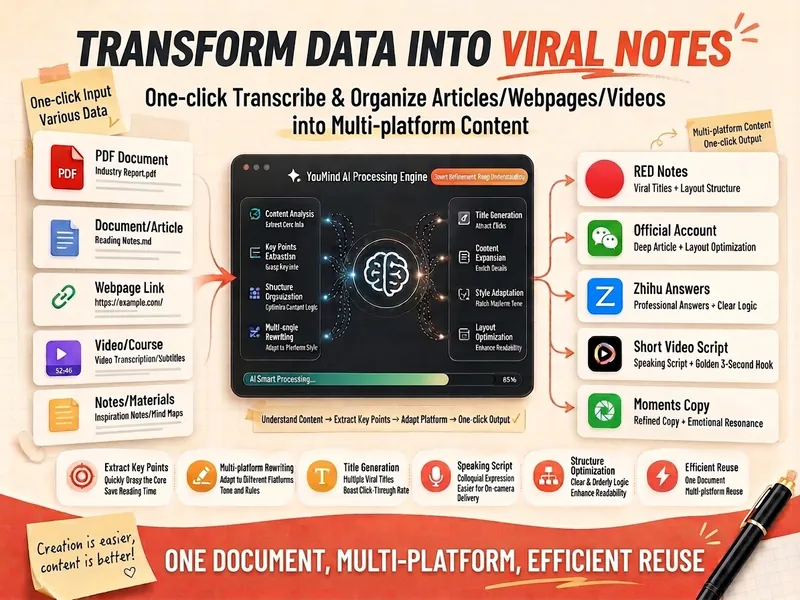
Intelligently transform various materials in your hands—whether articles, web content, video transcripts, course notes, meeting minutes, or even scattered ideas—into viral content suitable for multi-platform publishing. This assistant deeply explores the core perspectives, key information, and shareable golden quotes from your materials, and tailors a content strategy for you based on the characteristics of different platforms such as Xiaohongshu, WeChat Official Accounts, Zhihu, Douyin, and WeChat Moments. You will receive a detailed material transformation report, including a core summary, diverse communication angles, and specific content versions optimized for each platform. Whether you need a relatable experience sharing, a well-structured in-depth article, rigorous knowledge popularization, or fast-paced short video scripts and personalized WeChat Moments copy, this tool provides comprehensive support from a headline library to full content. At the same time, it also provides a self-check checklist to ensure that the content is faithful to the original text while precisely reaching the target audience, helping you easily create engaging content.
Information
- Version
- v6
- Last updated
- Runtime credits
- Usage-based
- Models
- Auto
- Use cases
- Research & analysisLearning & education
- What you get
- Document
