Six-Dimension Psych Tests
Explore six psychology profiles through chat
Six-Dimension Psych Tests
Explore six psychology profiles through chat
Showcase
Description
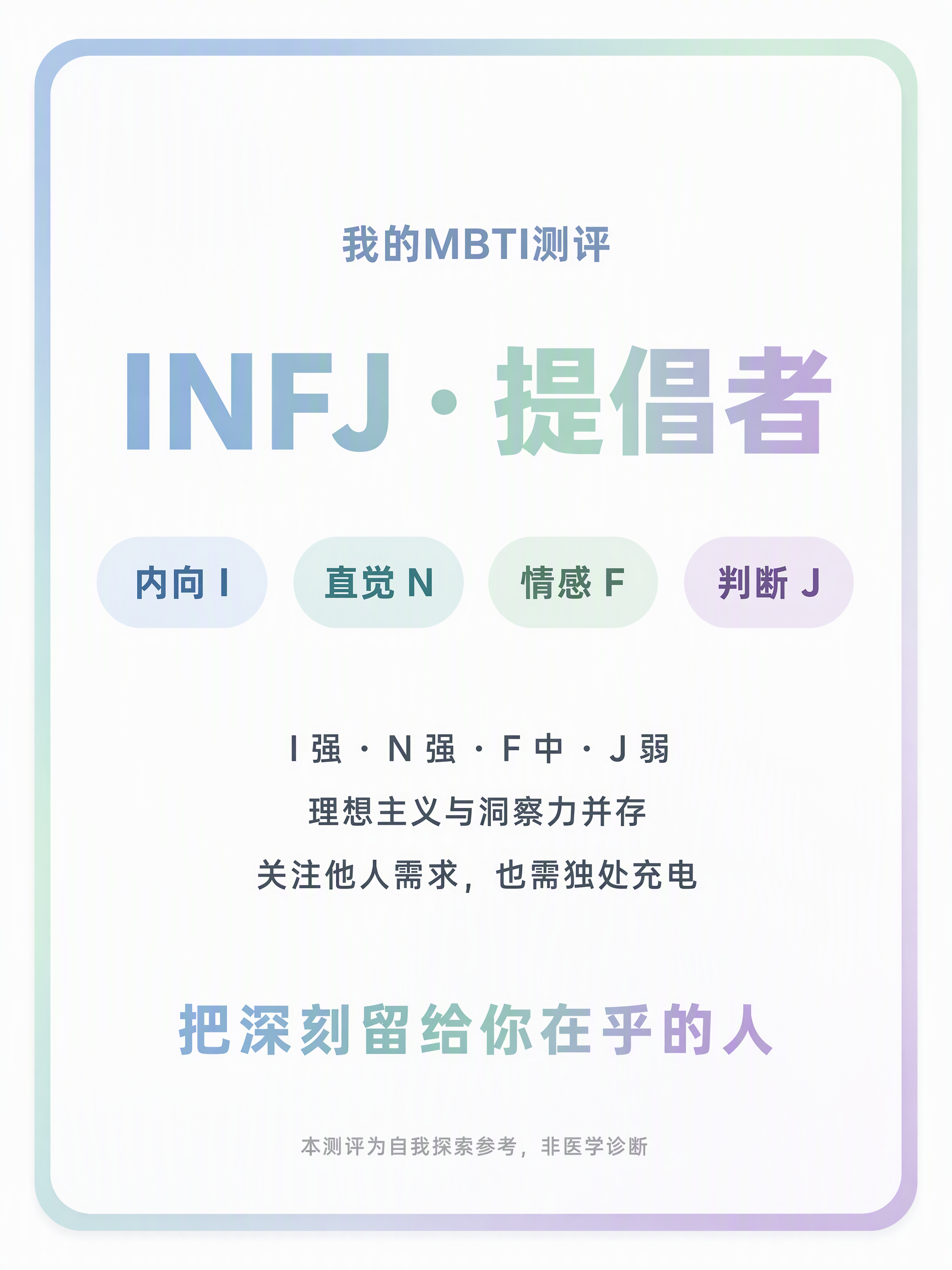
Through relaxed, step-by-step conversational questions, complete a psychological self-exploration focused on one dimension and receive clear, understandable results. Choose from MBTI, Enneagram, love languages, stress level, sleep quality, or career interests. Answer naturally with responses like “sounds like me,” “so-so,” or “not really”—there’s no need to face every question at once. After the assessment, the skill provides core conclusions, key scores, and tendency explanations based on your answers, then generates a clearly structured interpretation report. It covers a summary of the conclusions, score distribution, strengths, gentle points to keep in mind, and practical suggestions for learning, work, relationships, and self-care. The content remains neutral and non-pathologizing and does not replace medical or clinical diagnosis. You’ll also receive a reviewable record of your psychological assessment and a shareable 3:4 portrait results card. The card highlights the assessment dimension and core conclusion, along with keywords, a score or advice summary, and a brief message—ideal for saving or sharing your self-exploration results.
Related Skills
View all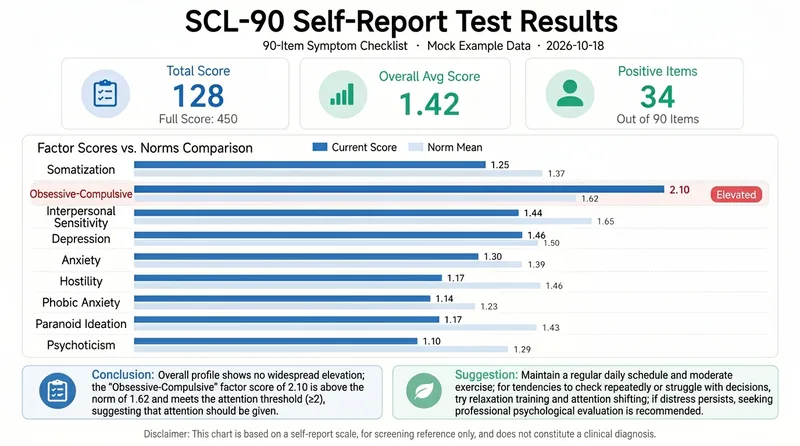
SCL-90 Assessment & Report
Complete the SCL-90 (90-Item Symptom Checklist) through conversation and receive clear, supportive, easy-to-review psychological symptom screening results. Before you begin, the assessment explains its scope, the requirement to answer based on the past week, the 5-point rating scale, who it is intended for, and that it is not diagnostic. You can choose to answer one item at a time, 10 items at a time, or all at once. The process respects your pace, does not predict results, and does not lead your answers. The system collects and validates all responses against the standard items, promptly identifying unanswered questions, formatting errors, or ratings outside the allowed range. After completion, it calculates core measures such as the total score, overall mean score, and number of positive items, then analyzes 9 dimensions including somatization, obsessive-compulsive symptoms, interpersonal sensitivity, depression, and anxiety. It compares the results with reference norms to provide an easy-to-understand interpretation, screening notes, and moderate self-regulation suggestions. The results are for self-understanding and preliminary screening only and do not replace professional diagnosis or treatment. If signals related to self-harm, suicide, or harming others appear in your responses, the system will prioritize compassionate support, safety reminders, and help-seeking resources. After completing the assessment, you can also generate a Chinese-language visual results graphic containing core measures, factor comparisons, screening conclusions, suggestions, and a disclaimer, along with a written summary. If needed, you can save the assessment report for your records.
Counselor IP Niche Diagnosis
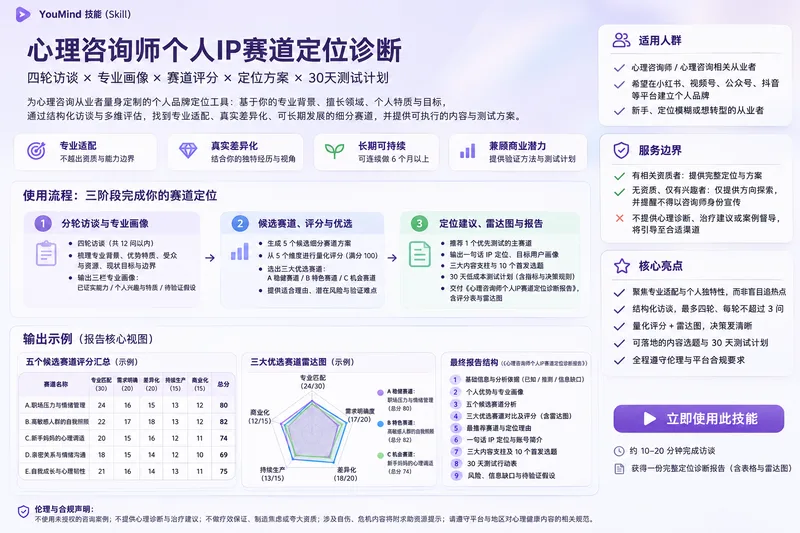
Counselor IP Niche Diagnosis is a personal brand positioning analysis tool designed specifically for psychological counseling practitioners, helping you find a social media sub-niche suitable for long-term growth based on your professional abilities. Want to start on Xiaohongshu, Video Channels, or WeChat Official Accounts, but unsure whether to choose intimate relationships, emotional management, workplace psychology, or another direction? Do you find yourself following trending topics, only to worry about homogeneous content, burnout, or a mismatch with your professional training? This Skill goes beyond simply recommending trending niches. Through four rounds of structured interviews, it understands your professional background, credentials, counseling orientation, areas of expertise, personal traits, target audience, and business goals to build an authentic professional profile. **What you will get:** - **5 candidate sub-niches**: Analyzes target audiences, core issues, differentiated directions, and potential service formats. - **5-dimensional professional scoring**: Compares professional match, demand clarity, differentiation, content sustainability, and commercial viability. - **3 preferred directions**: Distinguishes steady, distinctive, and opportunistic niches to help determine your priority testing direction. - **Personal IP positioning plan**: Includes a one-sentence positioning statement, bio, and three core content pillars. - **Content launch plan**: Generates 10 initial topic ideas, a 30-day low-cost testing schedule, and metrics to monitor. Ideal for new psychological counseling practitioners preparing to build a personal brand, as well as professionals who already have an account but lack clear positioning, consistent content, or wish to adjust their development direction. This Skill respects qualification boundaries and professional ethics, distinguishing known facts, professional judgments, and market assumptions without fabricating platform data or promising follower growth, lead generation, or income results. The final analysis report serves as a reference for personal decision-making and content practice. **Let your professional skills be the starting point of your positioning, and give every piece of content a clear direction.**
Your Tree, Your Story
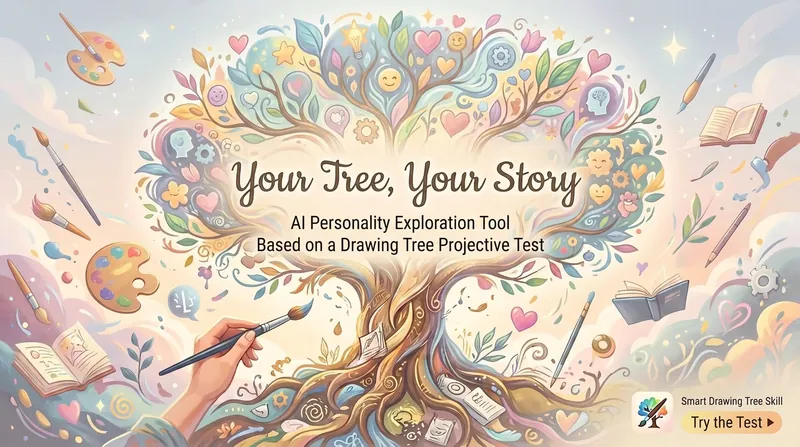
As a university teacher with 20 years of experience in life-and-death education, I deeply understand that knowing yourself is the starting point for all life reflection. Have you ever thought that a tree might be the most honest self-portrait of your inner self? No need to fill out hundreds of questionnaires, no need to answer awkward questions like "how do you feel about yourself." Just pick up a pen and draw a tree on paper or iPad. That's your tree, your story—an AI personality exploration tool based on the tree drawing projection test. How does it work? Three steps, five minutes: 1️⃣ Draw a tree — on paper or iPad, vertical orientation, draw freely, no right or wrong. 2️⃣ Take a photo of the full drawing — upload to AI (note: capture the entire paper or canvas, not just the tree; position also matters). 3️⃣ Answer a few questions — "Where does this tree grow?" "What kind of tree is it?" … just like chatting with a friend about your drawing. After these three steps, the AI will give you a warm personality exploration report—not a cold diagnosis, but words like a friend speaking to you late at night. A warm reminder This is a fun tool for self-exploration, not a psychological diagnosis. If the story the tree tells you makes you uneasy, that might be a starting point for self-understanding—remember, the tree is just a mirror to help you see yourself; true healing still requires professional help. The accompanying draw-a-person and draw-a-tree tests have been released. The integrated House-Tree-Person test is coming soon.
Information
- Version
- v2
- Last updated
- Runtime credits
- Usage-based
- Models
- Auto
