
Compensation Offer Calculator
Estimate net pay, benefits, and offer floor
Compensation Offer Calculator
Estimate net pay, benefits, and offer floor
Showcase
Description
Compare compensation, bonuses, social insurance, housing fund contributions, and income tax parameters from your current and prospective employers in one framework. Clearly assess take-home cash, the value of personal contributions, and overall benefits to understand the real income change from changing jobs and set a reasonable salary negotiation floor. Suitable for evaluating offers, negotiating compensation when changing jobs, and comparing compensation packages across cities or policy years.
Related Skills
View all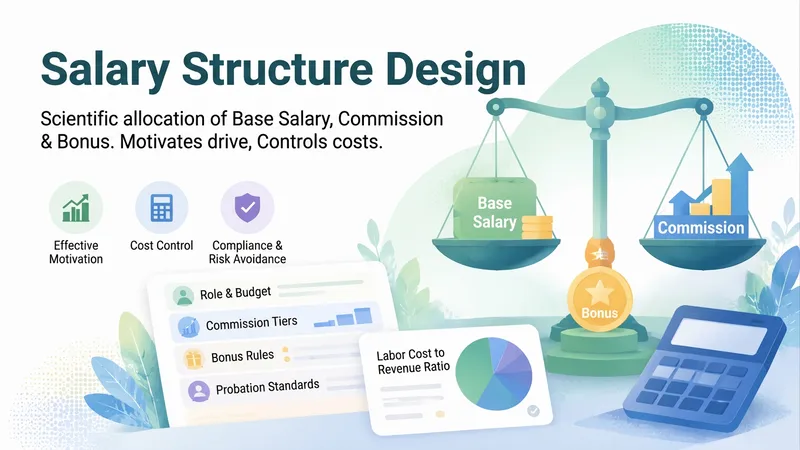
Compensation Structure Design
How should you set the salary when hiring? How much commission is enough to motivate people without hurting your margins? **Compensation Structure Design** takes the role, industry, city, and budget you provide and produces a complete compensation structure: base-pay ranges, commission tiers, bonus rules, and probation standards. Each tier includes the level of candidate typically suited to that pay. It also estimates labor costs as a share of revenue and flags structures that may pose legal risks.

Brand Deal Pricing Coach
The hardest part of taking a brand deal isn't finding one—it's knowing what the deal is worth. You spend three days negotiating, then the client says, “That’s the entire budget.” You don’t know whether it’s a firm limit or a negotiation tactic. Quote too high and you may lose the deal; quote too low and you may finish the work after staying up late, only to realize you lost money. This skill brings in the knowledgeable friend who knows the business. Share the basic details of the deal—who the client is, the format, how many deliverables and revision rounds are required, and what price they offered. It will first ask for key missing information, then provide a Brand Deal Pricing Evaluation Report: ✨ Core capabilities 1. Break-even price calculation: Time costs + hard costs + taxes and commissions + revision and payment-term risks, so you can first determine “below what price am I losing money?” 2. Three pricing tiers: Floor price / target price / ideal price, with the reasoning behind each tier and the amount tied to every add-on and discount item 3. Contract checklist: Payment, advance payment, revision limits, licensing scope and duration, exclusivity period, and the right to publish the work as a case study—beginners often lose out more on terms than on price 4. Negotiation scripts: For the initial quote, “the budget is limited,” “let’s test the results first,” exclusivity requests, requests for free trial work, and more. Each scenario includes a ready-to-copy version with tone and risks noted 5. One-page quote letter: Once you reach an agreement, generate a quote letter you can send directly to the client with one click 6. Pricing archive: Remember your past deal prices and minimum hourly rate, becoming more accurate the more you use it 🛡️ Three firm principles · No invented market figures: All amounts come only from the anchors and cost calculations you provide. Estimated ranges are clearly marked as “not the market average” · No sugarcoating: If the price is below your costs, it will tell you directly, “Taking this deal means losing money,” and calculate where the loss comes from · No deciding for you: It provides analysis and supporting reasons; the decision remains yours 📱 Who it’s for Bloggers, creators, and up creators handling brand partnerships, platform deals, or sponsored content; public-account writers; Xiaohongshu and Douyin creators; as well as designers, writers, and podcast hosts taking on projects. 💡 How to use it Simply describe your deal. You can also use /报价 /还价 /条款 /出函 /复盘 /档案 for precise access. Getting one quote right can mean a difference of hundreds or even thousands.
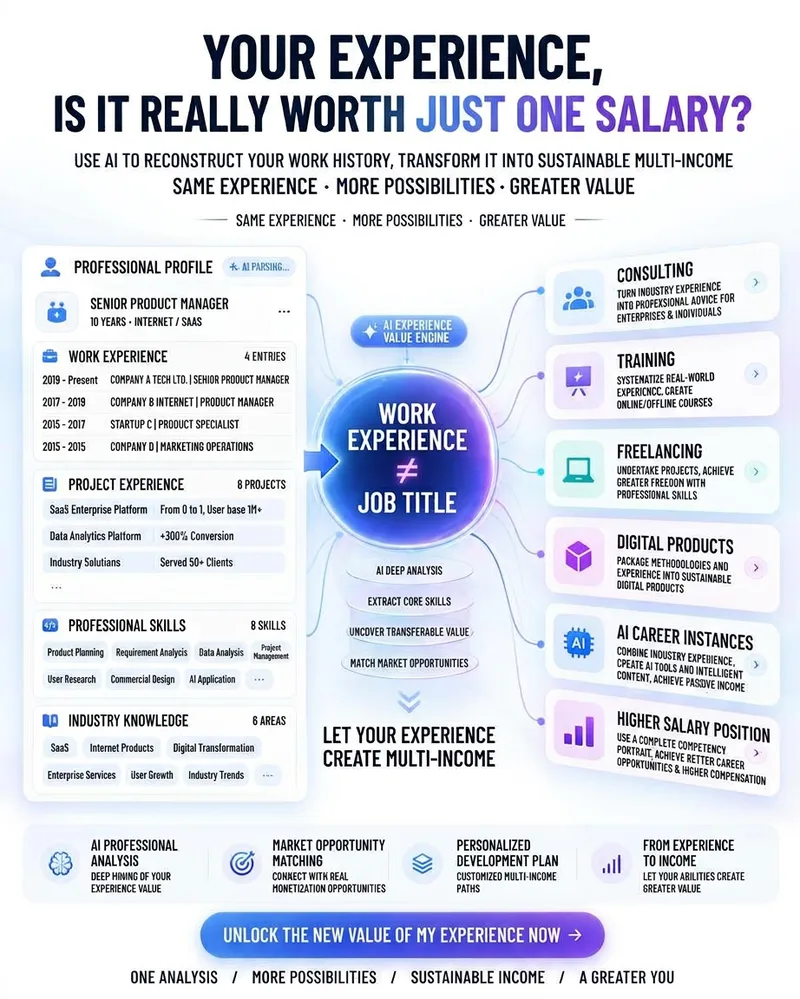
Career Monetization Planner
Career Monetization Planner is an AI skill that helps everyday professionals rediscover their career value and find paths to greater income. Many people have worked for 5, 10, or more years but only know that they “can do their current job.” They may not realize that their industry experience, professional skills, project experience, and problem-solving methods can be turned into higher-paying roles, side businesses, consulting, training, freelancing, or digital products. You only need to share your career experience, what you’re good at, your current income, and your goals—or paste your résumé directly. The Skill will guide you through a career profile, an inventory of hidden high-value skills, an analysis of additional income opportunities, ways to turn your experience into products, higher-paying role analysis, AI side-business ideas, and a 90-day action plan. Each direction considers startup costs, time commitment, difficulty, income potential, and practical feasibility—not simply a list of dozens of “ways to make money.” It’s especially suited to people with some work experience who are considering a raise, job change, side business, second income stream, or monetizing their professional experience. Whether you work in research and development, product, operations, sales, design, education, medicine, engineering, or management, you can start from the skills you’ve already built and find more valuable paths to income. You may not need to learn an entirely new skill. You may simply not have seen the value you already have.
Information
- Version
- v9
- Last updated
- Runtime credits
- Usage-based
- Models
- Auto
