
Zeng Guofan Review Skill
Active review, not diary. Work log queries.
Showcase
Description
Morning Review — Daily structured reflection conversation. Reads yesterday's daily report, drives cognitive review with 4 rounds of questioning plus extraction of today's priorities. Trigger ways: /morning-review, /morning-review, /review, /review, "Morning Review", "Morning Review", "morning review", "Good morning", "Let's review", "Start review", "Today's review", "Review yesterday", "Reflect", "Yesterday's review", "Review" Supports quick mode: /morning-review quick, /morning-review quick. Morning reflection: reads yesterday's report, runs 4-question structured interview, extracts today's top 3 priorities. Saves output to Obsidian.
Recommended by
Nico@YouMind
Why we love this skill
Centered on Zeng Guofan's 'tracing thoughts' method and multidimensional work logs, this skill reviews behaviors and uncovers decision-making thought patterns for unique insights and cognitive growth.
Related Skills
View all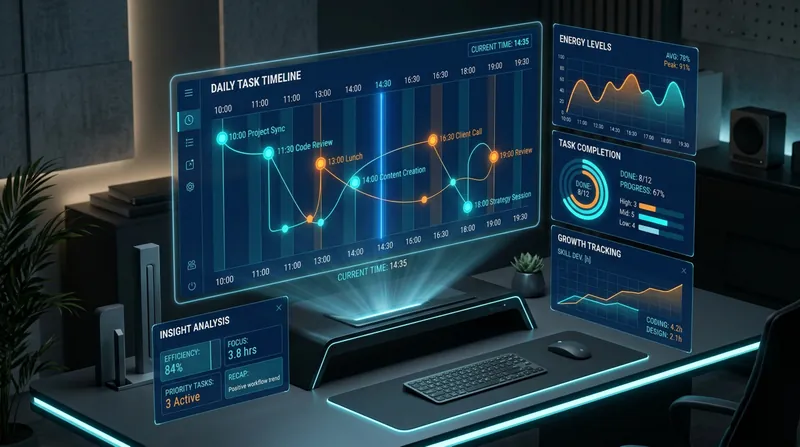
Daily Action Command Center
A complete personal efficiency and growth system that helps you coordinate the overall situation, conduct deep reflection, and continuously evolve. [Core Functions] Step 1: Morning task breakdown and energy management Based on your fixed time structure (10:00-10:30 clipping/10:30-12:00 morning/14:30-19:30 afternoon), intelligently break down tasks, estimate energy consumption, optimize sequencing, and provide off-screen rest suggestions. Step 2: Clip deep analysis system 5-layer analysis framework: multi-level information deconstruction → critical thinking assessment → knowledge network construction → practice transformation path → information lifecycle management. Automatically control daily clip count (suggested ≤5 articles) to ensure deep understanding. Step 3: Task completion deep review and growth tracking 6 dimensions: three-dimensional quality assessment → success pattern extraction → root cause-oriented improvement → intelligent historical comparison → energy calibration and motivation tracking → intelligent task recommendation. Every task completion is a growth opportunity. Step 4: Evening deep review 6-layer progressive exploration: curiosity root → thinking pattern decoding → value core return → problem of the problem → thinking trap diagnosis → psychological state and tomorrow's seeds. From surface to depth, fully decode a day's growth. Step 5: Periodic data insights Automatically generate reports on Friday/end of month: energy consumption patterns, curiosity evolution, psychological state trends, pitfall statistics, growth milestones, next week/month suggestions. [System Value] Not just a task management tool, but a cognitive upgrade engine + capability growth tracker + thinking pattern decoder. Helps you return from chaos to core, from execution to insight, from completion to evolution.
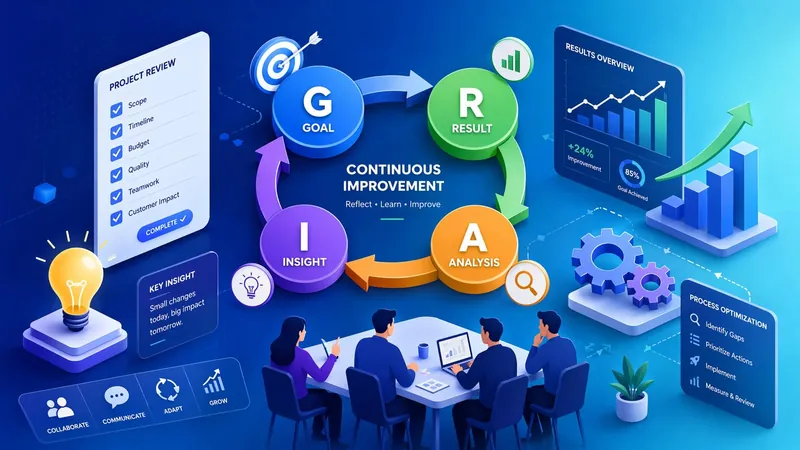
Retrospective Master
Tired of project retrospectives being just a formality? This smart retrospective assistant supports all scenarios including learning, technology, product, marketing, and management. It features a built-in six-fold quality protection mechanism that automatically prevents shallow analysis and blame-shifting, forcing deep root cause analysis to ensure meaningful retrospectives. Three start modes are available: new retrospective with step-by-step guidance, conversational retrospective that auto-extracts historical information, and quick import and parsing of project documents. Flexibly choose between quick mode and deep mode. Generate six key deliverables with one click: structured retrospective reports, improvement suggestion lists, action plans, trend analysis tables, and experience knowledge base entries. Upgrade your retrospectives from "post-mortem summaries" to a "continuous evolution engine", turning every experience into organizational wisdom!
Work Review MAX: Logs→Review
Does your weekly report look like this: “Moved Project A forward this week, participated in discussions for Meeting B, supported the team with Request C, delivered xx documents, and will continue next week.” Your manager glances at it and moves on. It’s not that you didn’t work hard. It’s that you wrote a log, not a review. When evaluators review promotion materials and managers read monthly reports, they care about just five things: ① Why was this work worth doing? (judgment) ② What benchmark shows that the result was good? (data anchoring) ③ Which parts did “you” do, and which were done by the team? (contribution boundaries) ④ What reusable insight did you take away from the work? (growth curve) ⑤ What do you commit to delivering next cycle? (commitment mindset) 99% of review drafts fail to make even one of these clear. They just list features: “Iterated on X,” “launched Y,” “supported Z”—like a robot. This Skill is a structured compiler I refined through frontline business reviews as an AI OPC. Paste in your raw work log exactly as it is—no matter how messy or scattered—and it will produce a complete review that meets senior-level promotion and performance-review standards: 📊 One-line overall assessment (help readers understand your value in 30 seconds) 🎯 Key achievements (STAR + judgment-based narrative, not a feature list) 📈 Data benchmark table (with baselines, definitions, and your share of the contribution) 🧠 Methodology and lessons learned (showing your growth curve) 📅 Next-cycle plan (commitment-letter format, with measurable goals + deadlines + resource needs) ⚠️ Risks and support needed (surfacing risks shows ownership) 📋 Missing-data checklist (everything you need to look up, all at once) Bonus: ✓ Review of 3 key improvement areas (showing which weaknesses in the raw material were addressed) ✓ Defense-risk forecast (which points evaluators may challenge in a promotion review + suggested responses) ✓ Reusable template variables (make a few edits and reuse it next time) How is it different from a typical “AI weekly report” Skill? Others: Rephrase your work log and output it again—it’s still a work log. This one performs structural surgery on it, upgrading it from a “feature-listing format” to a “judgment-based narrative.” What it will never do: ✗ It will not invent data—anything you didn’t provide is marked “needs to be added,” with no made-up numbers ✗ It will not write filler like “As an AI,” “In conclusion,” or “Thank you, leadership” ✗ It will not flatter you or ask, “Can you tell me more?” It gets straight to work Who should use it: People tired of weekly reports and hoping to log off early P6→P7 / M1→M2 / mid-level→senior professionals aiming for promotion Anyone facing a midyear or annual performance review with materials still unwritten Project leads who need to write quarterly reviews for managers, evaluators, or clients Anyone who works hard and wants their work to be truly seen Doing good work doesn’t automatically mean you know how to report it. With the same workload, people who know how to write effective reviews get promoted a year faster. Use it for your next weekly report and make your work visible.
Information
- Version
- v3
- Last updated
- Runtime credits
- Usage-based
- Models
- Auto
