
Create 3D Teaching Webpages
Create 3D models for beautiful teaching pages
Create 3D Teaching Webpages
Create 3D models for beautiful teaching pages
Showcase
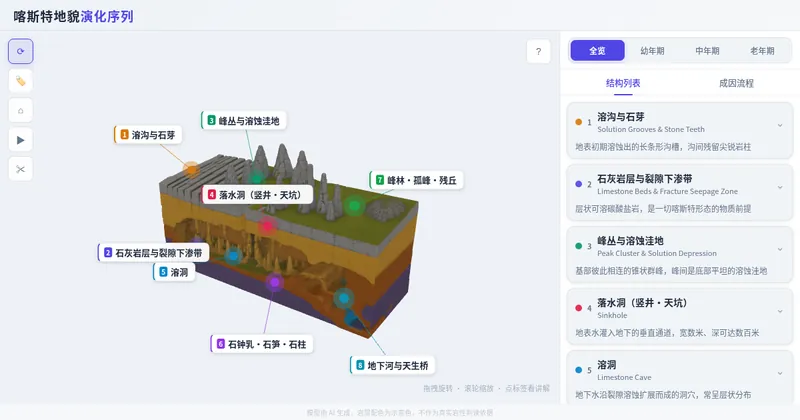
喀斯特地貌演化序列
喀斯特地貌演化序列

制作草履虫结构3D教学页
草履虫结构交互教学
喀斯特地貌演化序列
喀斯特地貌演化序列
制作草履虫结构3D教学页
草履虫结构交互教学
Description
Create 3D interactive teaching webpages for teachers across subjects: first clarify the teaching need and output a structured modeling blueprint, then generate three rendering options for teacher confirmation. Use a single image for low-cost conversion to 3D (only upgrade to multi-view if unsatisfied), and finally produce a single-file interactive webpage using a unified design language. It includes an unconditional standard feature baseline—auto-rotation, click-to-select structure explanations, three-state label visibility, XYZ axis sectioning, view presets, keyboard shortcuts, and load-failure fallback—and normalizes model orientation to prevent labels from misaligning with the model.
Related Skills
View all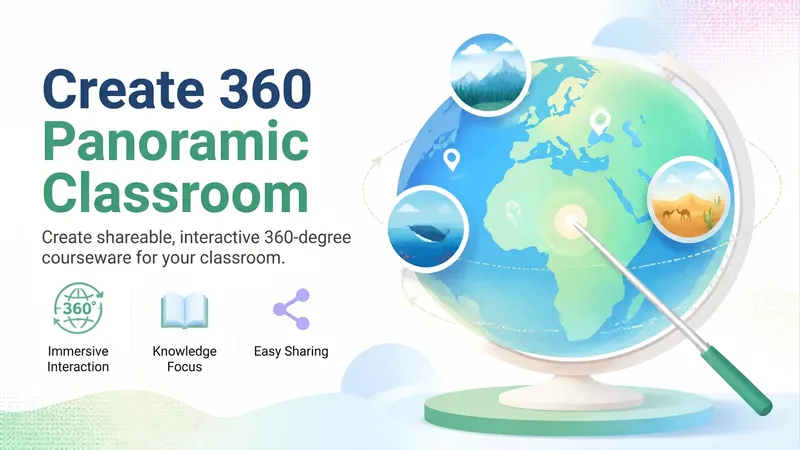 Webpage
360° Panoramic Classroom
Transform lesson topics, grade levels, and teaching objectives into accessible, shareable interactive panoramic classroom web pages. Students can drag perspectives, switch scenes, and click knowledge hotspots to understand textbook content through spatial exploration. Whether it is literary observation perspectives in Chinese, science experiment scenes, or history and geography topics, you can organize appropriate scenes around learning objectives, complemented by age-appropriate explanations and guided inquiry questions. You can provide textbooks, lecture notes, real panoramic images, or other classroom materials. The system plans visual content, hotspot placement, and teaching focal points based on material use and availability. When materials are insufficient, unified-style AI illustrations are used, clearly distinguishing between real imagery, simulated visuals, and information pending verification. For history, science, and geography, relevant content undergoes reliability checks when needed to prevent speculation or illustration from being presented as fact. Before production, a lesson plan is presented for your confirmation, and web development begins only after approval. The final product is optimized for computers and mobile devices, supporting panoramic viewing, scene switching, hotspot pop-ups, and an essential teaching sidebar. It is suitable for classroom projection, independent student exploration, or after-class sharing. Delivery includes instructions on operation, material authenticity, completed checks, and known limitations. If materials lack full 360-degree capability, this is faithfully noted along with a recommendation for restricted-view interactive presentation.
Arts Education Visual Webpages
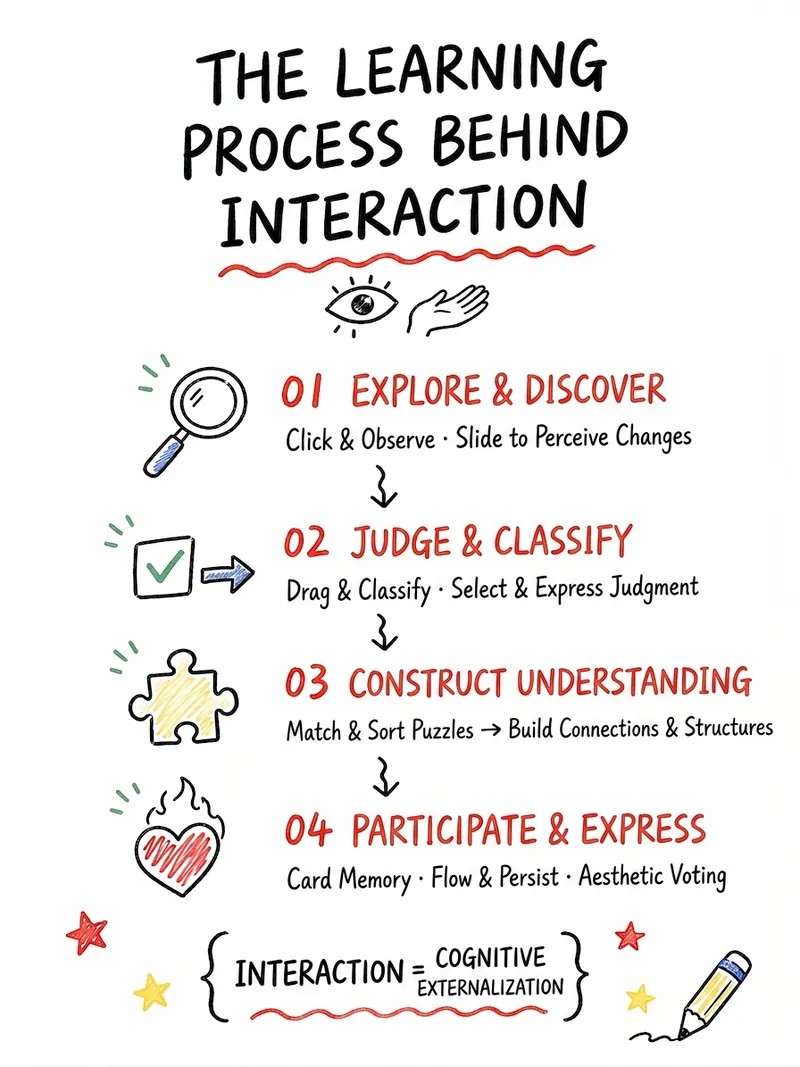
Easily transform K-12 arts education content into lively and engaging interactive web experiences. This skill is designed specifically for arts teachers, helping you present diverse arts courses—including fine arts, music, dance, drama, film, calligraphy, and intangible cultural heritage—to students through visualization and gamification. Whether you want to design click-to-explore, drag-and-drop sorting, color experiments, aesthetic voting, or challenge tasks, this skill can intelligently generate a variety of interactive plans based on your course name, core knowledge points, and teaching objectives. It not only transforms abstract arts concepts into digital content that students can view, manipulate, and create, but also iterates and optimizes based on your feedback, ensuring the plan meets teaching needs while being aesthetically pleasing. In the end, you will receive a detailed interactive webpage content draft, including page structure, student workflow, feedback design, visual style suggestions, and classroom usage guidance. Additionally, this skill can directly generate AI-ready webpage creation prompts, HTML design drafts, and even single-file HTML code, instantly energizing your arts classroom and enhancing student engagement and learning outcomes.
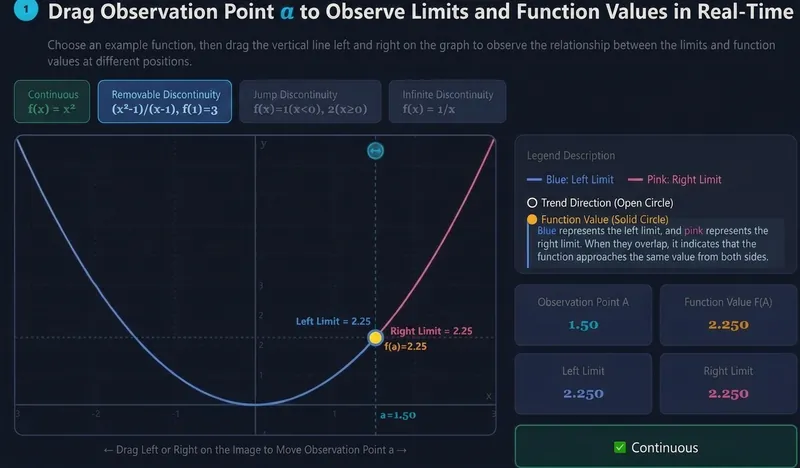
Calc Concept Visualizer V2.0
Transform abstract calculus concepts into interactive teaching web pages that you can drag around, present in class, and iterate on repeatedly. V2.0 adds the 'Concept Teaching Task Package' and 'Web Page Versioning Protection': It not only generates dynamic demonstration pages for concepts like limits, derivatives, and integrals, but also first breaks down the teaching structure, then supplements typical example problems, step-by-step explanations, common pitfalls, variant scenarios, student self-tests, and classroom discussion suggestions as needed. Subsequent modifications to the web page automatically generate new versions like v2, v3, etc., without overwriting older versions, making it easy to roll back. ✦ Core Features 🧭 Teaching Structure First — Automatically break down concept intuition, rigorous definitions, prerequisites, related concepts, typical examples, common misconceptions, and application scenarios. 🖱️ Interactive Web Page Generation — Convert concepts such as limits, derivatives, integrals, Riemann sums, and gradients into dynamic web pages that can be dragged, parameter-adjusted, and observed for changes. 📦 Concept Teaching Task Package — Optionally generate example problems, explanations, common pitfalls, variants, self-tests, and classroom questions, suitable for teacher lesson preparation and student review. 🧑🏫 Multi-Audience Adaptation — Supports different teaching scenarios such as vocational colleges, engineering, computer science, mathematics majors, graduate exam preparation, and teacher lesson preparation. 🛡️ Versioned Iteration Protection — Modifying a web page defaults to saving as a new version, not overwriting the old version, preventing loss of results due to iteration deviations. 🎨 Zero Code, Ready to Use — Describe the concept and teaching needs, and you'll get a fully usable interactive teaching web page. Example Input: “I want to explain the geometric meaning of derivatives” “Create an interactive Riemann sum web page for first-year engineering students learning definite integrals” “Explain the relationship between limits and function values, with example problems, common pitfalls, and variants”
Information
- Version
- v7
- Last updated
- Runtime credits
- Usage-based
- Models
- Auto
