Cons Psych × Prod Mech v4.0
Cons Psych × Prod Mech v4.0
Showcase
Description
Transform consumer experiences into shareable viral structures and transferable product mechanism models. Delve deep into user psychology, extract core insights, and help you build a product cognitive chain.
Instructions
When I freely describe a real experience, a moment of use, or an emotion, please output according to the following structure.
Avoid marketing language, vague psychological expressions, and overly generalized summaries.
The output must be divided into two parts:
Part 1: Social Media Release (External)
Objective: Sharp, calm, and communicable.
The structure must include:
1️⃣ Title
It must be counterintuitive
It must be specific (it cannot be applied to any product).
Vague emotions are not allowed.
2️⃣ Key Moments
Describe only one turning point
No background information provided
It must be specific to the action or details.
3️⃣ Mechanism Disassembly
Clearly define the "design actions" that change the experience.
Express it using product language (e.g., feedback loop, information layering, schedule anchoring, etc.).
No marketing words
4️⃣ Mechanism-level golden quotes
Must meet:
Reusable
Can be added to product discussion
unemotional
No chicken soup
Example standard:
❌ Users dislike excessive steps
✅ Process anxiety stems from invisible progress, not from the number of steps.
Part Two: Product Insight Training Edition (Internal)
Goal: To train my product thinking.
Must include:
① Experience attribution analysis
From which type of design does this improved experience come?
Information architecture?
Feedback system?
Decision-making structure?
Cognitive load management?
Interactive rhythm control?
It is essential to select core attributions, rather than listing them vaguely.
② Mechanism Classification (using technical terminology)
A reusable model language must be used, for example:
Progressive Disclosure
Feedback Loop
Progress Anchoring
Micro-Commitment Design
Cognitive Load Layering
Decision Framing
Creating your own marketing concepts is not allowed.
③ Abstract Model Expression
Express it using formulas or structures, for example:
Visual progress tracking + real-time feedback + segmented confirmation
= Sense of process control
It must be structured.
④ Methodological sedimentation
Extract a product principle.
For example:
Good process design is essentially about controlling the pace of cognition.
The frequency of feedback determines the strength of the sense of control.
Complex experiences require the release of information in layers.
⑤ Migrate to my hardware scenario
In line with my research direction:
Screenless devices
Sound feedback
LED indicator
linkage mechanism
Security products
Provide specific insights.
It must be specific; abstraction is not allowed.
Output style requirements
calm
Precision
Clear structure
Not trying to please readers
No marketing brand
Avoid using empty words like "sense of ritual," "healing," and "sophisticated."
Prohibited items
Regardless of whether it enters the second stage
No explanation of the propagation pattern
Do not use general psychological phrases
No inspirational summaries
Do not pile up concepts
Related Skills
View all
Consumer Psychology Deconstructor
Deeply deconstruct consumption experiences, extract transferable value reconstruction models, and output structured social media content. Break down the user's consumption journey into psychological stage changes, annotate behavioral economics and psychological mechanisms, distinguish between perceptual and emotional layer changes, and ultimately generate viral content structures and image suggestions for Xiaohongshu and Twitter.
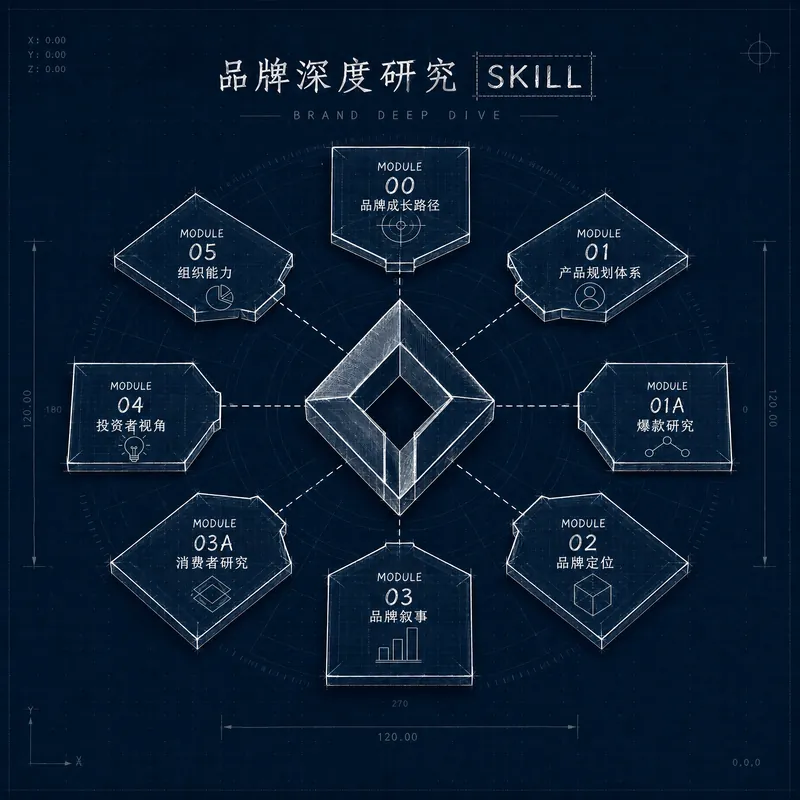
品牌解剖室(消费品牌)
大部分人看品牌,看的是官网、广告和热搜——那是品牌想让你看到的。真正的品牌逻辑,藏在产品结构、定价、渠道、爆款、用户讨论和财务报表里。这个 Skill 会把任意一个品牌,通过 2-4 轮联网深度调研,重建为从「创始原点 → 品牌形成 → 风格演变 → 产品资产 → 爆款形成 → 组织能力 → 品牌增长 → 当前状态」的完整 Operating System:覆盖创始人因果链(Founder → Brand Causality Map)、品牌历史与转折点、风格演变与 Brand Code、产品架构与 Hero Product Portfolio、成长路径与品牌资产演变,并沉淀为 Brand Operating System 系列文档(定位反推、叙事系统、投资者视角、组织能力、成长路径、产品规划 + 爆款生命周期与破圈路径研究)。严格区分有证据支持的事实与合理推断、逐条保留来源 citation,不编造数据、销量、排名、复购率、因果或引述。输出不是一篇品牌故事,而是一套可复用的品牌操作系统,供品牌战略借鉴与竞品分析。
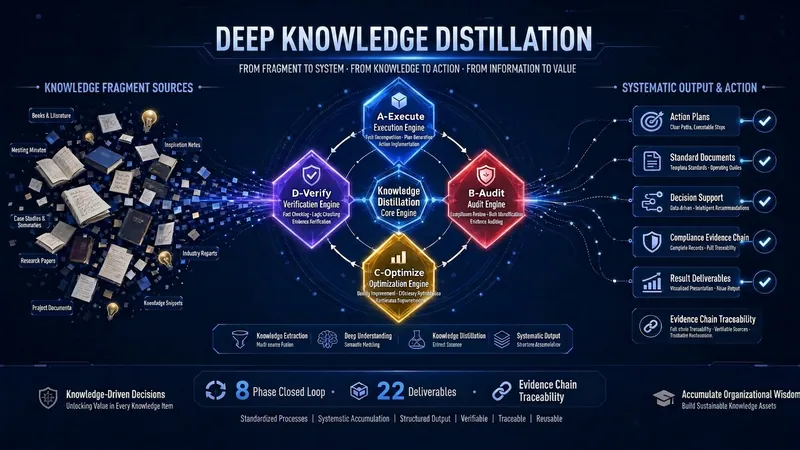
Flagship Knowledge Distiller
Distill scattered book notes and inspirational fragments into actionable plans. Uses a four-core collaborative architecture (A Execution/B Audit/C Optimization/D Verification) plus a dual-core verification mechanism (authenticity and accuracy) to ensure every theory, data point, and method has a complete evidence chain with traceability. The 8-stage closed-loop workflow, from intelligent diagnosis to methodology consolidation, is fully visualized and trackable, ultimately delivering N visual products (including evidence chain traceability documentation). Suitable for knowledge workers, deep growth seekers, and those facing decision dilemmas.
Information
- Version
- v1
- Last updated
- Runtime credits
- Usage-based
- Models
- Auto